Schizocosa mccooki
McCook's Split Wolf Spider
no rights reserved · CC0
Family: Lycosidae · Class: Arachnida · Order: Araneae
Schizocosa mccooki (McCook's Split Wolf Spider) is a California animal in the Lycosidae family.
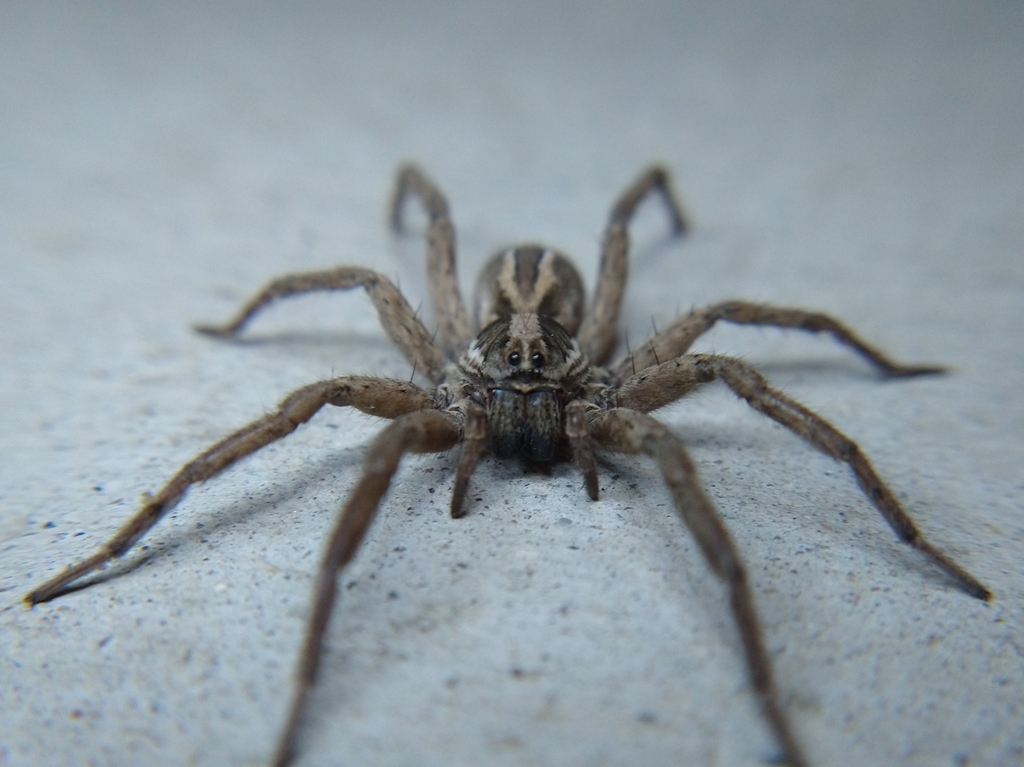
McCook's Split Wolf Spider (Schizocosa mccooki) is a medium-sized wolf spider belonging to the family Lycosidae. Adults typically measure 8-12 mm in body length, with females generally larger than males. The species exhibits the characteristic robust build of wolf spiders, with a cephalothorax bearing distinctive eye arrangement and relatively long, powerful legs adapted for hunting. Coloration varies from brown to grayish-brown with darker markings, providing effective camouflage in natural habitats. Males often display more contrasting patterns, particularly during breeding season. Schizocosa mccooki has a broad distribution across North America, ranging from southern Canada through much of the United States. The species occurs in California, where it has been documented in various regions including Los Angeles County, where specimens have been observed at locations such as Madrona Marsh Preserve in Torrance (BugGuide 2011). The species extends eastward across the continent, with populations recorded in numerous states from the Pacific Coast to the Atlantic seaboard. This wolf spider inhabits diverse terrestrial environments, showing preference for areas with mixed vegetation and adequate ground cover. In California, the species has been documented in prairie and vernal pool habitats, suggesting adaptability to seasonal moisture variations. McCook's Split Wolf Spider typically occupies microhabitats that provide hunting opportunities and shelter, including areas with leaf litter, low vegetation, and open spaces where prey movement can be detected. As an active hunter, Schizocosa mccooki does not construct webs for prey capture but instead relies on speed and ambush tactics. The species is primarily nocturnal, becoming active after dark to hunt various small arthropods. Documented prey includes crane flies and other flying insects that the spider can overpower (BugGuide 2011). Like other wolf spiders, females carry egg sacs attached to their spinnerets and subsequently carry newly hatched spiderlings on their backs. Mating involves complex courtship displays typical of the genus, with males performing species-specific visual and vibrational signals to attract females. According to NatureServe, Schizocosa mccooki currently holds a Global Conservation Status of G5, indicating the species is secure and widespread with no immediate conservation concerns (NatureServe 2024). The species is not federally listed under the Endangered Species Act and appears to maintain stable populations across its range. Its broad distribution and habitat flexibility likely contribute to its conservation security. However, like many arthropod species, local populations may face pressures from habitat modification, urbanization, and pesticide use, though these impacts do not appear to threaten the species at the population level. The species' presence in urban-adjacent areas such as Madrona Marsh Preserve demonstrates some tolerance for human-modified landscapes, which may aid in its continued persistence across much of its range.
Classification
Class: Arachnida · Order: Araneae · Family: Lycosidae
Frequently asked questions
How is Schizocosa mccooki classified?
Schizocosa mccooki belongs to class Arachnida, order Araneae, family Lycosidae.
What family does Schizocosa mccooki belong to?
Schizocosa mccooki is in the Lycosidae family.
What is Schizocosa mccooki?
McCook's Split Wolf Spider (Schizocosa mccooki) is a medium-sized wolf spider belonging to the family Lycosidae.
Is Schizocosa mccooki found in California?
Yes. Schizocosa mccooki is recorded in California in The California Species Project's catalogue.
Related species
Other California species in the same genus, family, or bioregion.
Data from The California Species Project — 14,000+ California species with verified data from CNPS, CDFW, USFWS, and more.