Schizura ipomoeae
Morning-glory Prominent
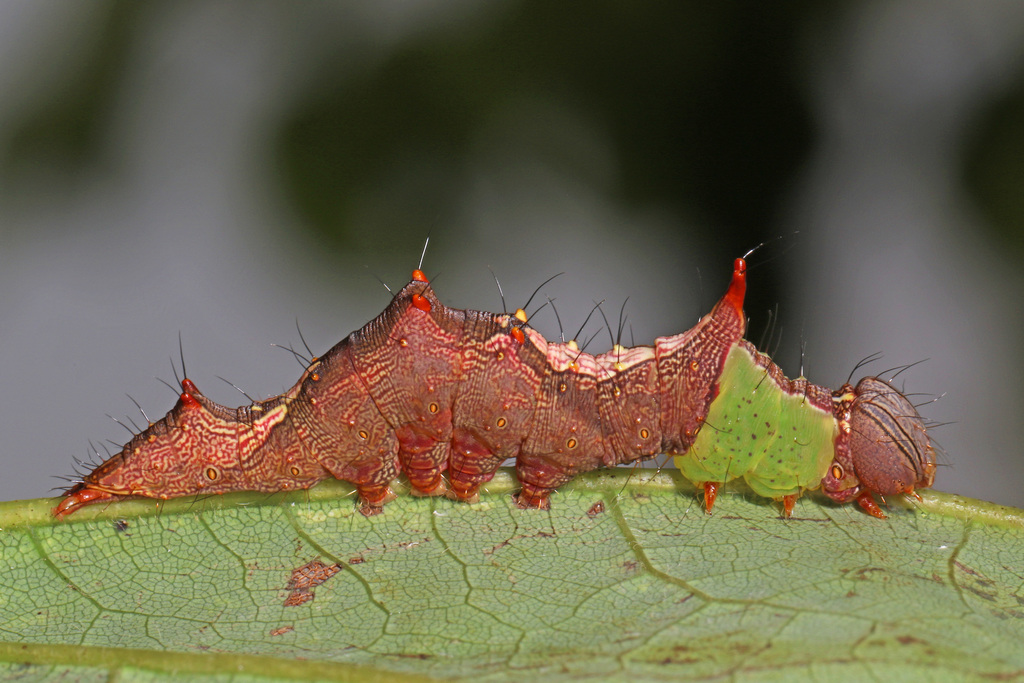
(c) Judy Gallagher, some rights reserved (CC BY-SA) · licence
Family: Notodontidae · Class: Insecta · Order: Lepidoptera
Schizura ipomoeae (Morning-glory Prominent) is a California animal in the Notodontidae family.
The morning-glory prominent (Schizura ipomoeae) is a medium-sized moth in the family Notodontidae, distinguished by its cryptic coloration and distinctive wing patterns. Adults have a wingspan ranging from 35 to 45 mm (1.4 to 1.8 inches). The forewings display mottled gray-brown coloration with darker transverse lines and subtle white markings that provide effective camouflage against tree bark. The hindwings are typically paler, ranging from light gray to whitish. When at rest, the moth adopts a characteristic posture with wings held tent-like over the body, a typical trait of the prominent moth family. The species occurs across much of North America, from southern Canada south to Florida and west to the Rocky Mountains. In California, morning-glory prominent populations are documented in various regions, though distribution data remains incomplete. The species appears to be more common in areas with suitable host plants and appropriate habitat conditions. Morning-glory prominent caterpillars are specialist feeders on plants in the morning-glory family (Convolvulaceae), particularly wild morning-glory (Calystegia species) and bindweed (Convolvulus species). Adults are found in diverse habitats including riparian woodlands, forest edges, suburban areas, and disturbed sites where host plants are present. The species shows adaptability to human-modified landscapes, provided host plants remain available. Elevation preferences and specific microhabitat requirements have not been thoroughly documented. The species is univoltine in northern portions of its range and bivoltine in warmer southern regions, including parts of California. Adults are nocturnal and attracted to artificial lights during their flight period, which typically extends from late spring through early fall depending on location and climate. Mating occurs shortly after adult emergence, with females depositing eggs singly or in small clusters on host plant foliage. Larvae develop through five instars, feeding primarily at night and resting during daylight hours. Mature caterpillars are approximately 40 mm (1.6 inches) long with variable coloration ranging from green to brown, often with lateral stripes. Pupation occurs in soil or leaf litter, with the species overwintering in the pupal stage. The morning-glory prominent is not currently listed under federal or California endangered species legislation. Population trends are poorly documented, but the species appears to maintain stable populations across much of its range. The moth's association with weedy host plants that thrive in disturbed habitats may provide some resilience against habitat loss. However, like many native Lepidoptera, the species may face pressure from habitat fragmentation, pesticide use, and climate change. Light pollution poses an additional threat to nocturnal moths through disruption of natural behavior patterns and increased predation risk. Conservation efforts for this species would benefit from broader habitat protection initiatives and reduced pesticide applications in areas supporting native plant communities. Maintaining diverse plant assemblages including native Convolvulaceae species supports both morning-glory prominent populations and associated ecological communities.
Classification
Class: Insecta · Order: Lepidoptera · Family: Notodontidae
Frequently asked questions
How is Schizura ipomoeae classified?
Schizura ipomoeae belongs to class Insecta, order Lepidoptera, family Notodontidae.
What family does Schizura ipomoeae belong to?
Schizura ipomoeae is in the Notodontidae family.
What is Schizura ipomoeae?
The morning-glory prominent (Schizura ipomoeae) is a medium-sized moth in the family Notodontidae, distinguished by its cryptic coloration and distinctive wing patterns.
Is Schizura ipomoeae found in California?
Yes. Schizura ipomoeae is recorded in California in The California Species Project's catalogue.
Related species
Other California species in the same genus, family, or bioregion.
Data from The California Species Project — 14,000+ California species with verified data from CNPS, CDFW, USFWS, and more.