Scoliopteryx libatrix
The Herald
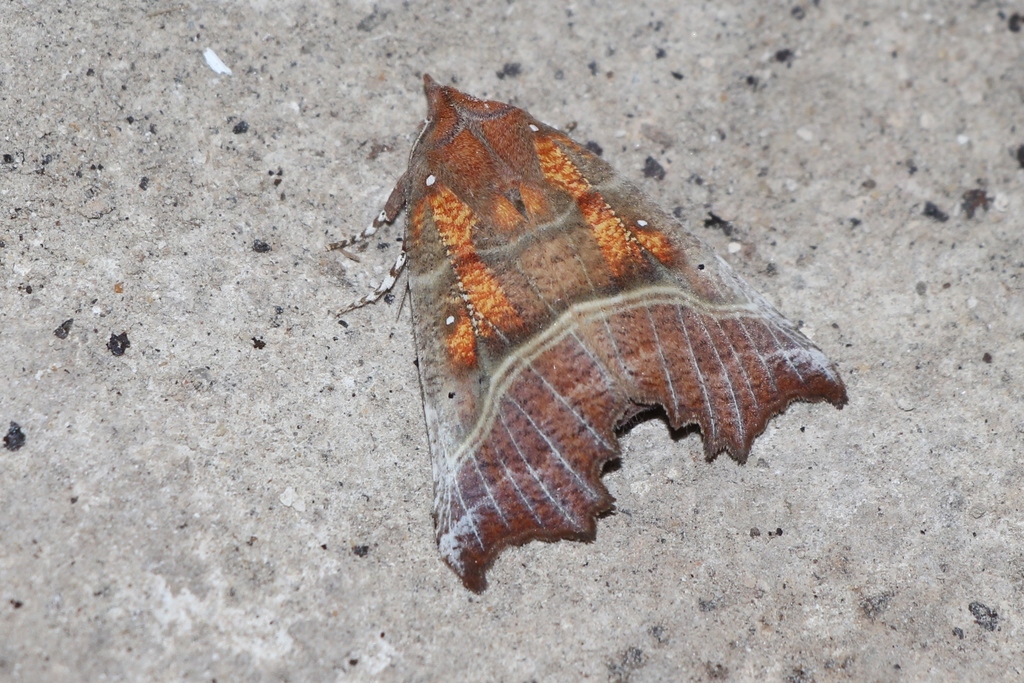
no rights reserved · CC0
Family: Erebidae · Class: Insecta · Order: Lepidoptera
Scoliopteryx libatrix (The Herald) is a California animal in the Erebidae family.
The Herald moth (Scoliopteryx libatrix) is a distinctive noctuid moth in the family Erebidae, subfamily Scoliopteryginae. Adults display mottled gray-brown forewings with irregular scalloped margins that create a distinctive ragged appearance. The hindwings are typically lighter in color with darker marginal bands. The wingspan ranges from 38 to 50 mm (1.5 to 2.0 inches). When at rest, the moth's wing position and coloration provide effective camouflage against tree bark and dead leaves. The Herald moth has a widespread distribution across North America, Europe, and Asia. In North America, the species ranges from southern Canada through the United States, including California. The moth occurs throughout temperate regions where suitable host plants are present. In California, populations are documented from various counties, though specific distribution data within the state requires further documentation. Habitat preferences include riparian areas, woodland edges, parks, and gardens where willows (Salix species) grow. The species shows a strong association with moist environments supporting its primary host plants. Adults can be found from sea level to moderate elevations, typically in areas with adequate water sources that support willow growth. The moths frequent areas with mixed vegetation that provides both larval host plants and adult nectar sources. Larval development occurs exclusively on willow species (Salix spp.), with caterpillars feeding on leaves from spring through early summer. The larvae are green with pale stripes and reach maturity by midsummer before pupating in the soil or leaf litter. Adults emerge in late summer and have an extended flight period, remaining active through autumn and often overwintering in protected locations such as caves, cellars, or hollow trees. This overwintering behavior distinguishes the Herald from many other noctuid species. Adults are attracted to tree sap, rotting fruit, and late-season flowers, particularly ivy blooms in autumn. The species is typically single-brooded in northern regions but may produce a partial second generation in warmer climates. The Herald moth currently has no federal or state conservation listing in California. The species appears to maintain stable populations throughout its range, benefiting from the widespread distribution of willow host plants along waterways and in riparian habitats. However, habitat modification affecting riparian zones could potentially impact local populations. Urban development and water management practices that alter riparian corridors may present localized threats. Climate change effects on water availability and riparian plant communities warrant monitoring. The species' ability to utilize various willow species and its extended adult lifespan provide some resilience against environmental fluctuations. Conservation efforts focused on maintaining healthy riparian ecosystems benefit this species along with many other riparian-dependent organisms.
Classification
Class: Insecta · Order: Lepidoptera · Family: Erebidae
Frequently asked questions
How is Scoliopteryx libatrix classified?
Scoliopteryx libatrix belongs to class Insecta, order Lepidoptera, family Erebidae.
What family does Scoliopteryx libatrix belong to?
Scoliopteryx libatrix is in the Erebidae family.
What is Scoliopteryx libatrix?
The Herald moth (Scoliopteryx libatrix) is a distinctive noctuid moth in the family Erebidae, subfamily Scoliopteryginae.
Is Scoliopteryx libatrix found in California?
Yes. Scoliopteryx libatrix is recorded in California in The California Species Project's catalogue.
Related species
Other California species in the same genus, family, or bioregion.
Data from The California Species Project — 14,000+ California species with verified data from CNPS, CDFW, USFWS, and more.