Scopula junctaria
Simple Wave
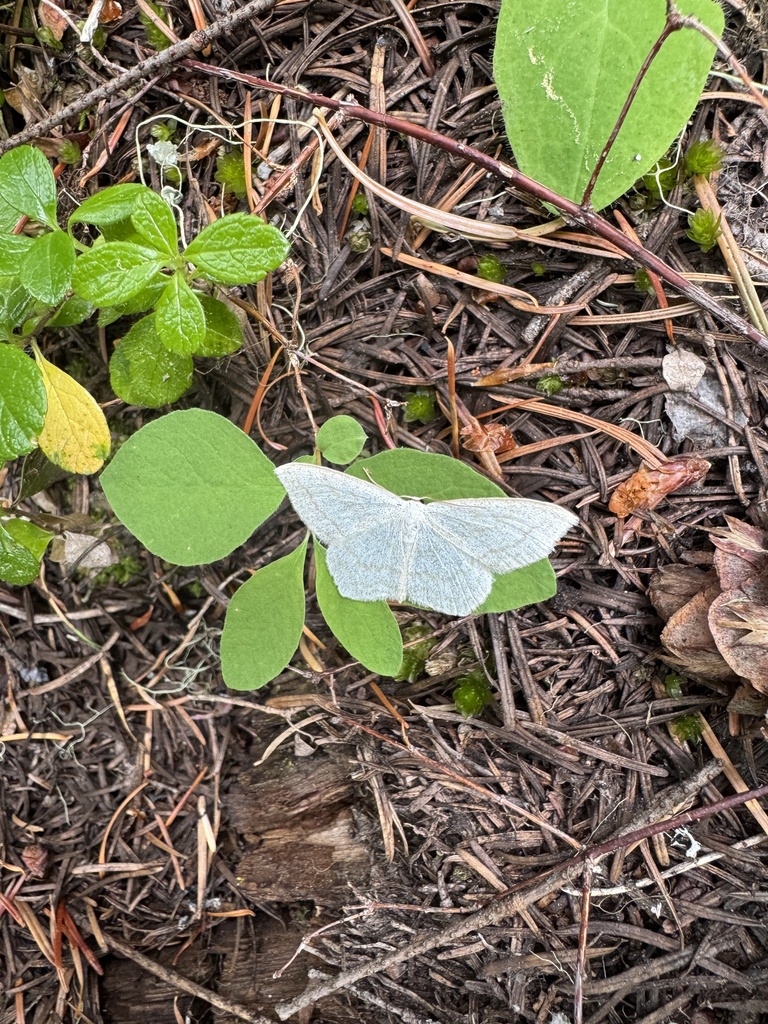
(c) James H. Thomas, some rights reserved (CC BY) · licence
Family: Geometridae · Class: Insecta · Order: Lepidoptera
Scopula junctaria (Simple Wave) is a California animal in the Geometridae family.
The Simple Wave (Scopula junctaria) is a small moth in the family Geometridae, first described by Francis Walker in 1861. This species belongs to a group commonly known as wave moths, characterized by their delicate wing patterns and relatively small size typical of geometrid moths. The Simple Wave displays the subtle coloration and patterning characteristic of its genus. Like other Scopula species, it exhibits relatively plain wing markings with fine transverse lines that give the group its "wave" common name. The forewings and hindwings are typically pale with faint cross-lines and minimal ornamentation compared to more boldly marked geometrid species. This species has a broad North American distribution, occurring throughout Canada and across the northern United States. Its range extends south to Maryland in the east, Arizona in the southwest, and California in the west (iNaturalist). The species appears to be associated with cooler climates and higher latitudes, consistent with its presence across much of Canada and the northern tier of U.S. states. The Simple Wave inhabits diverse habitats across its extensive range, though specific ecological preferences have not been well documented in the scientific literature. Given its wide geographic distribution from coast to coast, the species likely utilizes various plant communities and elevation zones. Like most geometrid moths, adults are primarily nocturnal and attracted to artificial lights. As with many geometrid species, detailed information about the Simple Wave's life cycle, host plant relationships, and specific ecological requirements remains limited in published sources. Geometridae larvae, commonly called inchworms or loopers, are typically herbivorous and feed on a variety of plant species. The distinctive locomotion of geometrid caterpillars, arching their bodies as they move, results from having fewer prolegs than most other moth larvae. Adult Simple Waves likely emerge during specific seasonal periods, though flight times may vary across the species' extensive latitudinal range. The Simple Wave currently lacks formal conservation status at federal or state levels. The species is listed as "GNR - Not Yet Ranked" by NatureServe, indicating insufficient data to assess conservation needs (ButterflyAndMoths.org). This ranking is common among many geometrid moths, where basic biological and ecological information remains poorly documented despite the species being scientifically described over 160 years ago. The widespread distribution of Scopula junctaria across North America suggests the species may be relatively stable, though specific population trends have not been assessed. Like many moth species, the Simple Wave may face challenges from habitat modification, artificial lighting, and climate change, but the extent of these potential impacts remains unknown without dedicated research. Scientific documentation for this species remains limited despite its broad range. The information presented here is based on available taxonomic and distributional sources. If you have additional verified information about this species' biology, distribution, or ecology, please contact us to help improve this species account.
Classification
Class: Insecta · Order: Lepidoptera · Family: Geometridae
Frequently asked questions
How is Scopula junctaria classified?
Scopula junctaria belongs to class Insecta, order Lepidoptera, family Geometridae.
What family does Scopula junctaria belong to?
Scopula junctaria is in the Geometridae family.
What is Scopula junctaria?
The Simple Wave (Scopula junctaria) is a small moth in the family Geometridae, first described by Francis Walker in 1861.
Is Scopula junctaria found in California?
Yes. Scopula junctaria is recorded in California in The California Species Project's catalogue.
Related species
Other California species in the same genus, family, or bioregion.
Data from The California Species Project — 14,000+ California species with verified data from CNPS, CDFW, USFWS, and more.