Scopula luteolata
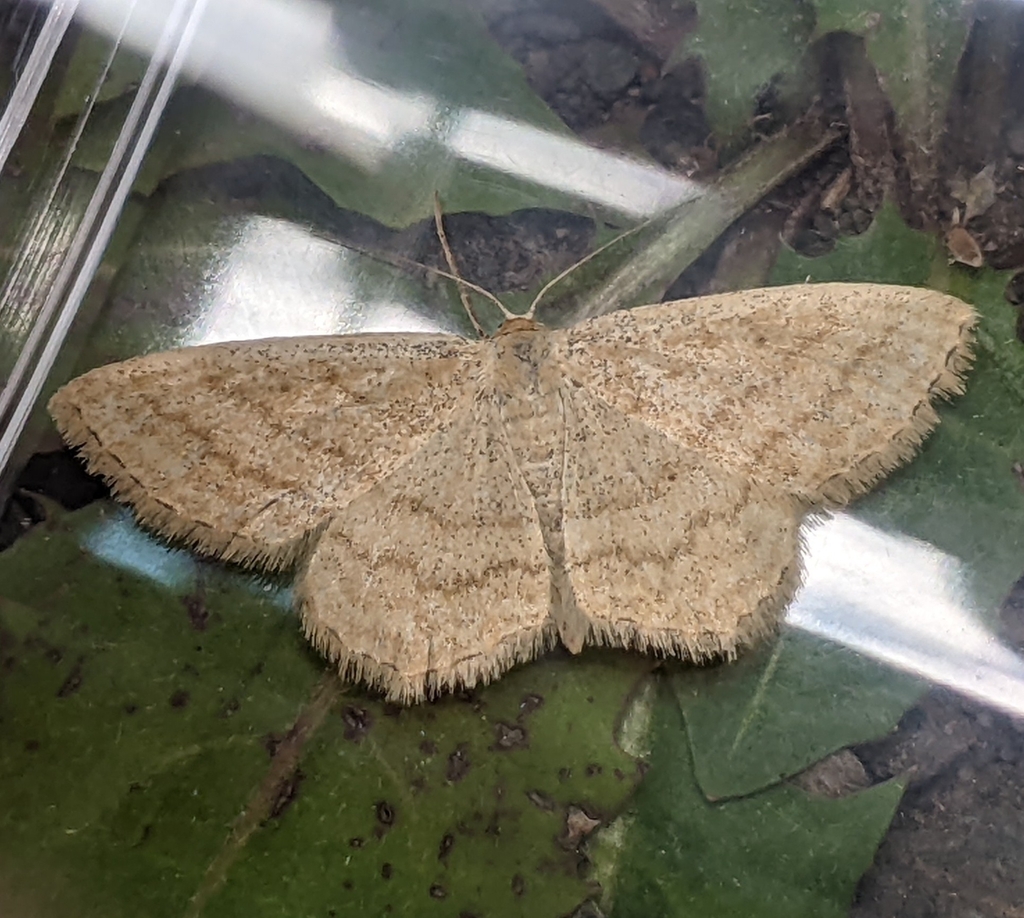
no rights reserved · CC0
Family: Geometridae · Class: Insecta · Order: Lepidoptera
Scopula luteolata is a California animal in the Geometridae family.
Scopula luteolata is a small moth in the family Geometridae, subfamily Sterrhinae. This species belongs to the genus Scopula, which contains 24 species in North America and is characterized by relatively small moths with delicate wing patterns. The generic name Scopula is Latin for "small broom," referring to the brush-like appearance of the male antennae in some species. Specific morphological details for S. luteolata have not been well documented in the available literature. This species occurs across western North America, with a distribution extending from southwestern Canada to the southwestern United States. In Canada, the range includes the mountains of southwestern Alberta north to Banff and west to Vancouver Island, British Columbia. Within the United States, S. luteolata has been recorded from Arizona, California, Montana, Nevada, New Mexico, Oregon, Washington, and Wyoming (iNaturalist). The species appears to have a broad elevational range across montane regions of the western cordillera. Scopula luteolata inhabits montane wooded areas, particularly favoring openings and edges within forested environments. The species is associated with shrubby openings where forest canopy creates a mosaic of light and shade conditions. This habitat preference suggests the moth may require the structural diversity provided by forest edge environments, which typically offer both shelter and diverse plant resources. Elevation ranges and specific microhabitat requirements have not been thoroughly documented. Like other Geometridae moths, S. luteolata likely undergoes complete metamorphosis with egg, larval, pupal, and adult stages. Geometridae larvae are commonly known as inchworms or loopers due to their distinctive crawling motion, moving by arching their bodies. Adult activity periods, larval host plants, and reproductive biology for this species remain poorly documented in the scientific literature. Most geometrid moths are nocturnal, attracted to artificial lights, and adults typically feed on nectar or other liquid nutrients. Scopula luteolata does not appear on federal or state endangered species lists and has no formal conservation status designation. The species' wide geographic distribution across multiple states and provinces suggests stable populations, though specific population trends have not been assessed. As with many montane forest species, potential threats could include habitat fragmentation from logging, development, or climate change impacts on montane ecosystems. However, the species' apparent tolerance for forest edge habitats may provide some resilience to moderate habitat disturbance. Scientific documentation for this species remains limited. The information presented here is based on available sources including iNaturalist observations and BugGuide taxonomic data. If you have additional verified information about this species' biology, distribution, or ecology, please contact us to help improve this species account.
Classification
Class: Insecta · Order: Lepidoptera · Family: Geometridae
Frequently asked questions
How is Scopula luteolata classified?
Scopula luteolata belongs to class Insecta, order Lepidoptera, family Geometridae.
What family does Scopula luteolata belong to?
Scopula luteolata is in the Geometridae family.
What is Scopula luteolata?
Scopula luteolata is a small moth in the family Geometridae, subfamily Sterrhinae.
Is Scopula luteolata found in California?
Yes. Scopula luteolata is recorded in California in The California Species Project's catalogue.
Related species
Other California species in the same genus, family, or bioregion.
Data from The California Species Project — 14,000+ California species with verified data from CNPS, CDFW, USFWS, and more.