Scopula quinquelinearia
Five-lined Wave
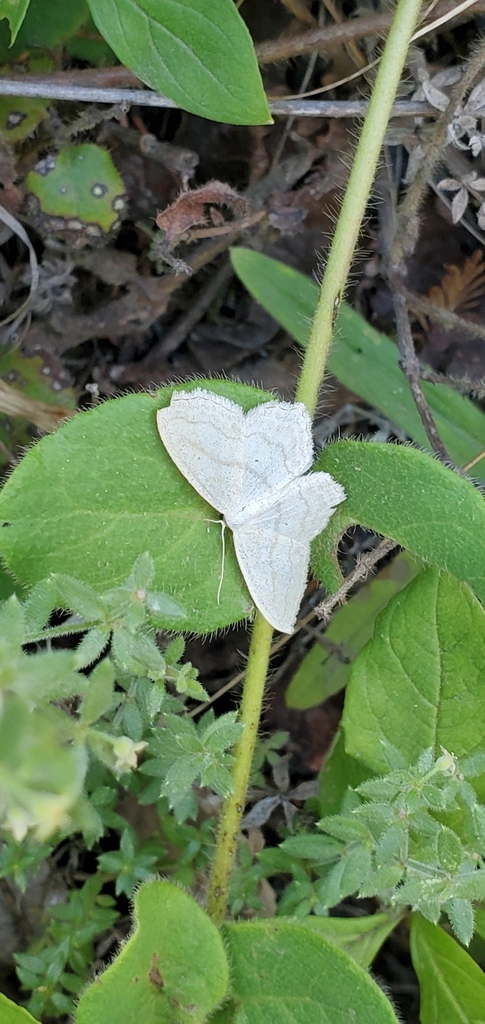
no rights reserved · CC0
Family: Geometridae · Class: Insecta · Order: Lepidoptera
Scopula quinquelinearia (Five-lined Wave) is a California animal in the Geometridae family.
The Five-lined Wave is a small moth in the family Geometridae, commonly known as the inchworms or geometer moths. Adults typically measure 15 to 25 mm (0.6 to 1.0 inches) in wingspan. The forewings display a distinctive pattern of five parallel lines running across the wing surface, giving the species its common name. The ground color is typically pale gray to light brown, with the characteristic transverse lines being darker and more prominent. The hindwings are generally paler with less distinct markings. Scopula quinquelinearia occurs across much of North America, with populations documented from southern Canada through the United States. In California, the species has been recorded from various counties, though specific distributional data remains limited in the scientific literature. The moth appears to have a relatively broad range within suitable habitat types across the state. The species inhabits diverse habitats including mixed forests, woodland edges, and areas with abundant herbaceous vegetation. Adults are typically found in areas with moderate canopy cover that provide both larval host plants and nectar sources for adults. Elevation preferences have not been well documented, though the species appears to occur from near sea level to moderate elevations in mountainous regions. Adult Five-lined Waves are primarily nocturnal and are attracted to artificial lights during nighttime hours. Flight periods vary by location and elevation, but adults are generally active during spring and summer months. The larvae are typical geometrid caterpillars, moving in the characteristic looping motion that gives inchworms their name. Specific host plant relationships have not been comprehensively documented in the literature, though many Scopula species utilize low-growing herbaceous plants and shrubs. The caterpillars likely feed on various plants in the families typically associated with geometrid moths. Reproductive behavior follows the typical pattern for Geometridae, with females laying eggs on or near suitable host plants. The species likely undergoes complete metamorphosis with egg, larval, pupal, and adult stages. Winter survival strategy and the number of generations per year have not been well documented for this particular species. Scopula quinquelinearia does not appear on federal or state listing databases as of December 2025, suggesting stable populations throughout its range. No specific conservation concerns have been identified for this species, though like many moths, it may be affected by habitat loss and light pollution. The species' apparent tolerance for various habitat types may contribute to its persistence across its range. Detailed population studies and ecological research would enhance understanding of this moth's conservation status and habitat requirements. Scientific documentation for this species remains limited compared to more extensively studied moth groups. The information presented here represents available knowledge from taxonomic and field guides. Additional research on host plant relationships, population dynamics, and detailed ecological requirements would contribute significantly to our understanding of the Five-lined Wave's biology and conservation needs.
Classification
Class: Insecta · Order: Lepidoptera · Family: Geometridae
Frequently asked questions
How is Scopula quinquelinearia classified?
Scopula quinquelinearia belongs to class Insecta, order Lepidoptera, family Geometridae.
What family does Scopula quinquelinearia belong to?
Scopula quinquelinearia is in the Geometridae family.
What is Scopula quinquelinearia?
The Five-lined Wave is a small moth in the family Geometridae, commonly known as the inchworms or geometer moths.
Is Scopula quinquelinearia found in California?
Yes. Scopula quinquelinearia is recorded in California in The California Species Project's catalogue.
Related species
Other California species in the same genus, family, or bioregion.
Data from The California Species Project — 14,000+ California species with verified data from CNPS, CDFW, USFWS, and more.