Scorpaenichthys marmoratus
Cabezon
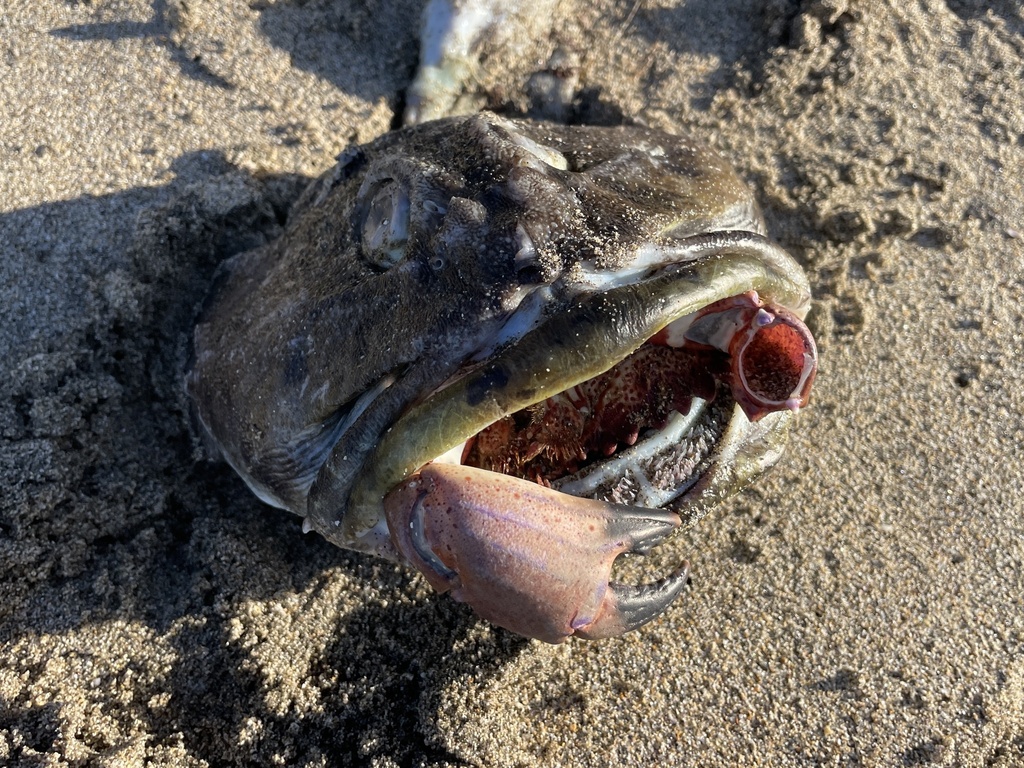
(c) Cricket Raspet, some rights reserved (CC BY) · licence
Family: Cottidae · Class: Actinopterygii · Order: Perciformes
Scorpaenichthys marmoratus (Cabezon) is a California animal in the Cottidae family.
The cabezon is a large, robust sculpin and the largest member of the cottid family found along the Pacific Coast. Adults can reach lengths up to 99 centimeters (39 inches) and weights exceeding 11 kilograms (25 pounds), though most individuals are considerably smaller. The species exhibits pronounced sexual dimorphism, with males developing a prominent fleshy crest on the head during breeding season. Coloration varies widely, ranging from brown and olive to reddish-purple with mottled patterns that provide effective camouflage against rocky substrates. The large, broad head features prominent eyes and a wide mouth equipped with numerous small teeth. Cabezon occur along the Pacific Coast from southeastern Alaska to Baja California, Mexico. In California waters, they are found from the intertidal zone to depths of approximately 76 meters (250 feet). The species shows strong site fidelity, with individuals often remaining in the same general area for extended periods. According to the California Department of Fish and Wildlife Marine Species Portal, they are commonly found near kelp beds, jetties, isolated rocky reefs, and pinnacles. This species inhabits rocky reef environments and kelp forests, showing a strong preference for areas with complex bottom topography that provides shelter and ambush opportunities. Adults are typically found on hard substrates including rocky reefs, boulder fields, and artificial structures such as jetties and piers. Juveniles may occupy tide pools and shallow nearshore areas before moving to deeper waters as they mature. The species demonstrates adaptability to various salinity levels and can occasionally be found in estuarine environments. Cabezon are opportunistic predators that employ a sit-and-wait hunting strategy. Their diet consists primarily of crabs, mollusks, fish, and other benthic invertebrates. During winter months, adults move to deeper waters for spawning. Females deposit large masses of eggs in rocky crevices or on kelp fronds, with individual egg masses containing up to 100,000 eggs. Males guard the nest sites aggressively until the eggs hatch, typically after 6-10 weeks depending on water temperature. The species exhibits relatively slow growth rates and late maturity, characteristics that make populations vulnerable to overfishing pressure. Currently, cabezon are not federally or state listed as threatened or endangered species. However, the species has been identified as requiring urgent scientific attention due to gaps in biological knowledge, particularly regarding age and growth parameters in California waters. Historical recreational fisheries targeted this species heavily, and while populations appear stable, the California Department of Fish and Wildlife has implemented size and bag limits to ensure sustainable harvest. The Marine Life Management Act requires continued monitoring and potential development of fishery management plans for important recreational species including cabezon. Research priorities include age validation studies and population assessments to support evidence-based management decisions.
Classification
Class: Actinopterygii · Order: Perciformes · Family: Cottidae
Frequently asked questions
How is Scorpaenichthys marmoratus classified?
Scorpaenichthys marmoratus belongs to class Actinopterygii, order Perciformes, family Cottidae.
What family does Scorpaenichthys marmoratus belong to?
Scorpaenichthys marmoratus is in the Cottidae family.
What is Scorpaenichthys marmoratus?
The cabezon is a large, robust sculpin and the largest member of the cottid family found along the Pacific Coast.
Is Scorpaenichthys marmoratus found in California?
Yes. Scorpaenichthys marmoratus is recorded in California in The California Species Project's catalogue.
Related species
Other California species in the same genus, family, or bioregion.
Data from The California Species Project — 14,000+ California species with verified data from CNPS, CDFW, USFWS, and more.