Scotogramma ptilodonta
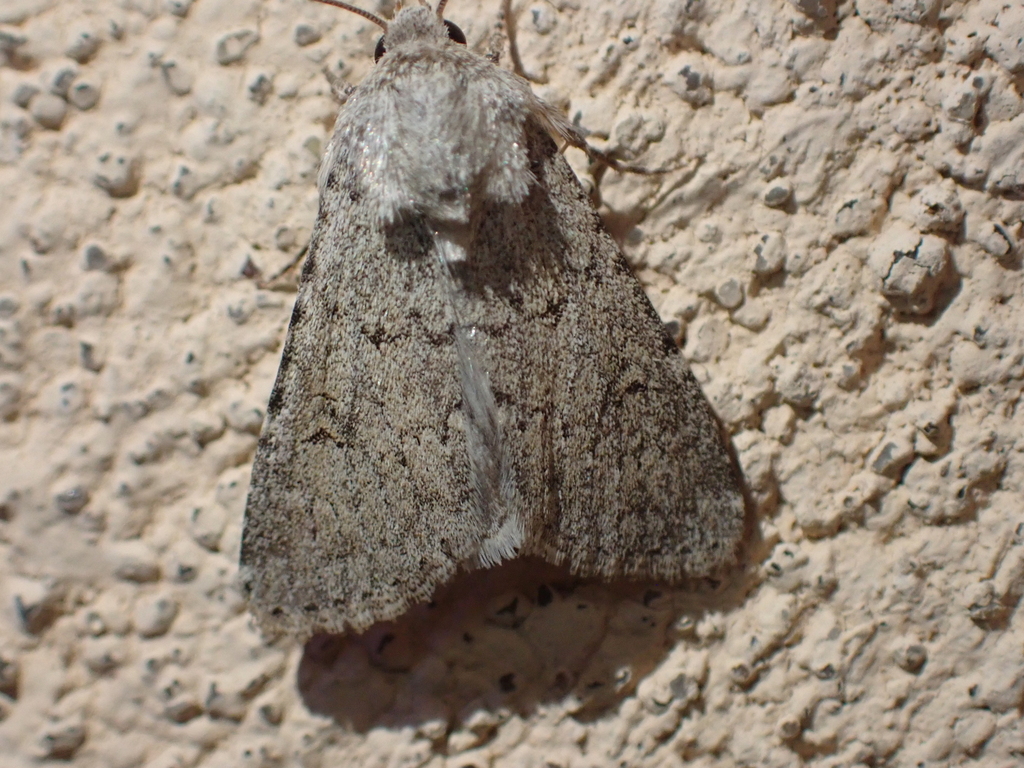
no rights reserved · CC0
Family: Noctuidae · Class: Insecta · Order: Lepidoptera
Scotogramma ptilodonta is a California animal in the Noctuidae family.
Scotogramma ptilodonta is a moth species in the family Noctuidae, commonly known as owlet moths or cutworm moths. This nocturnal lepidopteran belongs to a diverse family containing over 11,000 described species worldwide. The genus Scotogramma comprises medium-sized moths characterized by cryptic coloration and nocturnal habits typical of the Noctuidae family. Limited morphological data is available for S. ptilodonta specifically. Like other Scotogramma species, adults likely measure 25 to 35 mm (1.0 to 1.4 inches) in forewing length. The forewings typically display muted earth tones including browns, grays, and tans that provide effective camouflage against bark and leaf litter. Wing patterns often include subtle lines, spots, or geometric markings characteristic of noctuid moths. The hindwings are generally paler than the forewings, ranging from whitish to light brown. The species' distribution and range remain poorly documented in current literature. Many Scotogramma species have restricted distributions, particularly those found in western North America. Without comprehensive surveys, the full extent of S. ptilodonta's range cannot be definitively established. The species may be endemic to specific regions of California or the broader western United States, following patterns observed in related taxa. Habitat preferences for S. ptilodonta are not well-documented in available sources. Other Scotogramma species typically inhabit diverse terrestrial environments including grasslands, shrublands, and open woodlands. Adults are attracted to artificial lights and may be found in areas with mixed vegetation that supports their larval development. Elevation ranges and specific microhabitat requirements remain unknown for this species. Like other noctuids, S. ptilodonta likely exhibits typical moth life cycle patterns with complete metamorphosis. Adults are presumably nocturnal, active during warmer months when temperatures support flight activity. Mating behaviors probably involve chemical communication through pheromones, with females releasing species-specific compounds to attract males. Larval stages likely feed on herbaceous plants, though specific host plant relationships have not been documented. Many Scotogramma larvae are generalist feeders, consuming various grasses and forbs during their development. The conservation status of S. ptilodonta is not established through formal assessment by state or federal agencies. No listing status has been assigned under the Endangered Species Act or California Endangered Species Act as of December 2025. The species' conservation needs cannot be evaluated without basic data on population size, distribution, and ecological requirements. This represents a significant knowledge gap common among many smaller moth species that may face threats from habitat loss, climate change, or other anthropogenic factors without scientific recognition. Further research is needed to establish fundamental biological and ecological characteristics of S. ptilodonta, including distribution mapping, life history studies, and population assessments to inform potential conservation considerations.
Classification
Class: Insecta · Order: Lepidoptera · Family: Noctuidae
Frequently asked questions
How is Scotogramma ptilodonta classified?
Scotogramma ptilodonta belongs to class Insecta, order Lepidoptera, family Noctuidae.
What family does Scotogramma ptilodonta belong to?
Scotogramma ptilodonta is in the Noctuidae family.
What is Scotogramma ptilodonta?
Scotogramma ptilodonta is a moth species in the family Noctuidae, commonly known as owlet moths or cutworm moths.
Is Scotogramma ptilodonta found in California?
Yes. Scotogramma ptilodonta is recorded in California in The California Species Project's catalogue.
Related species
Other California species in the same genus, family, or bioregion.
Data from The California Species Project — 14,000+ California species with verified data from CNPS, CDFW, USFWS, and more.