Scotogramma yakima
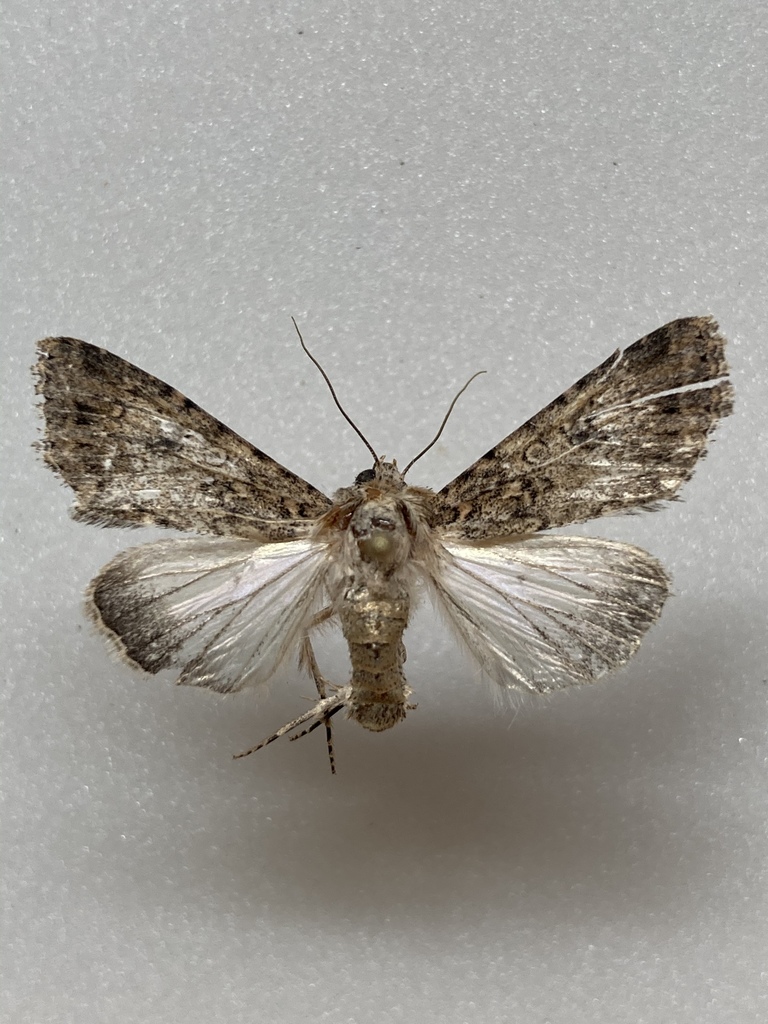
(c) Kevin Salls, some rights reserved (CC BY) · licence
Family: Noctuidae · Class: Insecta · Order: Lepidoptera
Scotogramma yakima is a California animal in the Noctuidae family.
Scotogramma yakima is a moth species in the family Noctuidae, commonly known as owlet moths or cutworm moths. This species belongs to a genus of medium-sized moths that are primarily distributed across western North America. Limited taxonomic and biological information is available for this particular species in the scientific literature. The physical characteristics of S. yakima follow the general pattern of Scotogramma moths, which typically measure 35 to 45 mm in wingspan. Members of this genus generally display subdued coloration with forewings that range from grayish-brown to brownish-gray, often with darker markings or banding patterns. The hindwings are typically lighter, appearing whitish to pale gray. Specific morphological details distinguishing S. yakima from closely related species would require examination of genitalic structures and wing pattern analysis by taxonomic specialists. The species appears to have a restricted distribution, with the specific epithet 'yakima' suggesting a connection to the Yakima region of Washington state or the broader Columbia River basin. However, comprehensive range data for S. yakima is not well-documented in accessible databases. The species likely occurs in arid or semi-arid environments characteristic of the inland Pacific Northwest, potentially extending into portions of northern California, Oregon, and southern British Columbia based on habitat similarity and the known distributions of related Scotogramma species. Habitat preferences for S. yakima are not specifically documented, but other Scotogramma species typically inhabit shrublands, grasslands, and open woodland areas in mountainous or hilly terrain. These moths generally prefer areas with scattered vegetation and exposed soil or rocky substrates. Elevation ranges and specific plant community associations remain undetermined for this species. Like other noctuids, S. yakima likely exhibits nocturnal activity patterns, with adults attracted to artificial lights during their flight period. The timing of adult emergence and flight period duration are not well-established for this species. Larval biology and host plant relationships are unknown, though related species often feed on herbaceous plants including grasses and forbs. The larval stage likely overwinters, with pupation occurring in soil chambers. The conservation status of Scotogramma yakima is not formally assessed at federal or state levels. The species does not appear on current endangered species lists or conservation priority rankings. However, the apparent rarity of this moth in collections and the limited distributional information suggest it may have a naturally restricted range or low population densities. Climate change impacts on semi-arid ecosystems and habitat modification through agricultural development or urban expansion could potentially affect populations, though specific threats remain unidentified due to insufficient biological and ecological data. Further taxonomic study and field surveys are needed to clarify the species' status, distribution, and conservation needs.
Classification
Class: Insecta · Order: Lepidoptera · Family: Noctuidae
Frequently asked questions
How is Scotogramma yakima classified?
Scotogramma yakima belongs to class Insecta, order Lepidoptera, family Noctuidae.
What family does Scotogramma yakima belong to?
Scotogramma yakima is in the Noctuidae family.
What is Scotogramma yakima?
Scotogramma yakima is a moth species in the family Noctuidae, commonly known as owlet moths or cutworm moths.
Is Scotogramma yakima found in California?
Yes. Scotogramma yakima is recorded in California in The California Species Project's catalogue.
Related species
Other California species in the same genus, family, or bioregion.
Data from The California Species Project — 14,000+ California species with verified data from CNPS, CDFW, USFWS, and more.