Scotophaeus blackwalli
Mouse Spider
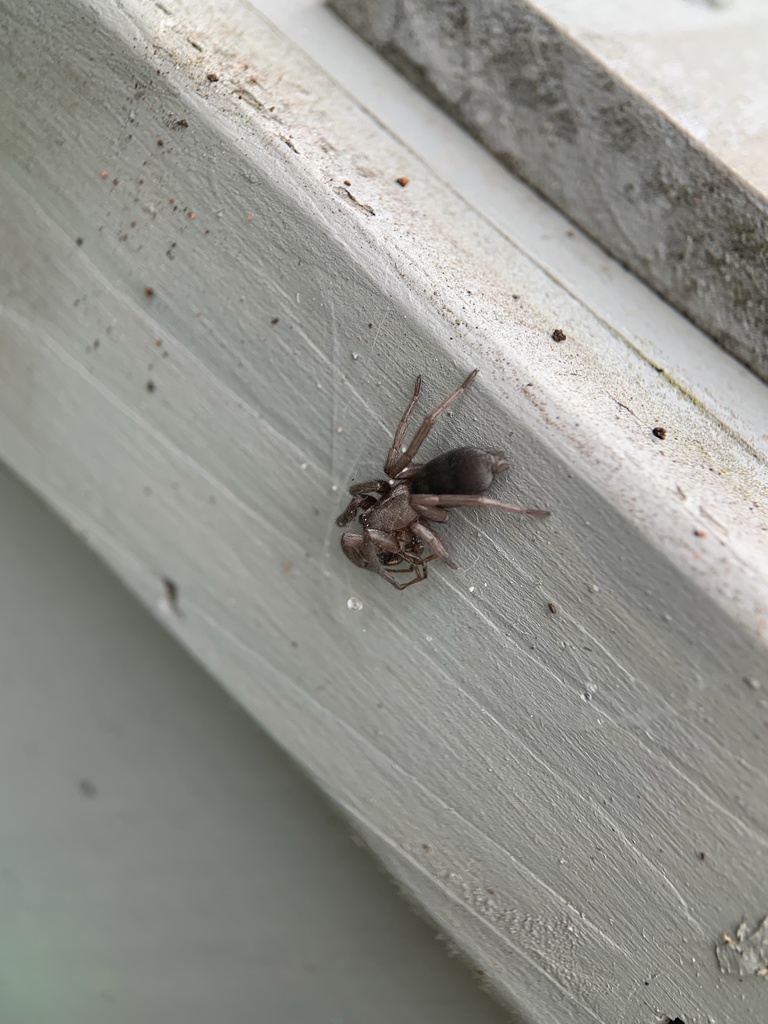
(c) Jan Sheppard, some rights reserved (CC BY) · licence
Family: Gnaphosidae · Class: Arachnida · Order: Araneae
Scotophaeus blackwalli (Mouse Spider) is a California animal in the Gnaphosidae family.
The mouse spider (Scotophaeus blackwalli) is a medium-sized ground spider in the family Gnaphosidae. This species displays distinctive orange-brown coloration covered with grey hairs, giving the abdomen a characteristic silky-grey appearance that is reminiscent of mouse fur, hence its common name (BugGuide 2024). The overall body structure is typical of gnaphosid spiders, though other species in this family with faint or absent markings can appear remarkably similar, making field identification challenging. Scotophaeus blackwalli is native to Europe but has been introduced to North America. According to available records, this species occurs along the Pacific Coast of the United States, where it has established populations around human settlements (BugGuide 2024). The extent of its distribution in California and specific counties of occurrence have not been comprehensively documented in the available literature. This species exhibits synanthropic habitat preferences in North America, meaning it is closely associated with human-modified environments (BugGuide 2024). The mouse spider is typically found around buildings and other structures, suggesting it thrives in urban and suburban settings rather than natural habitats. Specific microhabitat requirements, elevation ranges, and substrate preferences have not been well documented for this introduced population. As a member of the Gnaphosidae family, the mouse spider is presumed to be a nocturnal hunter that actively pursues prey rather than constructing webs for capture. Ground spiders in this family typically feed on small arthropods including insects and other spiders. However, specific information about the dietary preferences, reproductive behavior, seasonal activity patterns, and life cycle of S. blackwalli in North American populations remains largely undocumented in the scientific literature. The mouse spider has no federal or state conservation listing status and appears to be a stable introduced species along the Pacific Coast. The U.S. Fish and Wildlife Service taxonomic database includes S. blackwalli with three recognized subspecies globally, though none appear to have special conservation focus (USFWS 2024). The species' association with human-modified environments may actually facilitate its continued establishment and spread in suitable climatic zones. Unlike many native arachnid species that face habitat loss pressures, this introduced spider appears to benefit from urbanization and building construction that provides favorable microhabitats. Scientific documentation for this species remains limited despite its apparent establishment in North America. The information presented here synthesizes available observations from taxonomic databases and community identification guides. Detailed ecological studies addressing population dynamics, native prey interactions, and potential impacts on native spider communities would enhance understanding of this introduced species' role in California ecosystems.
Classification
Class: Arachnida · Order: Araneae · Family: Gnaphosidae
Frequently asked questions
How is Scotophaeus blackwalli classified?
Scotophaeus blackwalli belongs to class Arachnida, order Araneae, family Gnaphosidae.
What family does Scotophaeus blackwalli belong to?
Scotophaeus blackwalli is in the Gnaphosidae family.
What is Scotophaeus blackwalli?
The mouse spider (Scotophaeus blackwalli) is a medium-sized ground spider in the family Gnaphosidae.
Is Scotophaeus blackwalli found in California?
Yes. Scotophaeus blackwalli is recorded in California in The California Species Project's catalogue.
Related species
Other California species in the same genus, family, or bioregion.
Data from The California Species Project — 14,000+ California species with verified data from CNPS, CDFW, USFWS, and more.