Scudderia mexicana
Mexican Bush Katydid
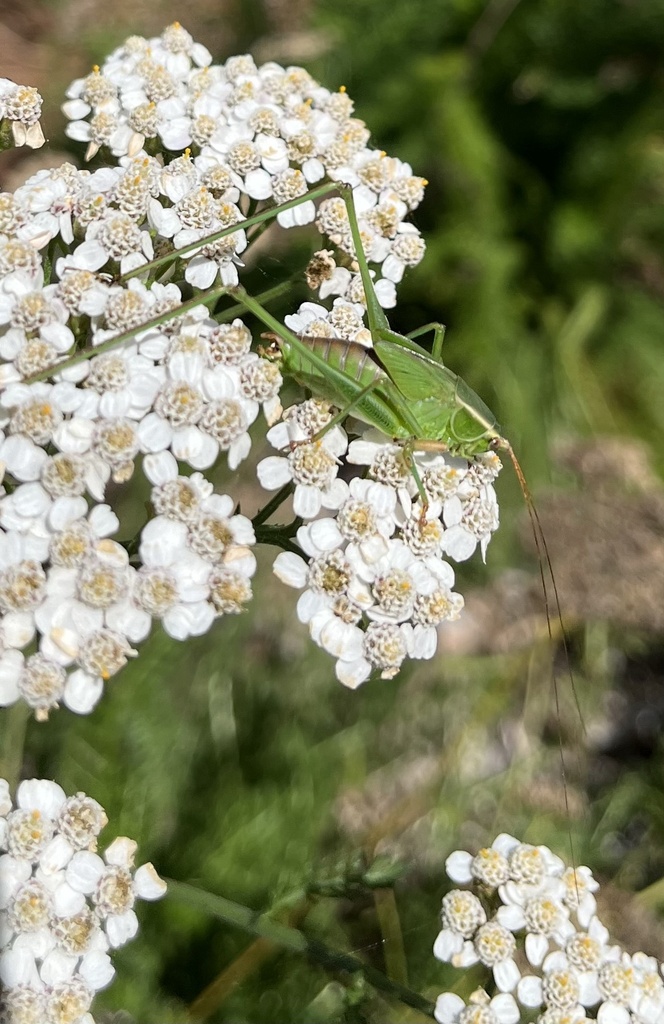
(c) Rachel Allingham, some rights reserved (CC BY) · licence
Family: Tettigoniidae · Class: Insecta · Order: Orthoptera
Scudderia mexicana (Mexican Bush Katydid) is a California animal in the Tettigoniidae family.
The Mexican Bush Katydid is a medium-sized orthopteran insect measuring approximately 30 mm (1.2 inches) in body length, with narrow, straight wings and characteristically long legs typical of the genus Scudderia (BugGuide). Males display a distinctive large, inflated supra-anal plate with lobes forming a deep U-shaped fork, which serves as a key diagnostic feature for species identification. The body coloration is generally green, providing effective camouflage among vegetation. Scudderia mexicana occurs primarily in southern California, southern Arizona, and parts of west Texas, where it replaces the more widespread S. furcata (BugGuide). In California, documented records include San Benito County, where specimens have been collected in live oak and chaparral habitats (BugGuide). The species represents the southwestern extent of the Scudderia genus distribution in North America. This katydid inhabits deciduous woodland, shrubland, and chaparral environments, showing a preference for areas with mixed vegetation structure. Documented habitat associations include live oak woodlands and chaparral communities, suggesting adaptation to Mediterranean-type climates characteristic of southern California. Like other Scudderia species, S. mexicana likely favors areas with dense herbaceous understory and shrub cover that provide both food resources and protection from predators. Mexican Bush Katydids are nocturnal insects, as evidenced by their attraction to artificial lights during nighttime hours (BugGuide). Adults are active during fall months, with October records documented in California. As members of the subfamily Phaneropterinae, they are presumed to be herbivorous, feeding on leaves and soft plant tissues, though specific host plant preferences have not been well documented in the literature. Like other bush katydids, males likely produce species-specific acoustic signals for mate attraction, though the specific calling patterns of S. mexicana have not been described in detail. The conservation status of Scudderia mexicana has not been formally assessed at federal or state levels. The species appears to have a naturally restricted range compared to its more widespread relatives, but current population trends and potential threats have not been systematically evaluated. Habitat loss due to urbanization and agricultural conversion in southern California and southwestern Arizona may pose localized threats to populations, particularly given the species' apparent association with native chaparral and woodland communities. Climate change impacts on Mediterranean-type ecosystems could also affect habitat suitability, though specific vulnerability assessments have not been conducted. The species' documented presence in relatively undisturbed habitats suggests it may be sensitive to habitat fragmentation and degradation. Detailed ecological studies of this species remain limited. The information presented here synthesizes available observations from taxonomic databases and community science reports. Additional research on host plant relationships, reproductive biology, and population status would enhance understanding of this southwestern katydid species.
Classification
Class: Insecta · Order: Orthoptera · Family: Tettigoniidae
Frequently asked questions
How is Scudderia mexicana classified?
Scudderia mexicana belongs to class Insecta, order Orthoptera, family Tettigoniidae.
What family does Scudderia mexicana belong to?
Scudderia mexicana is in the Tettigoniidae family.
What is Scudderia mexicana?
The Mexican Bush Katydid is a medium-sized orthopteran insect measuring approximately 30 mm (1.2 inches) in body length, with narrow, straight wings and characteristically long legs typical of the genus Scudderia (BugGuide).
Is Scudderia mexicana found in California?
Yes. Scudderia mexicana is recorded in California in The California Species Project's catalogue.
Related species
Other California species in the same genus, family, or bioregion.
Data from The California Species Project — 14,000+ California species with verified data from CNPS, CDFW, USFWS, and more.