Scyphophorus acupunctatus
Sisal Weevil
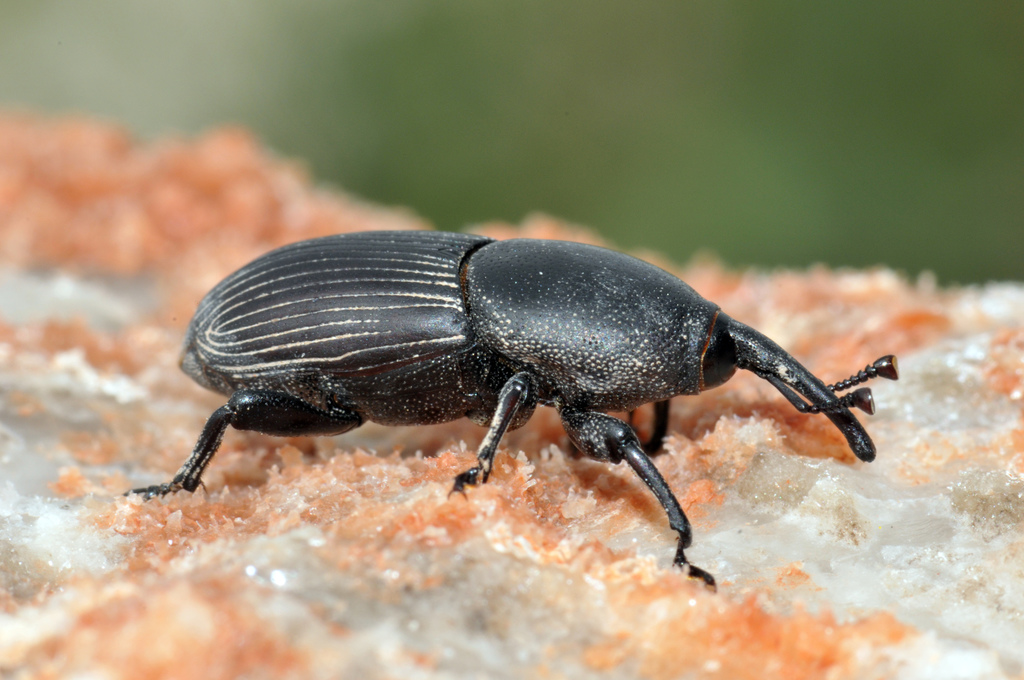
(c) Tom Kennedy, some rights reserved (CC BY) · licence
Family: Curculionidae · Class: Insecta · Order: Coleoptera
Scyphophorus acupunctatus (Sisal Weevil) is a California animal in the Curculionidae family.
The sisal weevil (Scyphophorus acupunctatus) is a moderate-sized weevil measuring 8 to 19 millimeters (0.31 to 0.75 inches) in length. The species name 'acupunctatus' refers to the pin-pricked appearance of the pronotum's punctation (BugGuide). Adults are characterized by their distinctive snout and robust body typical of the Curculionidae family. The species belongs to the subfamily Dryophthorinae, tribe Rhynchophorini, and is part of the subtribe Sphenophorina. Scyphophorus acupunctatus has an extensive range spanning the southwestern United States from California to Wyoming, Nebraska, and Texas, extending through Florida and continuing into northern South America and the West Indies (BugGuide). The species originated in the New World but has since spread globally to many regions where agave species are cultivated. In the United States, it occurs throughout the southern states and has been documented in various Caribbean territories. The sisal weevil inhabits areas where its host plants, primarily Agave species, are present. The species shows particular association with cultivated and wild agave populations, including sisal hemp (Agave sisalana) and other economically important agave species. It occurs across a range of elevations and habitat types where suitable host plants grow, from coastal areas to inland desert and semi-arid regions. Adult sisal weevils are specialized feeders on agave plants, with larvae feeding on the starchy base of the plant (USFWS Federal Register 2013). The feeding activity of larvae creates wounds that increase the risk of secondary pathogen infections, including viruses and fungi, which often result in plant death. This feeding behavior makes the species a significant pest of commercial agave crops, particularly sisal production. The weevil's life cycle is closely tied to its host plants, with females laying eggs in agave tissues and larvae developing within the plant structure. The sisal weevil is not federally or state-listed as a threatened or endangered species. However, it plays a significant ecological role as both a natural component of agave ecosystems and as an agricultural pest. The species has been identified as a threat to several endangered agave species, including Agave eggersiana in Puerto Rico, where weevil predation contributes to population decline (USFWS Federal Register 2013). The weevil's impact on native agave populations is of particular concern in areas where rare agave species occur, as adult and larval feeding can compromise natural recruitment and recovery efforts. Management of sisal weevil populations is primarily focused on agricultural settings where economic losses occur, rather than conservation concerns for the weevil itself. The species' ability to spread globally through human commerce has established it as an invasive pest in many regions outside its native range, requiring ongoing monitoring and control efforts in agave-growing areas worldwide.
Classification
Class: Insecta · Order: Coleoptera · Family: Curculionidae
Frequently asked questions
How is Scyphophorus acupunctatus classified?
Scyphophorus acupunctatus belongs to class Insecta, order Coleoptera, family Curculionidae.
What family does Scyphophorus acupunctatus belong to?
Scyphophorus acupunctatus is in the Curculionidae family.
What is Scyphophorus acupunctatus?
The sisal weevil (Scyphophorus acupunctatus) is a moderate-sized weevil measuring 8 to 19 millimeters (0.31 to 0.75 inches) in length.
Is Scyphophorus acupunctatus found in California?
Yes. Scyphophorus acupunctatus is recorded in California in The California Species Project's catalogue.
Related species
Other California species in the same genus, family, or bioregion.
Data from The California Species Project — 14,000+ California species with verified data from CNPS, CDFW, USFWS, and more.