Scyphophorus yuccae
Yucca Weevil
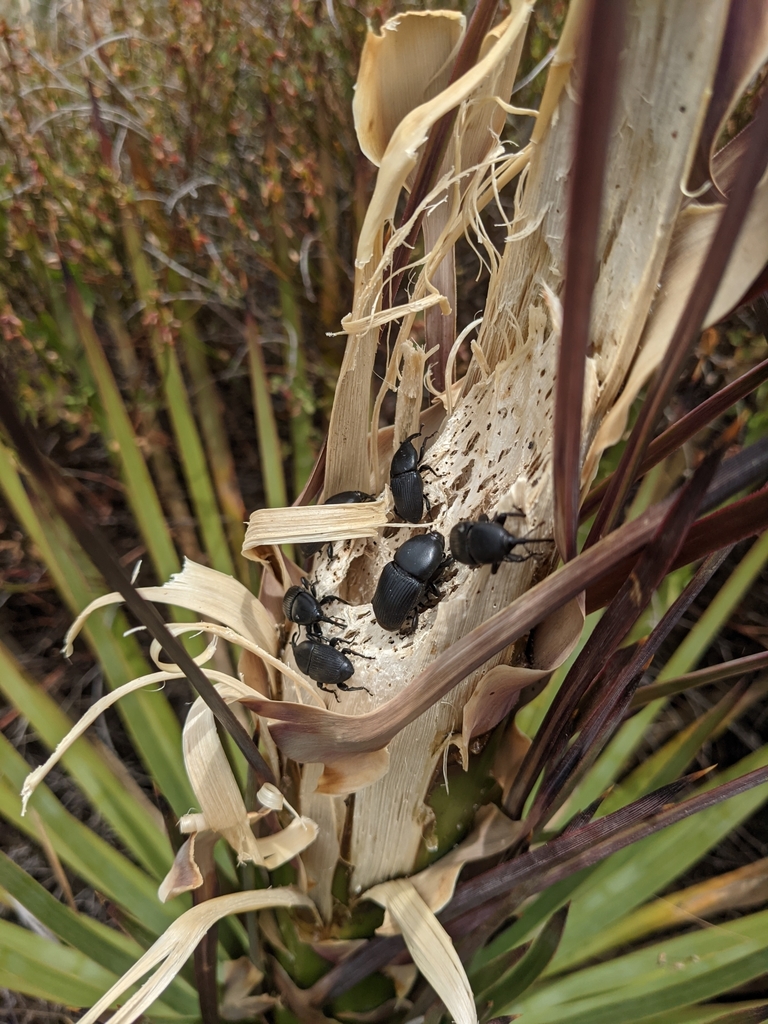
no rights reserved · CC0
Family: Curculionidae · Class: Insecta · Order: Coleoptera
Scyphophorus yuccae (Yucca Weevil) is a California animal in the Curculionidae family.
The yucca weevil (Scyphophorus yuccae) is a member of the beetle family Curculionidae that has received conservation attention across multiple states. This weevil belongs to a genus specialized on yucca plants and related desert vegetation. Physical characteristics and detailed morphological descriptions for this species remain poorly documented in the scientific literature. The species occurs across several western and southwestern United States regions, with documented populations extending from California eastward. According to BugGuide, the yucca weevil has been identified as a Species of Greatest Conservation Need in multiple states including Arkansas, New York, and Louisiana, indicating its conservation significance extends beyond California. The distribution appears tied to the presence of suitable yucca host plants and associated desert ecosystems. Yucca weevils inhabit desert and semi-arid environments where their host plants occur. The genus Scyphophorus is associated with yucca species and other members of the Agavaceae family. In California, suitable habitat likely includes areas supporting Mojave yucca (Yucca schidigera) and Joshua trees (Yucca brevifolia), which are prominent components of Mojave Desert ecosystems. These habitats typically feature well-drained soils and low annual precipitation characteristic of southwestern desert regions. As members of the weevil family, yucca weevils likely have specialized feeding relationships with their host plants. Adult weevils typically feed on plant tissues, while larvae may develop within plant structures such as stems, roots, or seed pods. The specific life history, reproductive biology, and seasonal activity patterns of S. yuccae have not been well documented in available literature. Like other desert-adapted insects, the species likely exhibits adaptations to survive extreme temperature fluctuations and limited water availability. The conservation status of S. yuccae reflects concerns about population stability and habitat threats. Multiple states have designated this species as requiring conservation attention through their State Wildlife Action Plans, suggesting population declines or vulnerability factors warrant monitoring. Desert ecosystems face increasing pressure from urbanization, climate change, and habitat fragmentation, which may impact specialized species like yucca weevils. The U.S. Fish and Wildlife Service maintains taxonomic records for the species (TSN: 618972) but no federal listing status has been established. Specific population numbers, detailed ecological requirements, and primary threat factors for S. yuccae remain inadequately studied. The designation as a Species of Greatest Conservation Need in multiple states indicates biologists recognize the need for additional research and monitoring. Climate change impacts on desert ecosystems, including altered precipitation patterns and increased temperatures, may pose long-term challenges for this and other desert-specialized insects. Scientific documentation for this species remains limited. The information presented here synthesizes available sources including U.S. Fish and Wildlife Service taxonomic databases and BugGuide conservation status reports. Additional field studies are needed to better understand the species' distribution, habitat requirements, life history, and conservation needs. Verified observations and ecological data from qualified researchers would significantly enhance understanding of this desert weevil species.
Classification
Class: Insecta · Order: Coleoptera · Family: Curculionidae
Frequently asked questions
How is Scyphophorus yuccae classified?
Scyphophorus yuccae belongs to class Insecta, order Coleoptera, family Curculionidae.
What family does Scyphophorus yuccae belong to?
Scyphophorus yuccae is in the Curculionidae family.
What is Scyphophorus yuccae?
The yucca weevil (Scyphophorus yuccae) is a member of the beetle family Curculionidae that has received conservation attention across multiple states.
Is Scyphophorus yuccae found in California?
Yes. Scyphophorus yuccae is recorded in California in The California Species Project's catalogue.
Related species
Other California species in the same genus, family, or bioregion.
Data from The California Species Project — 14,000+ California species with verified data from CNPS, CDFW, USFWS, and more.