Sebastes auriculatus
Brown Rockfish
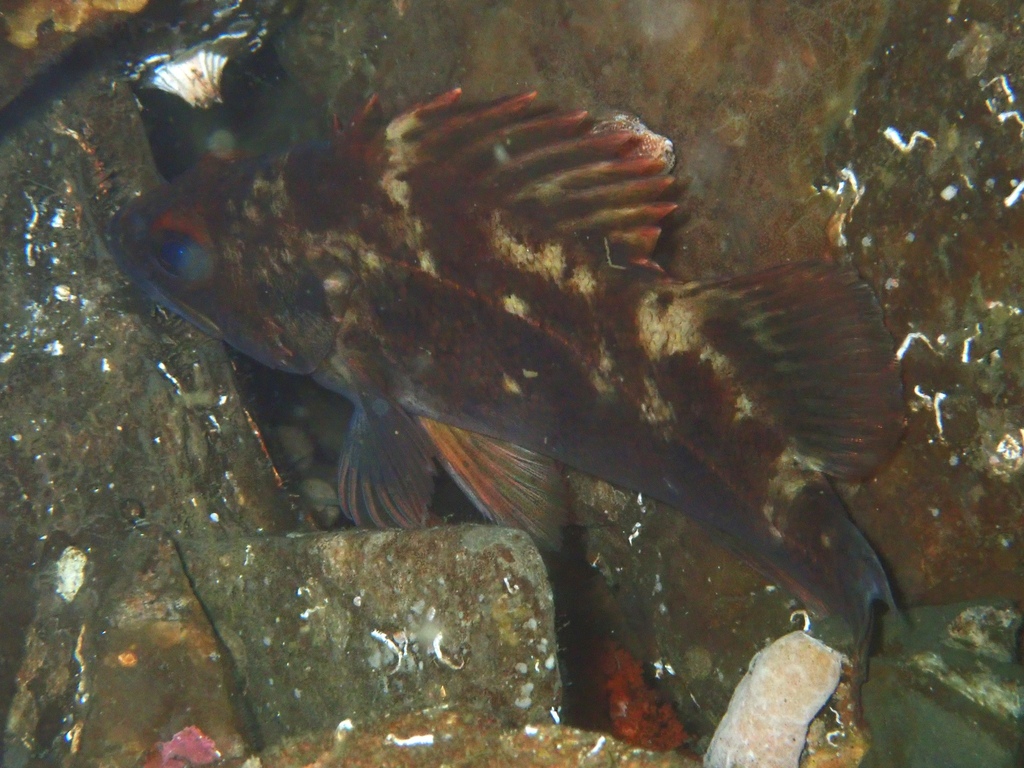
(c) dpcmiller, some rights reserved (CC BY) · licence
Family: Scorpaenidae · Class: Actinopterygii · Order: Scorpaeniformes
Sebastes auriculatus (Brown Rockfish) is a California animal in the Scorpaenidae family.
The brown rockfish (Sebastes auriculatus) is a medium-sized marine fish in the family Scorpaenidae, characterized by its mottled brown coloration and robust body typical of rockfish species. Adults commonly reach 30 to 40 cm (12 to 16 inches) in length, with some individuals growing up to 56 cm (22 inches). The species displays variable brown to reddish-brown coloration with darker mottling and lighter patches, providing effective camouflage against rocky substrates. Like other rockfish, brown rockfish possess venomous spines in their dorsal, anal, and pelvic fins that can cause painful wounds. Brown rockfish occur along the Pacific Coast from southeastern Alaska to central Baja California, Mexico. In California, they are found along the entire coastline, from the Oregon border south to Point Conception, with populations extending around the Channel Islands. The species is most abundant in central and northern California waters, becoming less common in southern California. This species inhabits rocky reefs, kelp beds, and hard-bottom areas from nearshore waters to depths of 294 meters (964 feet), though they are typically found shallower than 53 meters (175 feet). Brown rockfish show strong site fidelity, often remaining in the same general area for extended periods. Juveniles frequently occur in shallow rocky intertidal and subtidal zones, while adults prefer deeper rocky reefs and kelp forest environments. They commonly associate with complex bottom habitats that provide shelter and foraging opportunities. Brown rockfish are opportunistic predators that feed primarily on small fish, crustaceans, and marine worms. Their diet includes anchovies, juvenile rockfish, mysid shrimp, amphipods, and polychaete worms. The species exhibits internal fertilization and gives birth to live young, a characteristic shared with other Sebastes species. Mating occurs in winter, with females releasing larvae after a gestation period of approximately two months. Larval rockfish remain in the plankton for several weeks before settling to rocky bottom habitats. Brown rockfish are relatively slow-growing and long-lived, with some individuals reaching ages exceeding 20 years. Brown rockfish are not federally or state listed under endangered species legislation as of December 2025. However, like many rockfish species, they face challenges from fishing pressure, habitat degradation, and climate change effects. The species is managed as part of California's groundfish complex, with regulations including size limits, bag limits, and seasonal closures. Marine protected areas along the California coast, including areas near the Russian River and around the Channel Islands, provide important refuge habitat for brown rockfish populations. Commercial and recreational fishing data indicate variable population trends, with catches declining from peak levels in the 1980s but remaining relatively stable in recent decades. The species' slow growth and late maturity make populations vulnerable to overexploitation, emphasizing the importance of continued monitoring and management.
Classification
Class: Actinopterygii · Order: Scorpaeniformes · Family: Scorpaenidae
Frequently asked questions
How is Sebastes auriculatus classified?
Sebastes auriculatus belongs to class Actinopterygii, order Scorpaeniformes, family Scorpaenidae.
What family does Sebastes auriculatus belong to?
Sebastes auriculatus is in the Scorpaenidae family.
What is Sebastes auriculatus?
The brown rockfish (Sebastes auriculatus) is a medium-sized marine fish in the family Scorpaenidae, characterized by its mottled brown coloration and robust body typical of rockfish species.
Is Sebastes auriculatus found in California?
Yes. Sebastes auriculatus is recorded in California in The California Species Project's catalogue.
Related species
Other California species in the same genus, family, or bioregion.
Data from The California Species Project — 14,000+ California species with verified data from CNPS, CDFW, USFWS, and more.