Sebastes dallii
Calico Rockfish
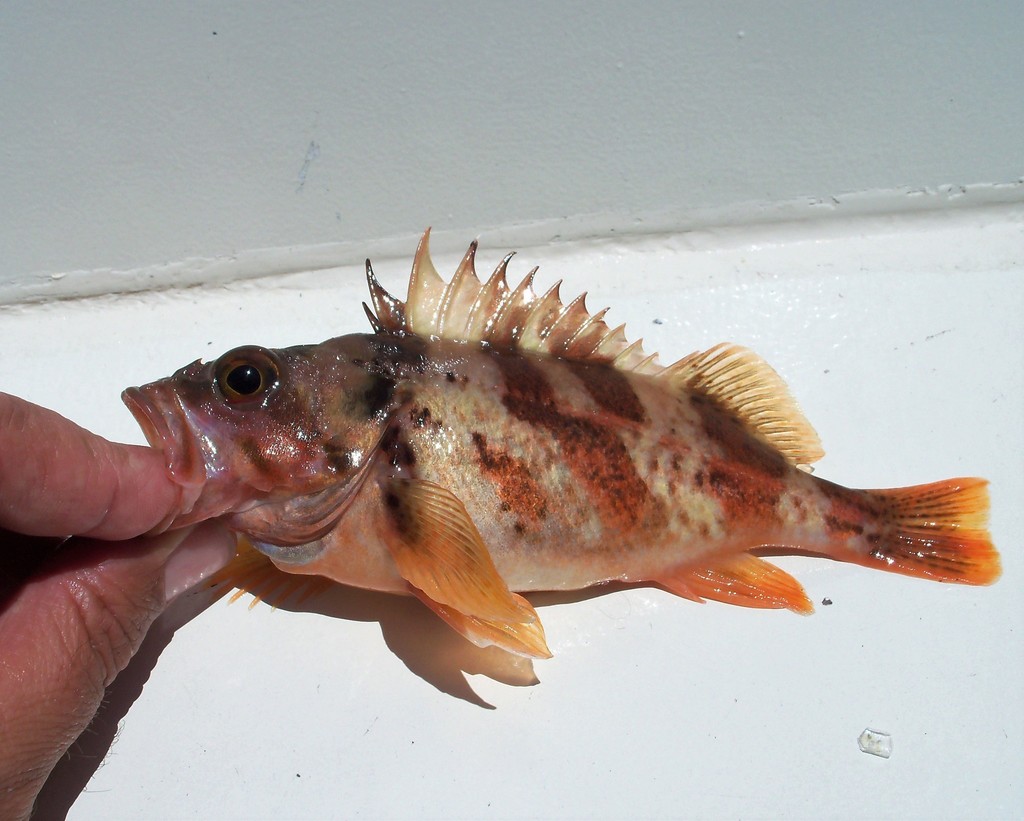
(c) nmoorhatch, some rights reserved (CC BY) · licence
Family: Scorpaenidae · Class: Actinopterygii · Order: Scorpaeniformes
Sebastes dallii (Calico Rockfish) is a California animal in the Scorpaenidae family.
The calico rockfish is a medium-sized marine fish in the family Scorpaenidae, endemic to the eastern Pacific Ocean. Adults typically reach lengths of 25 to 38 cm (10 to 15 inches), with a maximum recorded length of approximately 43 cm (17 inches). The species exhibits a distinctive mottled coloration pattern with brown, orange, and white patches across the body, giving it the calico appearance from which its common name derives. The body is laterally compressed with a large mouth and prominent eyes. Distinguishing features include strong dorsal spines and a broad, fan-shaped tail fin. Calico rockfish are found exclusively along the Pacific coast from northern California to Baja California, Mexico. In California waters, the species occurs from Humboldt County south to the Mexican border, with populations concentrated around the Channel Islands and along the central and southern California coast. The species is classified as a nearshore rockfish under California's management framework. This species inhabits rocky reefs, kelp forests, and hard substrate areas from the intertidal zone to depths of approximately 274 meters (900 feet), though most individuals are found in shallower waters between 6 and 91 meters (20 to 300 feet). Calico rockfish prefer areas with complex bottom structure including boulders, crevices, and kelp beds that provide shelter and foraging opportunities. Juveniles often associate with shallow kelp canopies and eelgrass beds, while adults typically occupy deeper rocky areas. Calico rockfish are carnivorous predators feeding primarily on small fish, crustaceans, squid, and various invertebrates. Their diet varies seasonally based on prey availability, with crustaceans forming a larger proportion during certain times of year. Like other rockfish species, calico rockfish are ovoviviparous, with females giving birth to live larvae after internal fertilization and development. Spawning typically occurs during late winter and spring months. The species exhibits slow growth rates and late maturity, characteristics common among rockfish that make them vulnerable to overfishing pressure. Calico rockfish are currently managed under California's nearshore rockfish complex regulations. While not federally listed as threatened or endangered, the species has experienced population declines due to fishing pressure, particularly during the 1980s and 1990s. Current management measures include seasonal closures, bag limits, and minimum size requirements. The California Department of Fish and Wildlife includes calico rockfish in the Nearshore Fishery Management Plan, which implements depth restrictions and gear limitations to protect spawning aggregations and juvenile habitat. Recent stock assessments suggest populations have stabilized under current management, though continued monitoring is necessary to ensure sustainable harvest levels. Climate change impacts, including ocean warming and acidification, may pose additional challenges for future population stability.
Classification
Class: Actinopterygii · Order: Scorpaeniformes · Family: Scorpaenidae
Frequently asked questions
How is Sebastes dallii classified?
Sebastes dallii belongs to class Actinopterygii, order Scorpaeniformes, family Scorpaenidae.
What family does Sebastes dallii belong to?
Sebastes dallii is in the Scorpaenidae family.
What is Sebastes dallii?
The calico rockfish is a medium-sized marine fish in the family Scorpaenidae, endemic to the eastern Pacific Ocean.
Is Sebastes dallii found in California?
Yes. Sebastes dallii is recorded in California in The California Species Project's catalogue.
Related species
Other California species in the same genus, family, or bioregion.
Data from The California Species Project — 14,000+ California species with verified data from CNPS, CDFW, USFWS, and more.