Sebastes mystinus
Blue Rockfish
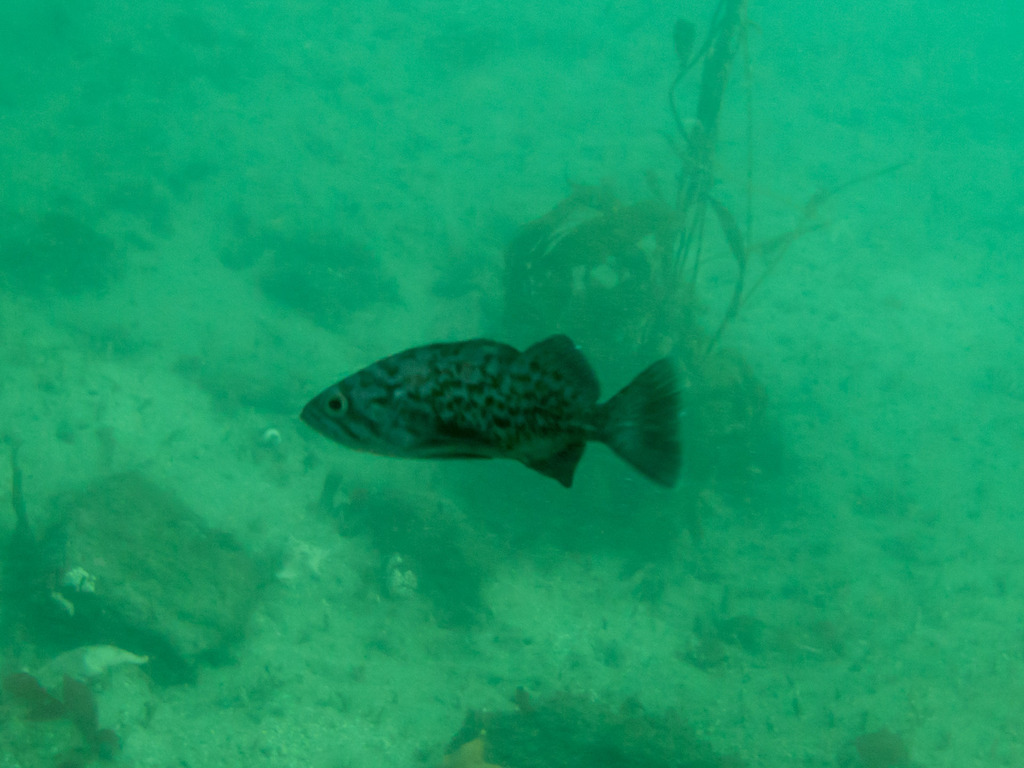
(c) Will Sides, some rights reserved (CC BY) · licence
Family: Scorpaenidae · Class: Actinopterygii · Order: Scorpaeniformes
Sebastes mystinus (Blue Rockfish) is a California animal in the Scorpaenidae family.
The blue rockfish is a medium-sized marine fish belonging to the rockfish family Scorpaenidae. Adults typically reach lengths of 30 to 39 cm (12 to 15 inches), though some individuals may grow up to 53 cm (21 inches). The species displays a compressed, elongated body with distinctive coloration ranging from blue-black to dark blue dorsally, fading to lighter blue or gray on the sides and belly. Blue rockfish possess the characteristic spiny dorsal fin of rockfish, with 13 dorsal spines and 13 to 16 soft rays. The anal fin contains 3 spines and 5 to 9 soft rays. Like other rockfish species, blue rockfish have venomous spines that pose a hazard when handling. Blue rockfish occur along the Pacific coast from British Columbia to Baja California, Mexico. In California waters, the species is distributed from the Oregon border south to Point Conception, with occasional sightings extending into southern California waters. The species is most abundant in central and northern California coastal areas. This species inhabits shallow rocky environments from surface waters to depths of 156 meters (512 feet), according to California Department of Fish and Wildlife. Blue rockfish are commonly found in kelp beds, rocky reefs, and around underwater structures. Juveniles utilize shallow water kelp beds as refuge habitat, while adults are often observed schooling above rocky substrates. The species shows a strong association with hard bottom habitats including natural rocky reefs and artificial structures. Blue rockfish are schooling fish that form aggregations, particularly over rocky areas and kelp forests. They feed primarily on zooplankton, including copepods, krill, and larval fish, positioning themselves in the water column to capture drifting prey. The species exhibits slow growth rates typical of rockfish, with females reaching sexual maturity at approximately 6 to 8 years of age. Blue rockfish are viviparous, with females giving birth to live young after internal fertilization. Reproduction occurs seasonally, with mating typically taking place in winter months and parturition occurring in spring. Females can produce between 65,000 to 1.2 million larvae depending on their size and age. Blue rockfish are managed as part of California's groundfish fishery complex and are subject to various fishing regulations including depth restrictions and seasonal closures. The species is targeted by both commercial and recreational fisheries, with recreational catches historically averaging over 1,000 tons annually in California. Blue rockfish populations are considered stable, though like many rockfish species, they are vulnerable to overfishing due to their slow growth, late maturation, and high longevity. The species benefits from marine protected areas established along the California coast, including areas such as Blue Cavern State Marine Conservation Area where fishing restrictions help protect rockfish habitat and populations.
Classification
Class: Actinopterygii · Order: Scorpaeniformes · Family: Scorpaenidae
Frequently asked questions
How is Sebastes mystinus classified?
Sebastes mystinus belongs to class Actinopterygii, order Scorpaeniformes, family Scorpaenidae.
What family does Sebastes mystinus belong to?
Sebastes mystinus is in the Scorpaenidae family.
What is Sebastes mystinus?
The blue rockfish is a medium-sized marine fish belonging to the rockfish family Scorpaenidae.
Is Sebastes mystinus found in California?
Yes. Sebastes mystinus is recorded in California in The California Species Project's catalogue.
Related species
Other California species in the same genus, family, or bioregion.
Data from The California Species Project — 14,000+ California species with verified data from CNPS, CDFW, USFWS, and more.