Sebastes paucispinis
Bocaccio
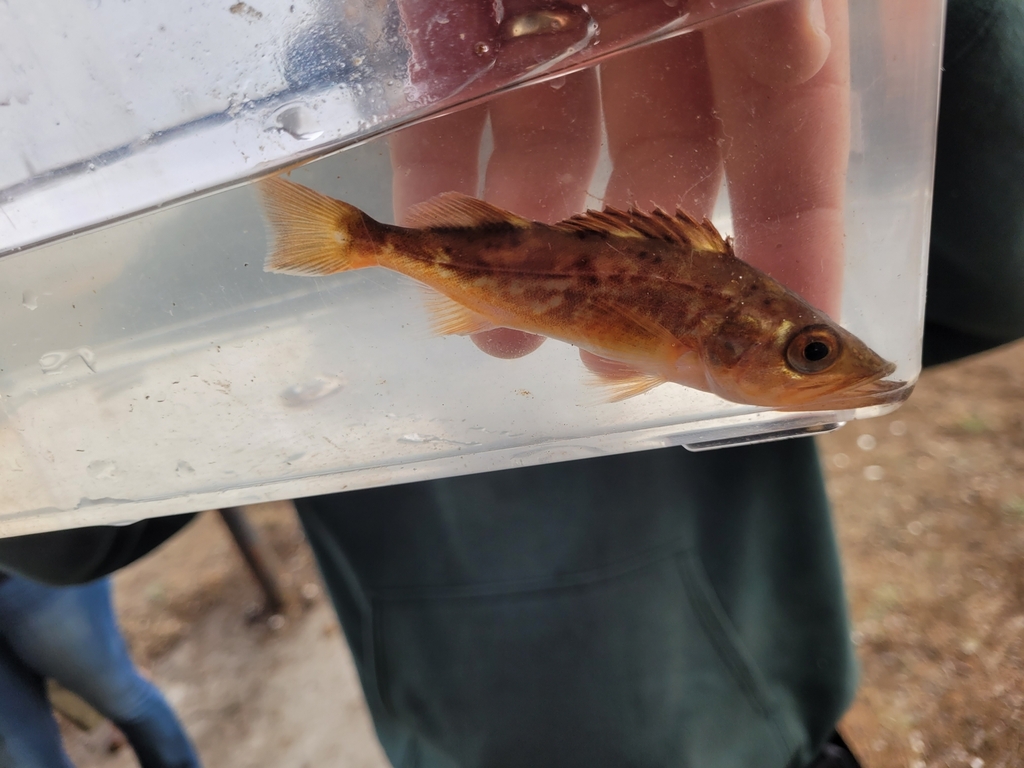
(c) Konshau Duman, some rights reserved (CC BY) · licence
Family: Scorpaenidae · Class: Actinopterygii · Order: Scorpaeniformes
Conservation status: Endangered
Sebastes paucispinis (Bocaccio) is a California animal in the Scorpaenidae family.
The bocaccio is a large marine rockfish belonging to the genus Sebastes. Adults can reach lengths of up to 91 cm (36 inches) and weights exceeding 9 kg (20 pounds), making it one of the larger rockfish species on the Pacific Coast. The body is elongated and laterally compressed, with a distinctive large mouth and protruding lower jaw. Coloration varies from olive-brown to reddish-brown dorsally, fading to lighter tones on the sides and belly. Juveniles display a more pronounced reddish coloration with darker mottling. Bocaccio historically ranged along the Pacific Coast from Punta Blanca, Baja California, Mexico, to Kodiak Island, Alaska. The species occurs in waters from British Columbia through California, Oregon, and Washington. Within California waters, bocaccio are found from the Mexican border north to the Oregon state line, inhabiting both nearshore and offshore marine environments. This species occupies a wide range of depths, from shallow rocky reefs at 5 meters to deep continental shelf areas exceeding 475 meters (1,558 feet). Adult bocaccio prefer rocky bottom habitats, including submarine canyons, seamounts, and areas with complex hard substrate. Juveniles are commonly found in shallower waters among kelp forests and rocky reefs, while adults typically inhabit deeper offshore waters. The species shows strong site fidelity to particular reef areas. Bocaccio are opportunistic predators with diet varying by life stage and habitat. Juveniles primarily consume planktonic crustaceans, small fish, and squid. Adults feed on a diverse array of prey including rockfish, anchovies, sardines, market squid, and various crustaceans. The species exhibits slow growth rates and late maturation, with females reaching sexual maturity between 4-7 years of age. Spawning occurs from January through May, with peak activity in February and March. Females are viviparous, releasing live larvae after internal fertilization and development. Large females can produce over 2 million larvae per spawning season. The Puget Sound-Georgia Basin Distinct Population Segment (DPS) of bocaccio is listed as endangered under the Endangered Species Act. This listing, codified in 50 CFR 224.101, reflects severe population declines in the Puget Sound and Georgia Basin region. According to NOAA Fisheries, this DPS has experienced dramatic reductions due to overfishing, habitat degradation, and other anthropogenic factors. The species faces ongoing threats from fishing pressure, climate change effects on prey availability, and habitat modification. Recovery efforts focus on fishing restrictions, habitat protection, and population monitoring. Outside the listed DPS, bocaccio populations along the broader Pacific Coast have also experienced significant declines, leading to strict fishing regulations and rebuilding plans. The species' slow growth, late maturation, and high longevity make it particularly vulnerable to overexploitation and slow to recover from population declines.
Classification
Class: Actinopterygii · Order: Scorpaeniformes · Family: Scorpaenidae
Conservation status
Endangered
Frequently asked questions
How is Sebastes paucispinis classified?
Sebastes paucispinis belongs to class Actinopterygii, order Scorpaeniformes, family Scorpaenidae.
What family does Sebastes paucispinis belong to?
Sebastes paucispinis is in the Scorpaenidae family.
Is Sebastes paucispinis protected or of conservation concern?
Sebastes paucispinis carries the following status: Endangered.
What is Sebastes paucispinis?
The bocaccio is a large marine rockfish belonging to the genus Sebastes.
Is Sebastes paucispinis found in California?
Yes. Sebastes paucispinis is recorded in California in The California Species Project's catalogue.
Related species
Other California species in the same genus, family, or bioregion.
Data from The California Species Project — 14,000+ California species with verified data from CNPS, CDFW, USFWS, and more.