Sebastes pinniger
Canary rockfish
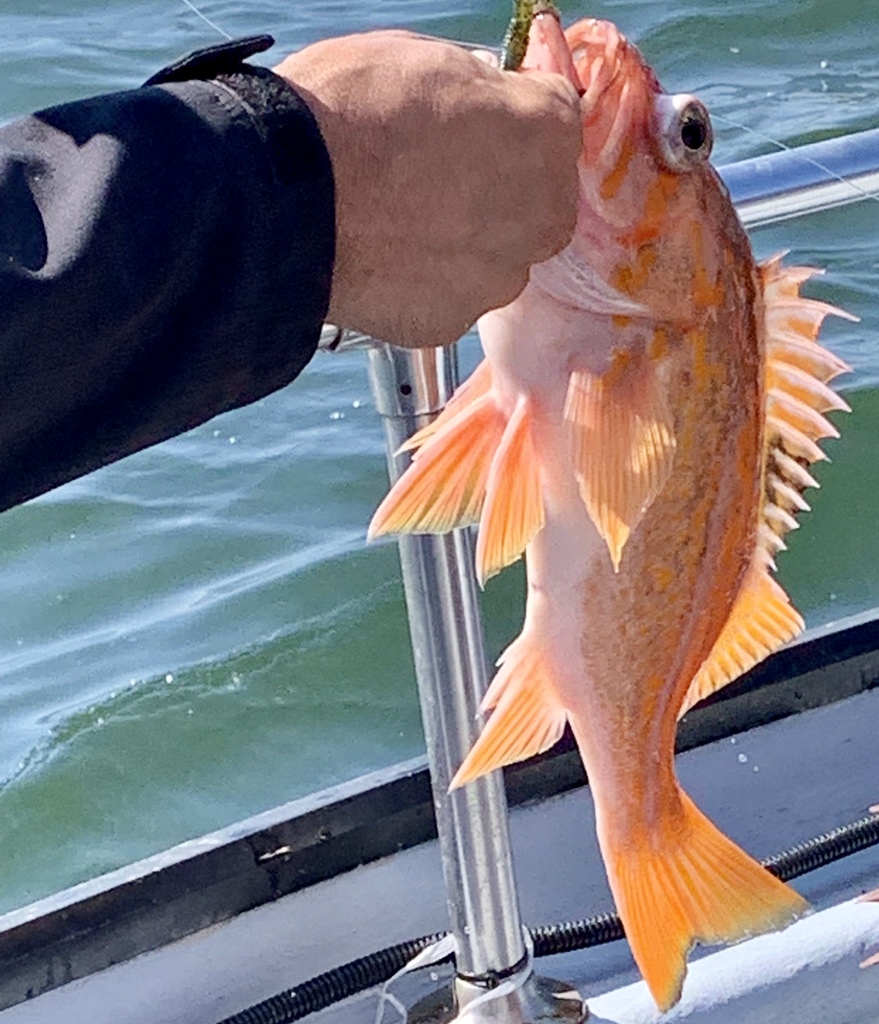
(c) Brook, some rights reserved (CC BY) · licence
Family: Scorpaenidae · Class: Actinopterygii · Order: Scorpaeniformes
Conservation status: Threatened
Sebastes pinniger (Canary rockfish) is a California animal in the Scorpaenidae family.
The canary rockfish is a medium-sized marine fish measuring up to 76 centimeters (30 inches) in total length. Adults display distinctive bright orange to yellow coloration on the dorsal surfaces, transitioning to lighter orange or white on the ventral areas. The species possesses the characteristic spiny dorsal fin of rockfish, with 13 to 15 dorsal spines and 12 to 14 soft rays. Three prominent orange stripes extend across the head, and the fins are typically orange to yellow in coloration. Canary rockfish occur along the Pacific Coast from southeastern Alaska to Baja California, Mexico. Within California waters, the species is distributed from the Oregon border south to Point Conception. The species inhabits both nearshore and offshore waters, with adults typically found at depths ranging from 25 to 250 meters (82 to 820 feet), though they may occur as deep as 400 meters (1,312 feet). This species prefers rocky reef habitats, kelp forests, and areas with hard substrate. Juveniles are commonly associated with kelp canopies and eelgrass beds in nearshore waters, while adults occupy deeper rocky reefs and continental shelf areas. Canary rockfish exhibit strong site fidelity and form aggregations around prominent rock formations and underwater pinnacles. Canary rockfish are opportunistic predators feeding primarily on small schooling fish, including anchovies, sardines, and juvenile rockfish. They also consume krill, copepods, and other zooplankton. Reproduction occurs through internal fertilization, with females releasing live young rather than laying eggs. Spawning typically occurs from December through March, with peak activity in January and February. Females may produce 260,000 to 1.9 million larvae per spawning event. Canary rockfish are slow-growing and long-lived, with individuals reaching sexual maturity at 6 to 8 years of age and maximum ages exceeding 40 years. The canary rockfish is federally listed as threatened under the Endangered Species Act, specifically the Puget Sound-Georgia Basin Distinct Population Segment (DPS) as referenced in 50 CFR 223.102. This northern population was listed due to severe population declines attributed to overfishing, habitat degradation, and environmental factors. The species experienced dramatic population reductions beginning in the 1990s, with surveys indicating declines of over 90 percent in some areas. Primary threats to canary rockfish include commercial and recreational overfishing, bycatch in mixed-species fisheries, and habitat alteration from bottom trawling activities. Their slow growth rates and late maturation make populations particularly vulnerable to fishing pressure. Climate change poses additional challenges through ocean acidification, warming waters, and shifts in prey availability. Recovery efforts focus on fishing restrictions, habitat protection within marine protected areas, and monitoring programs to track population trends. Stock assessments indicate some signs of recovery in recent years, though populations remain well below historical levels throughout much of their range.
Classification
Class: Actinopterygii · Order: Scorpaeniformes · Family: Scorpaenidae
Conservation status
Threatened
Frequently asked questions
How is Sebastes pinniger classified?
Sebastes pinniger belongs to class Actinopterygii, order Scorpaeniformes, family Scorpaenidae.
What family does Sebastes pinniger belong to?
Sebastes pinniger is in the Scorpaenidae family.
Is Sebastes pinniger protected or of conservation concern?
Sebastes pinniger carries the following status: Threatened.
What is Sebastes pinniger?
The canary rockfish is a medium-sized marine fish measuring up to 76 centimeters (30 inches) in total length.
Is Sebastes pinniger found in California?
Yes. Sebastes pinniger is recorded in California in The California Species Project's catalogue.
Related species
Other California species in the same genus, family, or bioregion.
Data from The California Species Project — 14,000+ California species with verified data from CNPS, CDFW, USFWS, and more.