Sebastes rosaceus
Rosy Rockfish
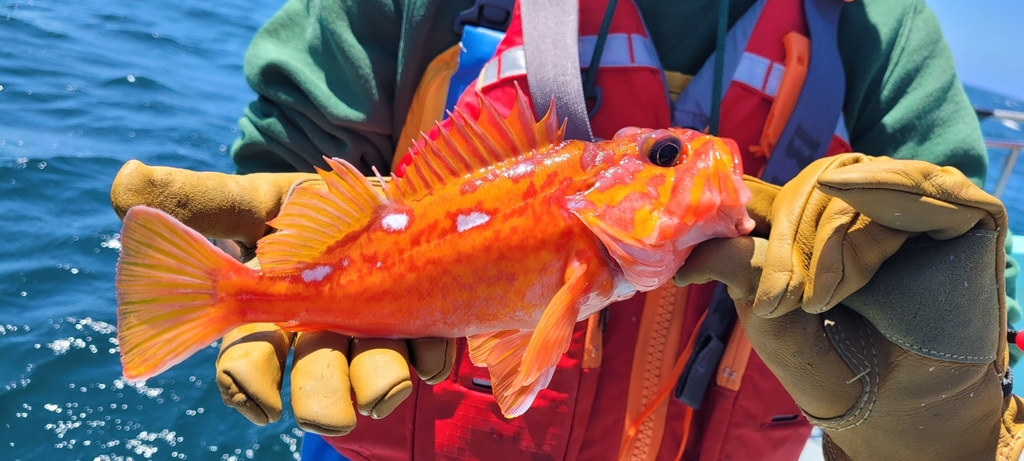
(c) Konshau Duman, some rights reserved (CC BY) · licence
Family: Scorpaenidae · Class: Actinopterygii · Order: Scorpaeniformes
Sebastes rosaceus (Rosy Rockfish) is a California animal in the Scorpaenidae family.
The rosy rockfish is a medium-sized marine fish belonging to the family Scorpaenidae. Adults typically measure 25 to 35 centimeters (10 to 14 inches) in total length, with a compressed body characteristic of the rockfish genus. The species displays a rosy-pink to reddish coloration that gives it its common name, often with darker mottling or banding patterns across the body and fins. Like other rockfish, rosy rockfish possess venomous spines in their dorsal, anal, and pelvic fins that require careful handling. Rosy rockfish occur along the Pacific coast from central California to Baja California, Mexico. In California waters, the species is distributed from approximately Monterey Bay southward, with populations documented in the Channel Islands and throughout the Southern California Bight. The species is commonly found in marine protected areas including Point Vicente State Marine Conservation Area and Big Flat State Marine Conservation Area, where healthy populations persist in rocky reef habitats. This species inhabits both soft and hard bottom substrates at depths ranging from 15 to 128 meters (50 to 420 feet), according to California Department of Fish and Wildlife life history data. Rosy rockfish demonstrate a preference for rocky reefs, kelp forests, and areas with complex bottom topography that provide shelter and foraging opportunities. Adults are typically associated with hard bottom habitats, while juveniles may utilize a broader range of substrate types during their early life stages. Rosy rockfish are ovoviviparous, meaning females give birth to live young rather than laying eggs. Fertilization is internal, and embryos develop within the female using nutrients from a yolk sac. Larvae are released as free-swimming individuals and undergo a planktonic stage before settling to bottom habitats. The species exhibits moderate longevity among rockfish, with reproductive output categorized as low compared to other members of the genus. Rosy rockfish are carnivorous, feeding primarily on small fish, crustaceans, and other invertebrates found in their rocky reef environment. Currently, rosy rockfish are managed as part of California's Rockfish, Cabezon, and Greenling (RCG) Complex under both state and federal regulations. The species is included in the Federal Pacific Coast Groundfish Fishery Management Plan and is subject to bag limits, size restrictions, and seasonal closures designed to ensure sustainable harvest levels. As of December 2025, rosy rockfish do not hold special conservation status under state or federal endangered species legislation, but like many rockfish species, they face challenges from fishing pressure, habitat degradation, and climate change impacts on marine ecosystems. Marine protected areas along the California coast provide important refugia for rosy rockfish populations, supporting both conservation goals and fisheries management through spillover effects to adjacent fished areas.
Classification
Class: Actinopterygii · Order: Scorpaeniformes · Family: Scorpaenidae
Frequently asked questions
How is Sebastes rosaceus classified?
Sebastes rosaceus belongs to class Actinopterygii, order Scorpaeniformes, family Scorpaenidae.
What family does Sebastes rosaceus belong to?
Sebastes rosaceus is in the Scorpaenidae family.
What is Sebastes rosaceus?
The rosy rockfish is a medium-sized marine fish belonging to the family Scorpaenidae.
Is Sebastes rosaceus found in California?
Yes. Sebastes rosaceus is recorded in California in The California Species Project's catalogue.
Related species
Other California species in the same genus, family, or bioregion.
Data from The California Species Project — 14,000+ California species with verified data from CNPS, CDFW, USFWS, and more.