Sebastes ruberrimus
Yelloweye rockfish
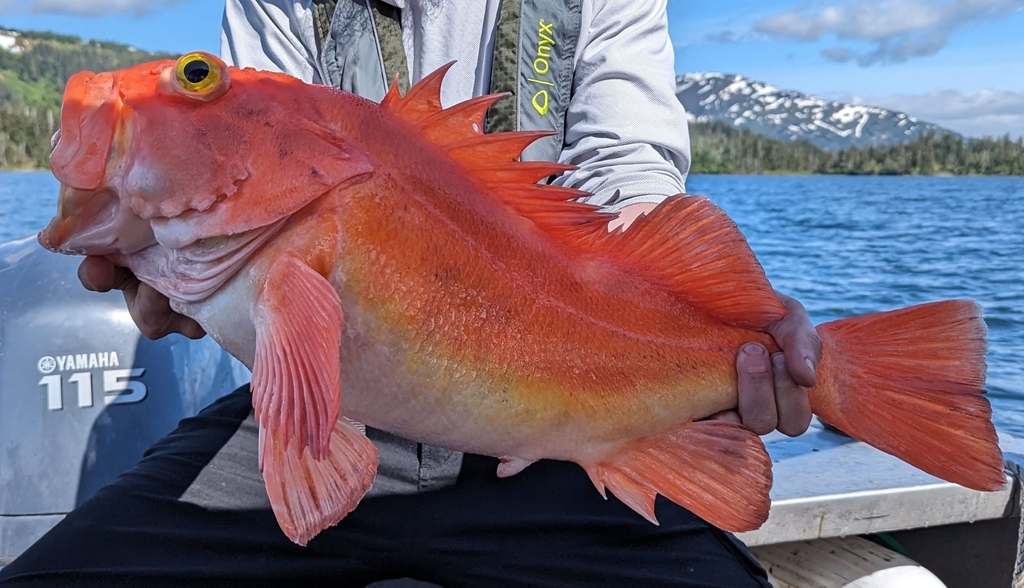
(c) Alexandria 'Alex' Wenninger, some rights reserved (CC BY) · licence
Family: Scorpaenidae · Class: Actinopterygii · Order: Scorpaeniformes
Conservation status: Threatened
Sebastes ruberrimus (Yelloweye rockfish) is a California animal in the Scorpaenidae family.
The yelloweye rockfish is a large, long-lived marine fish distinguished by its bright yellow to orange eyes and vibrant coloration. Adults can reach lengths of up to 91 cm (36 inches) and weights exceeding 9 kg (20 pounds). The body is typically orange to red with lighter yellow or pink areas, particularly on the head and fins. Juveniles display more muted coloration with darker banding. The species has a robust, laterally compressed body with a large mouth equipped with small teeth, and prominent spines on the dorsal fin typical of rockfish species. Yelloweye rockfish range along the Pacific Coast from Alaska to California. The species occurs in both nearshore and offshore waters, with populations documented in Washington's Puget Sound and Georgia Basin regions. In California waters, yelloweye rockfish are found along the coast from the Oregon border south to at least Point Conception, with documented occurrences in marine protected areas including Point Arena, Piedras Blancas, and South Cape Mendocino. This species inhabits rocky reef environments and kelp forests from shallow subtidal zones to depths exceeding 180 meters (590 feet). Adults typically occupy deeper waters with complex bottom topography, including rocky outcrops, boulders, and crevices that provide shelter and foraging opportunities. Juveniles are more commonly found in shallower rocky areas and kelp canopies. The species shows strong site fidelity, often remaining in the same general area for extended periods. Yelloweye rockfish are opportunistic predators that feed primarily on fish, crustaceans, and cephalopods. Their diet includes smaller rockfish, greenlings, crabs, shrimp, and juvenile salmon. The species exhibits extremely slow growth rates and exceptional longevity, with some individuals living over 100 years. Sexual maturity occurs late, typically between 15-20 years of age. Females are viviparous, giving birth to live larvae after internal fertilization. Spawning occurs in winter and spring, with larvae released into the water column where they undergo an extended pelagic phase before settling to benthic habitats. The Puget Sound/Georgia Basin Distinct Population Segment (DPS) of yelloweye rockfish was listed as threatened under the Endangered Species Act, as specified in 50 CFR 223.102. This population faces significant conservation challenges due to its life history characteristics, including slow growth, late maturity, and extreme longevity, which make it particularly vulnerable to overfishing. Primary threats include commercial and recreational fishing pressure, habitat degradation, and climate change effects on ocean conditions. The species' tendency to inhabit specific rocky reef areas makes it susceptible to localized depletion. Recovery efforts focus on fishing regulations, habitat protection through marine protected areas, and monitoring of population trends to assess the effectiveness of conservation measures.
Classification
Class: Actinopterygii · Order: Scorpaeniformes · Family: Scorpaenidae
Conservation status
Threatened
Frequently asked questions
How is Sebastes ruberrimus classified?
Sebastes ruberrimus belongs to class Actinopterygii, order Scorpaeniformes, family Scorpaenidae.
What family does Sebastes ruberrimus belong to?
Sebastes ruberrimus is in the Scorpaenidae family.
Is Sebastes ruberrimus protected or of conservation concern?
Sebastes ruberrimus carries the following status: Threatened.
What is Sebastes ruberrimus?
The yelloweye rockfish is a large, long-lived marine fish distinguished by its bright yellow to orange eyes and vibrant coloration.
Is Sebastes ruberrimus found in California?
Yes. Sebastes ruberrimus is recorded in California in The California Species Project's catalogue.
Related species
Other California species in the same genus, family, or bioregion.
Data from The California Species Project — 14,000+ California species with verified data from CNPS, CDFW, USFWS, and more.