Sebastes saxicola
Stripetail Rockfish
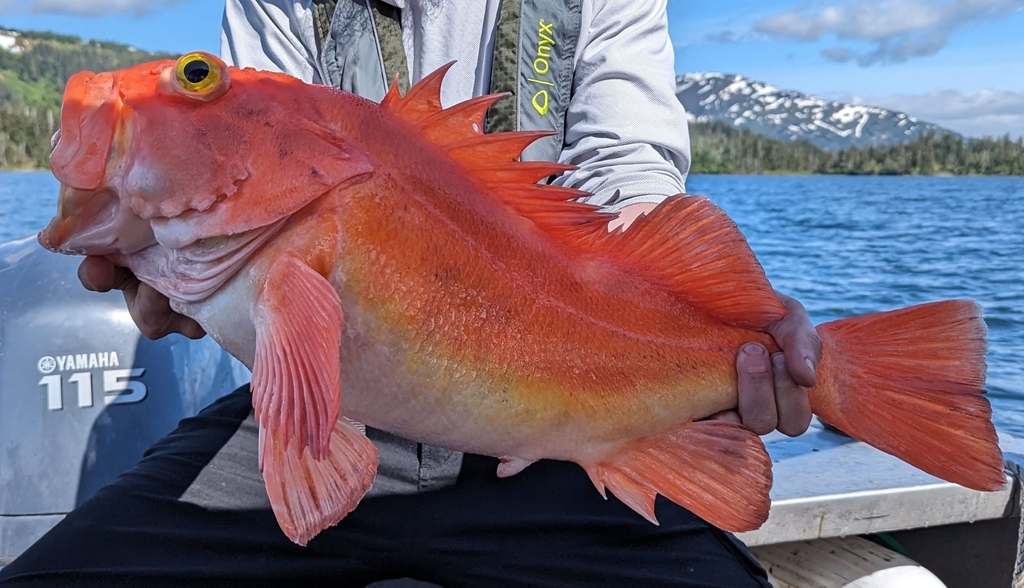
(c) Alexandria 'Alex' Wenninger, some rights reserved (CC BY) · licence
Family: Scorpaenidae · Class: Actinopterygii · Order: Scorpaeniformes
Sebastes saxicola (Stripetail Rockfish) is a California animal in the Scorpaenidae family.
The stripetail rockfish is a member of the genus Sebastes within the family Scorpaenidae, representing one of California's numerous rockfish species. Adults typically measure 20 to 30 cm (8 to 12 inches) in total length, with a compressed, elongated body characteristic of the rockfish group. The species displays mottled coloration ranging from pink to reddish-brown with darker vertical bars or stripes along the sides. The caudal fin exhibits distinctive striped patterns that give the species its common name, with alternating light and dark bands extending across the tail fin. Stripetail rockfish occur along the Pacific coast from British Columbia to Baja California, with populations documented throughout California's coastal waters. The species inhabits rocky reefs and hard substrate areas of the continental shelf, typically found at depths ranging from 37 to 274 meters (120 to 900 feet). They show preference for areas with complex bottom topography, including rocky outcrops, boulders, and reef structures that provide shelter and foraging opportunities. This species occupies nearshore and offshore rocky habitats, particularly areas with moderate to strong currents that facilitate planktonic food delivery. Stripetail rockfish are associated with both shallow rocky reefs and deeper shelf environments, demonstrating adaptability to various depth zones within their preferred rocky habitat type. The species requires areas with adequate crevices and overhangs for shelter during non-feeding periods. Stripetail rockfish are opportunistic carnivores, feeding primarily on zooplankton, small crustaceans, and juvenile fish. They exhibit the typical rockfish feeding behavior of remaining near bottom structures while making short excursions into the water column to capture prey items. Reproduction follows the ovoviviparous pattern common to Sebastes species, with females releasing live larvae after internal development. Spawning typically occurs during late winter and spring months, with larvae released into the water column where they undergo a pelagic juvenile phase before settling to bottom habitats. The stripetail rockfish is managed under California's recreational fishing regulations as part of the broader rockfish complex. According to the California Department of Fish and Wildlife, stripetail rockfish are included in the "Nearshore Rockfish" category for regulatory purposes, which establishes specific bag limits, size restrictions, and seasonal closures. The species faces typical pressures affecting California rockfish populations, including fishing pressure, habitat degradation, and climate-related oceanographic changes. While not individually listed under state or federal endangered species protections, stripetail rockfish populations are monitored as part of comprehensive rockfish stock assessments conducted by fisheries management agencies. Conservation efforts focus on maintaining sustainable harvest levels through regulated fishing seasons and protecting essential rocky reef habitats from degradation.
Classification
Class: Actinopterygii · Order: Scorpaeniformes · Family: Scorpaenidae
Frequently asked questions
How is Sebastes saxicola classified?
Sebastes saxicola belongs to class Actinopterygii, order Scorpaeniformes, family Scorpaenidae.
What family does Sebastes saxicola belong to?
Sebastes saxicola is in the Scorpaenidae family.
What is Sebastes saxicola?
The stripetail rockfish is a member of the genus Sebastes within the family Scorpaenidae, representing one of California's numerous rockfish species.
Is Sebastes saxicola found in California?
Yes. Sebastes saxicola is recorded in California in The California Species Project's catalogue.
Related species
Other California species in the same genus, family, or bioregion.
Data from The California Species Project — 14,000+ California species with verified data from CNPS, CDFW, USFWS, and more.