Sebastes serranoides
Olive Rockfish
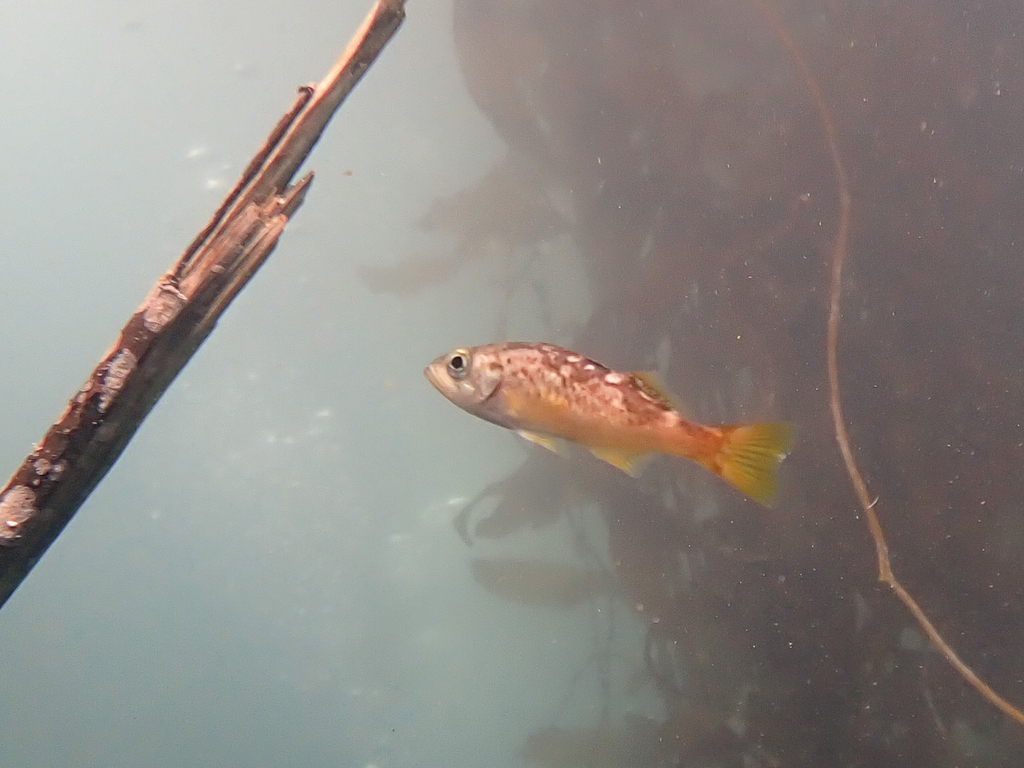
(c) cello caruso-turiello, some rights reserved (CC BY) · licence
Family: Scorpaenidae · Class: Actinopterygii · Order: Scorpaeniformes
Sebastes serranoides (Olive Rockfish) is a California animal in the Scorpaenidae family.
The olive rockfish is a medium-sized marine fish endemic to the northeastern Pacific Ocean. Adults typically reach lengths of 61 cm (24 inches) and can weigh up to 4.5 kg (10 pounds). The species exhibits olive-green to brownish coloration on the dorsal surface with lighter sides, often displaying irregular darker blotches or mottling. The body is laterally compressed with a large head and prominent eyes. Distinguishing features include a slightly protruding lower jaw and venomous spines in the dorsal, anal, and pelvic fins that require careful handling. Olive rockfish occur along the Pacific coast from British Columbia, Canada, to Baja California, Mexico. According to the California Marine Species Portal, they are most common from Cape Mendocino to Santa Barbara, California, and around the northern Channel Islands. The species inhabits both Northern California, Central California, and Southern California waters, making it one of the more widely distributed rockfish species along the California coast. This species occupies diverse marine habitats from nearshore kelp forests to deeper offshore waters. California Department of Fish and Wildlife data indicates olive rockfish are found from surface waters to depths of 480 meters (1,575 feet), with juveniles typically occurring in shallower kelp forests while adults move to deeper rocky reefs and soft bottom areas. They show particular affinity for kelp forest ecosystems and rocky reef structures that provide shelter and feeding opportunities. The species demonstrates vertical migration patterns, often moving between different depth zones during feeding. Olive rockfish are live-bearing (viviparous) with internal fertilization, a characteristic shared with all Sebastes species. Females give birth to planktonic larvae after a gestation period that varies with water temperature and food availability. The species exhibits moderate longevity compared to other rockfish, with adults capable of living several decades. They are opportunistic predators feeding on a variety of prey including small fish, squid, crustaceans, and marine worms. Juvenile olive rockfish primarily consume zooplankton and small invertebrates while sheltering in kelp canopies. Currently, olive rockfish do not hold federal or state endangered species protection status. However, like many rockfish species, they face pressure from commercial and recreational fishing activities. The species is managed under the Pacific Fishery Management Council's Groundfish Fishery Management Plan, which establishes catch limits and fishing regulations. Primary concerns include overfishing impacts on adult populations and habitat degradation affecting kelp forest nursery areas. Climate change poses additional threats through ocean warming and acidification, which can affect prey availability and reproductive success. The California Recreational Fisheries Survey monitors populations to inform management decisions and ensure sustainable harvest levels.
Classification
Class: Actinopterygii · Order: Scorpaeniformes · Family: Scorpaenidae
Frequently asked questions
How is Sebastes serranoides classified?
Sebastes serranoides belongs to class Actinopterygii, order Scorpaeniformes, family Scorpaenidae.
What family does Sebastes serranoides belong to?
Sebastes serranoides is in the Scorpaenidae family.
What is Sebastes serranoides?
The olive rockfish is a medium-sized marine fish endemic to the northeastern Pacific Ocean.
Is Sebastes serranoides found in California?
Yes. Sebastes serranoides is recorded in California in The California Species Project's catalogue.
Related species
Other California species in the same genus, family, or bioregion.
Data from The California Species Project — 14,000+ California species with verified data from CNPS, CDFW, USFWS, and more.