Seiurus aurocapilla
Ovenbird
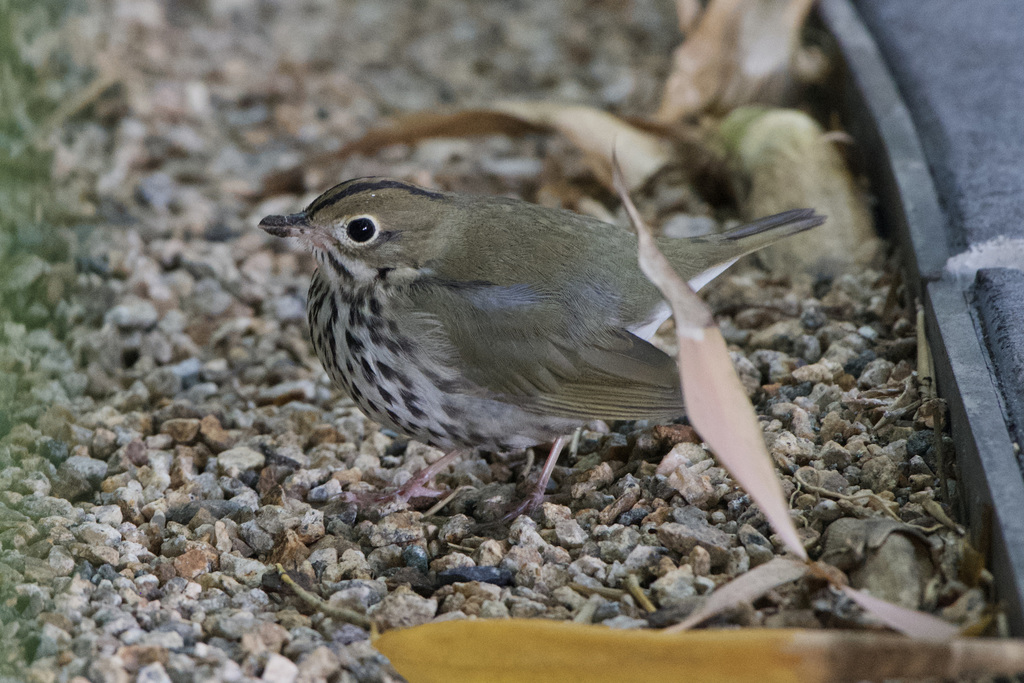
no rights reserved · CC0
Family: Parulidae · Class: Aves · Order: Passeriformes
Seiurus aurocapilla (Ovenbird) is a California animal in the Parulidae family.
The Ovenbird is a medium-sized warbler measuring 14 to 16 cm (5.5 to 6.3 inches) in length with a wingspan of 19 to 26 cm (7.5 to 10.2 inches). Adults weigh 19 to 25 grams. The species displays olive-brown upperparts with a distinctive orange crown stripe bordered by two black lateral stripes. The underparts are white with bold black streaks extending from the throat to the belly. A prominent white eye-ring and pale legs distinguish this species from similar ground-dwelling warblers. Males and females appear nearly identical, though males may show slightly brighter crown coloration during breeding season. Historically, Ovenbirds bred across eastern North America from southeastern Canada south to northern Georgia and west to eastern Montana and Colorado. In California, the species occurs primarily as an uncommon vagrant during migration, with records concentrated along the coast and in desert areas during fall migration from August through October. Most California sightings occur in Monterey, Los Angeles, Orange, Riverside, and San Diego counties. Spring records are considerably rarer, typically occurring in May. During the breeding season in their primary range, Ovenbirds inhabit mature deciduous and mixed forests with relatively open understories and substantial leaf litter. They prefer forests dominated by oak, maple, beech, and hickory, typically avoiding areas with dense shrub layers. In California, vagrant individuals are most frequently encountered in riparian woodlands, urban parks with mature trees, and occasionally in desert oases during migration. The species shows a strong preference for areas with accumulated leaf litter for foraging. Ovenbirds are ground-foraging insectivores that walk deliberately through leaf litter, using a distinctive high-stepping gait. Their diet consists primarily of beetles, ants, caterpillars, flies, and other invertebrates, supplemented by small amounts of seeds and berries during migration. The species constructs a distinctive dome-shaped nest on the ground, resembling a Dutch oven, which gives the bird its common name. Females typically lay 3 to 6 eggs in late May or early June. The loud, distinctive song is a series of repeated 'teacher-teacher-teacher' notes that increase in volume and intensity. The Ovenbird is not federally or state listed in California, reflecting its status as a vagrant rather than a breeding resident. According to the North American Breeding Bird Survey, continental populations have declined by approximately 1.8% annually since 1966, representing a cumulative decline of over 50% since systematic monitoring began. Primary threats to the species include habitat loss through deforestation, forest fragmentation, and nest parasitism by Brown-headed Cowbirds. Climate change may be shifting the species' range northward, potentially affecting migration patterns and the frequency of California occurrences. In their core breeding range, conservation efforts focus on maintaining large blocks of mature forest habitat and reducing forest edge effects that facilitate cowbird parasitism.
Classification
Class: Aves · Order: Passeriformes · Family: Parulidae
Frequently asked questions
How is Seiurus aurocapilla classified?
Seiurus aurocapilla belongs to class Aves, order Passeriformes, family Parulidae.
What family does Seiurus aurocapilla belong to?
Seiurus aurocapilla is in the Parulidae family.
What is Seiurus aurocapilla?
The Ovenbird is a medium-sized warbler measuring 14 to 16 cm (5.5 to 6.3 inches) in length with a wingspan of 19 to 26 cm (7.5 to 10.2 inches).
Is Seiurus aurocapilla found in California?
Yes. Seiurus aurocapilla is recorded in California in The California Species Project's catalogue.
Related species
Other California species in the same genus, family, or bioregion.
Data from The California Species Project — 14,000+ California species with verified data from CNPS, CDFW, USFWS, and more.