Selasphorus rufus
Rufous Hummingbird
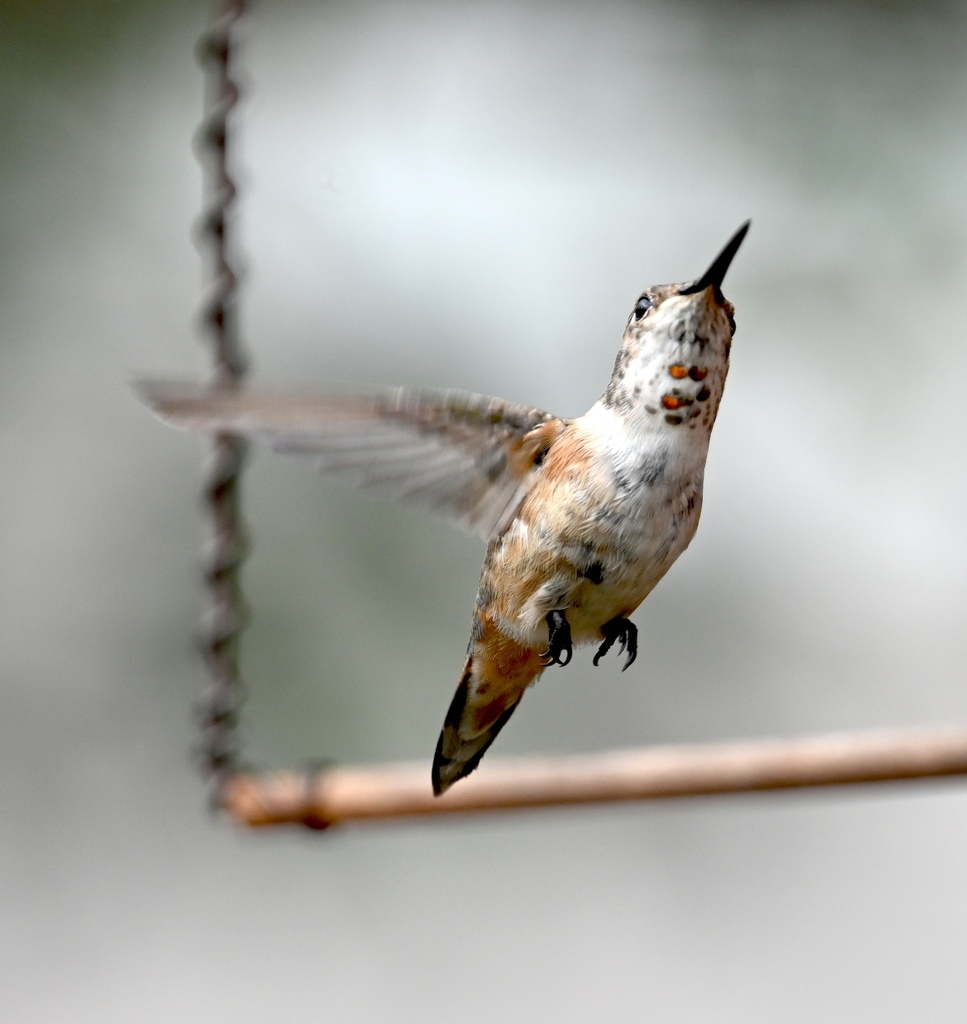
(c) Amber M. King, some rights reserved (CC BY) · licence
Family: Trochilidae · Class: Aves · Order: Apodiformes
Conservation status: G4 S1S2
Selasphorus rufus (Rufous Hummingbird) is a California animal in the Trochilidae family.
The Rufous Hummingbird is a small, compact hummingbird measuring 7.5 to 9 cm (3 to 3.5 inches) in length and weighing 2 to 5 grams. Adult males display distinctive rufous (rust-colored) plumage on the back, flanks, and tail, with an iridescent orange-red gorget that can appear dark in poor lighting. The crown and nape are also rufous, while the belly is white with rufous sides. Adult females are larger than males, with green backs, rufous flanks, and white throats with small rufous spots. Females have rufous bases to their outer tail feathers with dark tips and white corners. Both sexes have straight, needle-like bills adapted for nectar feeding. The Rufous Hummingbird has one of the longest migration routes of any North American hummingbird, traveling up to 6,400 kilometers (4,000 miles) between breeding and wintering grounds. In California, the species occurs primarily as a migrant and winter visitor, with populations ranked as S1S2, indicating the species is critically imperiled to imperiled in the state. During migration, Rufous Hummingbirds follow the Pacific Coast and Sierra Nevada mountains, with peak abundance occurring from July through September during southward migration and February through April during northward migration. This species inhabits a diverse range of habitats including coniferous forests, mixed woodlands, riparian areas, chaparral, and montane meadows. During migration and winter in California, Rufous Hummingbirds are found from sea level to elevations exceeding 3,000 meters (10,000 feet). They prefer areas with abundant flowering plants and are commonly observed in gardens, parks, and woodland edges. The species shows particular affinity for areas with native flowering plants such as manzanita, salvia, and penstemon, as well as introduced species like tree tobacco. Rufous Hummingbirds are aggressive territorial birds, often dominating feeders and flower patches despite their small size. They feed primarily on nectar from flowers, using their specialized tongues to extract nectar from tubular blooms. Their diet is supplemented with small arthropods including gnats, midges, aphids, and spiders, which provide essential proteins and amino acids. Males are particularly aggressive during breeding season, performing elaborate dive displays that can reach speeds of 50 kilometers per hour (30 mph). The species constructs small cup nests made of plant down, moss, and lichen, typically placed on horizontal branches 1 to 9 meters above ground. While not federally listed, the Rufous Hummingbird has experienced significant population declines across its range. According to the North American Bird Breeding Survey, populations declined by approximately 60 percent between 1966 and 2019. In California, the species' S1S2 ranking reflects its vulnerable status as primarily a migrant and winter visitor. Primary threats include habitat loss, climate change affecting flowering phenology, and competition with other hummingbird species. The species' dependence on specific flowering plants makes it particularly vulnerable to changes in bloom timing caused by climate change.
Classification
Class: Aves · Order: Apodiformes · Family: Trochilidae
Conservation status
G4 S1S2
Frequently asked questions
How is Selasphorus rufus classified?
Selasphorus rufus belongs to class Aves, order Apodiformes, family Trochilidae.
What family does Selasphorus rufus belong to?
Selasphorus rufus is in the Trochilidae family.
Is Selasphorus rufus protected or of conservation concern?
Selasphorus rufus carries the following status: G4 S1S2.
What is Selasphorus rufus?
The Rufous Hummingbird is a small, compact hummingbird measuring 7.5 to 9 cm (3 to 3.5 inches) in length and weighing 2 to 5 grams.
Is Selasphorus rufus found in California?
Yes. Selasphorus rufus is recorded in California in The California Species Project's catalogue.
Related species
Other California species in the same genus, family, or bioregion.
Data from The California Species Project — 14,000+ California species with verified data from CNPS, CDFW, USFWS, and more.