Semioscopis packardella
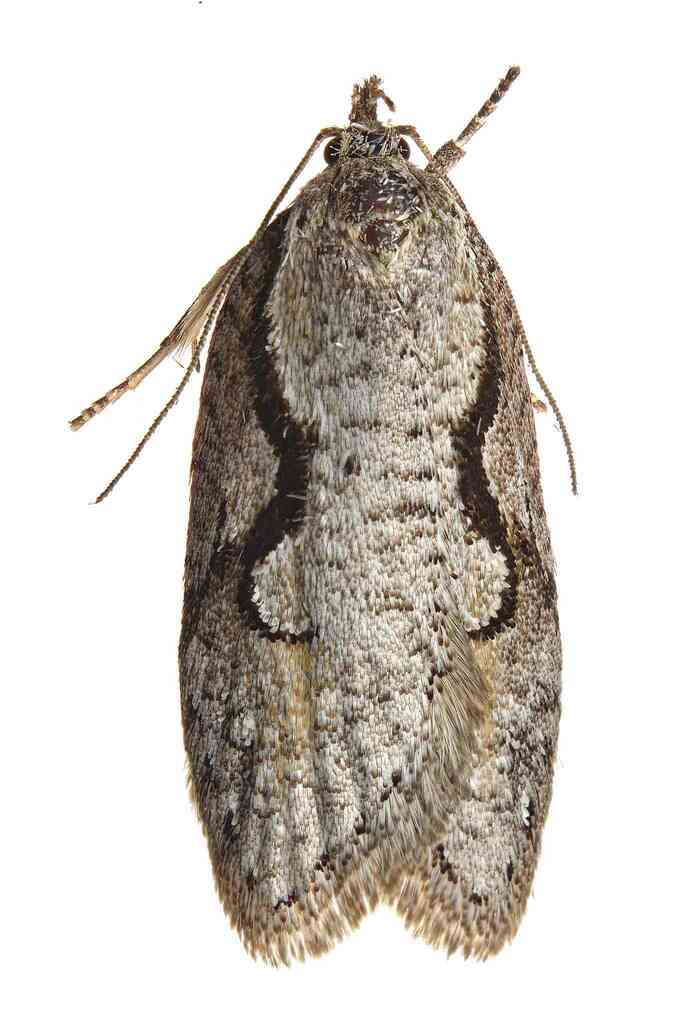
(c) Christian Back, some rights reserved (CC BY) · licence
Family: Depressariidae · Class: Insecta · Order: Lepidoptera
Semioscopis packardella is a California animal in the Depressariidae family.
Semioscopis packardella is a small moth in the family Depressariidae, one of the micro-lepidoptera groups characterized by narrow wings and small body size. Adults typically measure 8-12 mm in wingspan, with forewings that are elongated and narrow. The forewings display a mottled brown and gray pattern with darker scaling along the wing margins and distinctive white or pale yellow markings that form irregular bands across the wing surface. The hindwings are uniformly pale gray to whitish with long fringe scales characteristic of the Depressariidae family. The antennae are thread-like and approximately half the length of the forewings. The distribution and range of Semioscopis packardella in California remains poorly documented, with limited collection records available in scientific literature. This species belongs to a genus that is primarily distributed across temperate regions of North America, with several species extending into western states. Based on available collection data, the species likely occurs in mountainous and foothill regions where suitable host plants are present, though specific elevational ranges and county-level distributions require further survey work. Habitat preferences for Semioscopis packardella are not well-established, though related species in the genus typically inhabit areas with deciduous woodland, mixed forest edges, and riparian corridors. The species likely requires microhabitats with moderate moisture levels and partial shade, characteristics common to locations where potential host plants thrive. Adults are presumed to be active during warmer months, typically emerging in late spring through early summer based on collection patterns of related species. The larval ecology and host plant associations of Semioscopis packardella remain largely unknown, representing a significant knowledge gap for this species. Other members of the Semioscopis genus are known to be leaf miners or feed on various deciduous trees and shrubs during their larval stage, including species in the families Rosaceae, Betulaceae, and Salicaceae. Adult moths are presumed to be nocturnal, attracted to artificial lights, and likely have a single generation per year based on patterns observed in closely related species. Mating and oviposition behaviors have not been documented for this species. The conservation status of Semioscopis packardella is undetermined due to insufficient data on population size, distribution, and ecological requirements. The species does not appear on federal or state threatened species lists, though this may reflect a lack of comprehensive survey data rather than stable populations. Many micro-lepidoptera species face threats from habitat loss, particularly in California's rapidly developing foothill and woodland regions. Climate change may pose additional risks through altered precipitation patterns and temperature extremes that could affect host plant phenology and larval development timing. Comprehensive surveys targeting micro-lepidoptera communities are needed to assess the current status and distribution of this species throughout California. Research priorities include determining host plant associations, mapping current distribution, and assessing population trends through standardized monitoring protocols.
Classification
Class: Insecta · Order: Lepidoptera · Family: Depressariidae
Frequently asked questions
How is Semioscopis packardella classified?
Semioscopis packardella belongs to class Insecta, order Lepidoptera, family Depressariidae.
What family does Semioscopis packardella belong to?
Semioscopis packardella is in the Depressariidae family.
What is Semioscopis packardella?
Semioscopis packardella is a small moth in the family Depressariidae, one of the micro-lepidoptera groups characterized by narrow wings and small body size.
Is Semioscopis packardella found in California?
Yes. Semioscopis packardella is recorded in California in The California Species Project's catalogue.
Related species
Other California species in the same genus, family, or bioregion.
Data from The California Species Project — 14,000+ California species with verified data from CNPS, CDFW, USFWS, and more.