Sergiolus columbianus
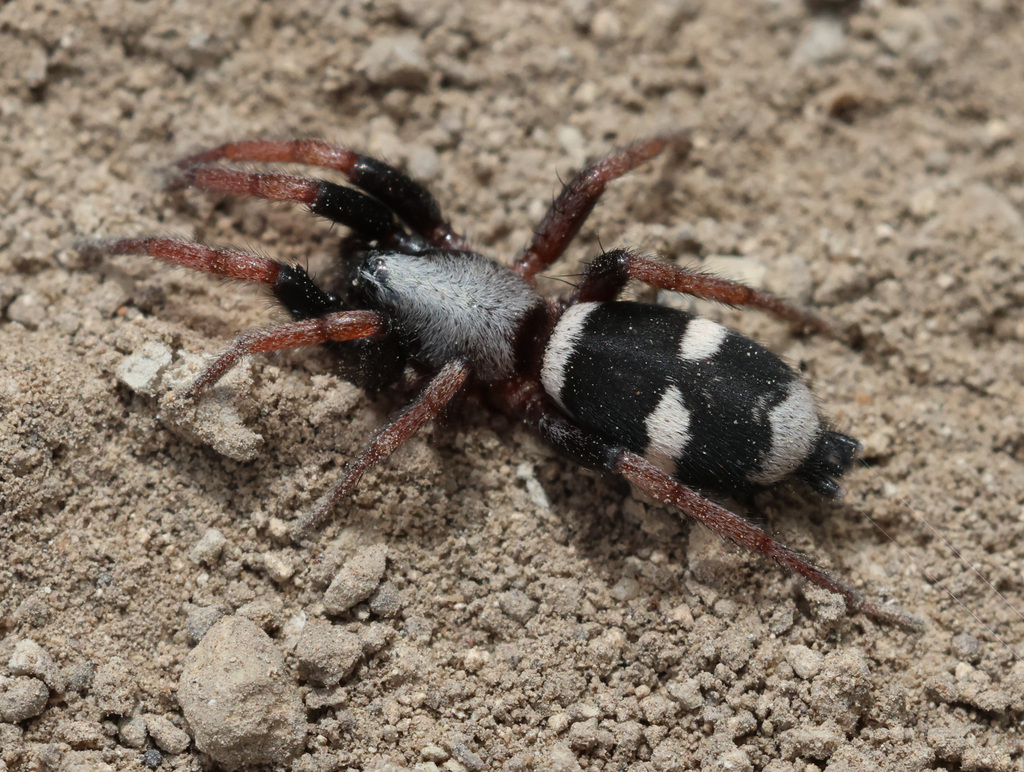
(c) Joey Bom, some rights reserved (CC BY) · licence
Family: Gnaphosidae · Class: Arachnida · Order: Araneae
Sergiolus columbianus is a California animal in the Gnaphosidae family.
Sergiolus columbianus is a medium-sized ground spider in the family Gnaphosidae. Females reach a body length of 7.5 mm, while males are slightly smaller at 6 mm body length (BugGuide). The species exhibits typical gnaphosid characteristics with a robust build and relatively short legs compared to other spider families. Sexual dimorphism is evident in size, with females being notably larger than males. This species has a broad distribution across western and central North America, ranging from Vancouver Island to South Dakota, and extending south to California and Arizona (BugGuide). In California, S. columbianus occurs throughout much of the state, representing the southern extent of its range. The species demonstrates considerable ecological adaptability across this extensive geographic distribution. Sergiolus columbianus inhabits diverse terrestrial environments, showing particular association with woody plant communities. The species has been documented in pine and oak forests, chaparral vegetation, sage communities, and pinyon pine-juniper woodlands (BugGuide). Additionally, it occurs in grassland habitats, indicating flexibility in habitat requirements. This habitat diversity suggests the species is adapted to various moisture and vegetation conditions across different elevational zones. As a member of the Gnaphosidae, S. columbianus is a nocturnal hunter that does not construct webs for prey capture. Ground spiders are active predators that hunt by pursuing prey on foot, typically feeding on small arthropods including insects and other spiders. The species likely overwinters as subadults or adults, with mating occurring in spring or early summer. Females produce egg sacs that are guarded until spiderlings emerge. Like other gnaphosids, this species probably constructs silk retreats under rocks, logs, or bark for daytime shelter and molting. The species belongs to the genus Sergiolus, which contains 26 species according to current taxonomic records (USFWS taxonomic database). Sergiolus columbianus shows no current federal or state conservation listing status, suggesting stable populations across its range. The species' broad distribution and habitat flexibility likely contribute to its conservation security. However, like many arthropod species, detailed population monitoring data are limited, and the species may face localized threats from habitat modification in developed areas. The extensive range and diverse habitat associations of S. columbianus reflect the adaptability typical of successful gnaphosid species. Its presence across multiple vegetation types and geographic regions indicates ecological resilience, though climate change and habitat fragmentation may pose future challenges. The species represents an important component of ground-dwelling predator communities throughout its range, contributing to arthropod population regulation in various western North American ecosystems. Further research on population dynamics and specific ecological requirements would enhance understanding of this widespread ground spider.
Classification
Class: Arachnida · Order: Araneae · Family: Gnaphosidae
Frequently asked questions
How is Sergiolus columbianus classified?
Sergiolus columbianus belongs to class Arachnida, order Araneae, family Gnaphosidae.
What family does Sergiolus columbianus belong to?
Sergiolus columbianus is in the Gnaphosidae family.
What is Sergiolus columbianus?
Sergiolus columbianus is a medium-sized ground spider in the family Gnaphosidae.
Is Sergiolus columbianus found in California?
Yes. Sergiolus columbianus is recorded in California in The California Species Project's catalogue.
Related species
Other California species in the same genus, family, or bioregion.
Data from The California Species Project — 14,000+ California species with verified data from CNPS, CDFW, USFWS, and more.