Sericosema juturnaria
Bordered Fawn
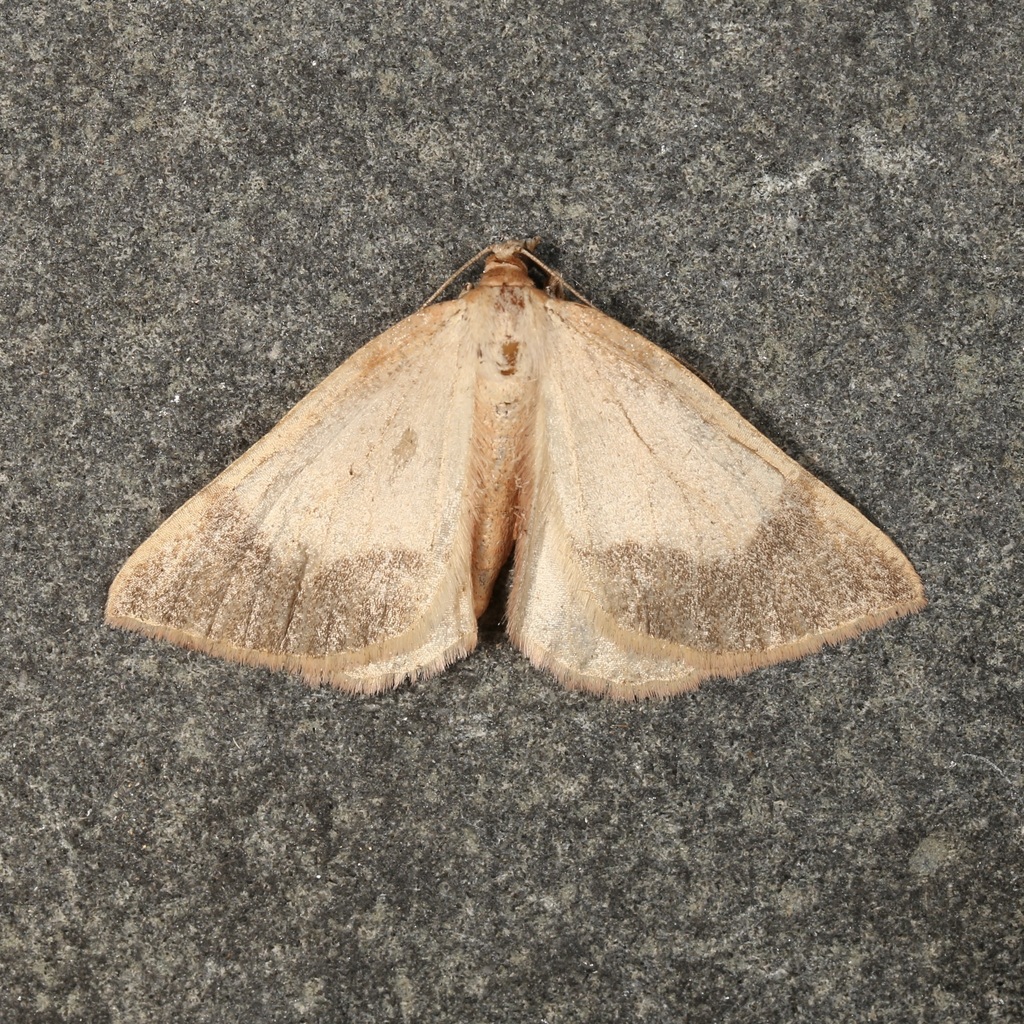
(c) Laura Gaudette, some rights reserved (CC BY) · licence
Family: Geometridae · Class: Insecta · Order: Lepidoptera
Sericosema juturnaria (Bordered Fawn) is a California animal in the Geometridae family.
The Bordered Fawn (Sericosema juturnaria) is a moth species in the family Geometridae, commonly known as geometrid moths or inchworm moths. This species belongs to a diverse family characterized by larvae that move in a distinctive looping motion, hence the common name "inchworms." Adult Bordered Fawn moths exhibit the typical geometrid body plan with relatively broad wings held horizontally when at rest and slender bodies. Geometrid moths in the genus Sericosema are typically medium-sized with wingspan measurements varying by species within the genus. The Bordered Fawn displays wing patterns and coloration consistent with many geometrid species, which often feature cryptic coloration that provides camouflage against tree bark and lichen-covered surfaces. The specific epithet "juturnaria" follows the typical geometrid naming convention ending in "-aria." The current distribution and range of Sericosema juturnaria requires verification from authoritative lepidopteran databases, as detailed range information is not readily available in standard references. Many geometrid moths have restricted distributions, particularly those adapted to specific host plant associations or particular habitat types within California's diverse ecosystems. Habitat requirements for the Bordered Fawn likely follow patterns typical of geometrid moths, which often inhabit forested areas, woodland margins, and areas with abundant vegetation that supports both larval development and adult nectar sources. The specific elevation range, vegetation associations, and microhabitat preferences would require field survey data and taxonomic literature review to establish with certainty. Like other geometrid moths, Sericosema juturnaria likely undergoes complete metamorphosis with egg, larval, pupal, and adult stages. Geometrid larvae are typically herbivorous, feeding on leaves of specific host plants, though the particular host plant associations for this species are not well-documented in readily accessible sources. Adult activity patterns, flight periods, and reproductive behavior would follow general geometrid patterns, with adults typically active during specific seasons and often attracted to lights during nocturnal activity periods. The conservation status of Sericosema juturnaria is not established in major conservation databases, suggesting either stable populations not requiring special protection or insufficient survey data to assess population trends. Many geometrid moths face threats similar to other Lepidoptera, including habitat loss, fragmentation of suitable habitat, climate change effects on host plant distribution, and light pollution affecting adult behavior patterns. Without specific population data or conservation assessments, the current status remains uncertain. Further research is needed to establish comprehensive life history information, host plant relationships, distribution patterns, and population status for this species. Lepidopteran surveys and taxonomic studies would provide essential data for understanding the ecology and conservation needs of Sericosema juturnaria within California's lepidopteran fauna.
Classification
Class: Insecta · Order: Lepidoptera · Family: Geometridae
Frequently asked questions
How is Sericosema juturnaria classified?
Sericosema juturnaria belongs to class Insecta, order Lepidoptera, family Geometridae.
What family does Sericosema juturnaria belong to?
Sericosema juturnaria is in the Geometridae family.
What is Sericosema juturnaria?
The Bordered Fawn (Sericosema juturnaria) is a moth species in the family Geometridae, commonly known as geometrid moths or inchworm moths.
Is Sericosema juturnaria found in California?
Yes. Sericosema juturnaria is recorded in California in The California Species Project's catalogue.
Related species
Other California species in the same genus, family, or bioregion.
Data from The California Species Project — 14,000+ California species with verified data from CNPS, CDFW, USFWS, and more.