Serpula columbiana
Red-trumpet Calcareous Tubeworm
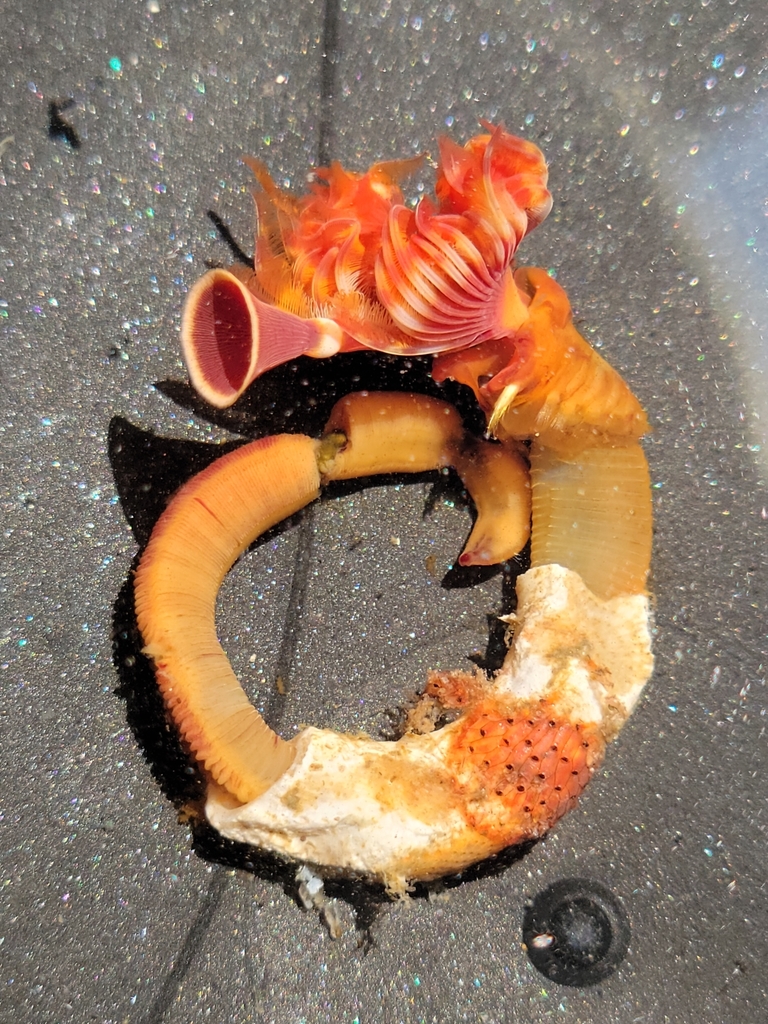
no rights reserved · CC0
Family: Serpulidae · Class: Polychaeta · Order: Sabellida
Serpula columbiana (Red-trumpet Calcareous Tubeworm) is a California animal in the Serpulidae family.
Serpula columbiana, the Red-trumpet Calcareous Tubeworm, is a marine polychaete worm in the family Serpulidae. As a member of the order Sabellida, this species constructs calcareous tubes characteristic of serpulid worms. The common name 'red-trumpet' likely refers to the distinctive coloration and flared tube opening typical of many Serpula species, though detailed morphological descriptions for this particular species are not well documented in current scientific literature. Serpulid tubeworms are sessile filter feeders that secrete calcium carbonate tubes for protection. These tubes are typically white to reddish in color and may have a trumpet-like flared opening. Adult worms extend feathery feeding structures called radioles from their tubes to capture plankton and organic particles from the water column. When disturbed, the worm rapidly retracts into its tube and seals the opening with a specialized operculum. The specific distribution and habitat requirements of S. columbiana have not been comprehensively documented. Serpulid tubeworms generally inhabit marine environments where they attach to hard substrates including rocks, shells, pier pilings, and ship hulls. Many species in this family are found in intertidal and shallow subtidal zones, though some occur at greater depths. Like other serpulids, S. columbiana likely reproduces through broadcast spawning, releasing gametes into the water column where fertilization occurs. Larvae undergo a planktonic phase before settling and metamorphosing into tube-building juveniles. The duration of larval development and specific spawning seasons for this species remain undocumented. Serpulid tubeworms play important ecological roles as filter feeders, helping to clarify water by removing suspended particles. Their calcium carbonate tubes can contribute to reef-building in some environments and provide habitat structure for other marine organisms. Some serpulid species have become problematic as marine fouling organisms on ships and harbor infrastructure. No specific conservation status has been assigned to S. columbiana, and the species does not appear on federal or state threatened and endangered species lists as of December 2025. The lack of comprehensive biological and ecological data for this species represents a significant knowledge gap in our understanding of California's marine polychaete fauna. Detailed ecological studies of this species are lacking. The above information synthesizes general serpulid biology with available taxonomic data. Scientific documentation for this species remains limited, and specific information about its distribution, habitat preferences, life history, and ecological role requires further research. We welcome contributions of verified scientific data, photographs, or field observations to enhance this species account.
Classification
Class: Polychaeta · Order: Sabellida · Family: Serpulidae
Frequently asked questions
How is Serpula columbiana classified?
Serpula columbiana belongs to class Polychaeta, order Sabellida, family Serpulidae.
What family does Serpula columbiana belong to?
Serpula columbiana is in the Serpulidae family.
What is Serpula columbiana?
Serpula columbiana, the Red-trumpet Calcareous Tubeworm, is a marine polychaete worm in the family Serpulidae.
Is Serpula columbiana found in California?
Yes. Serpula columbiana is recorded in California in The California Species Project's catalogue.
More California species
This species has no close relatives in our California data — here are other species to explore.
Data from The California Species Project — 14,000+ California species with verified data from CNPS, CDFW, USFWS, and more.