Setophaga americana
Northern Parula
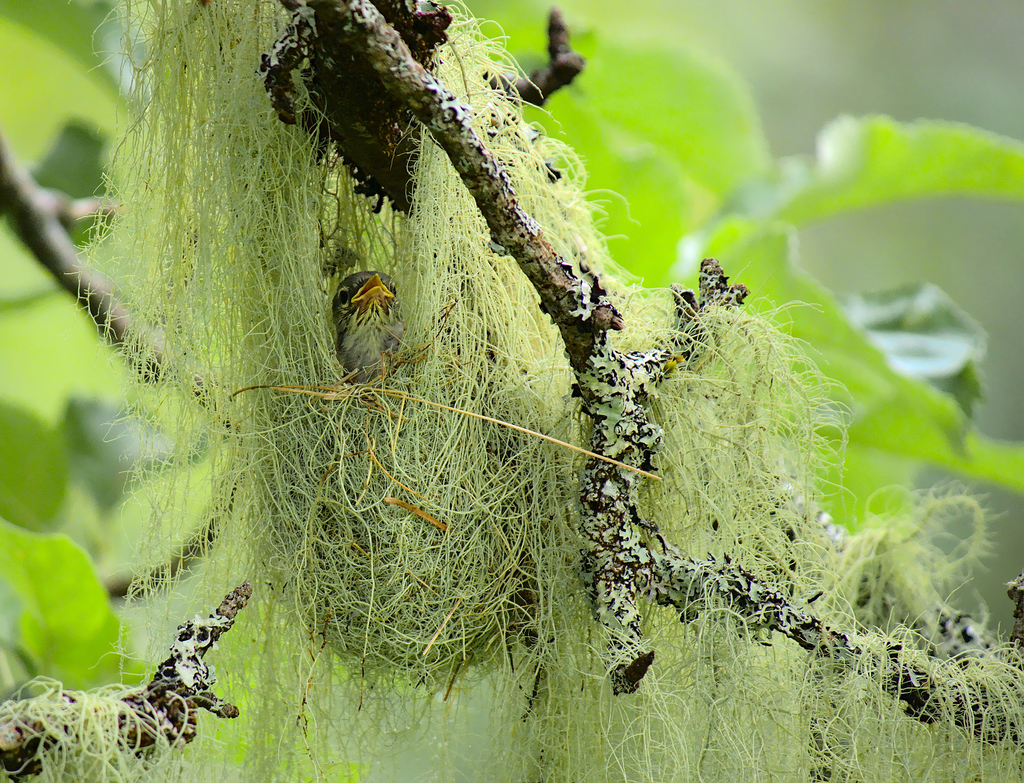
(c) Blake Ross, some rights reserved (CC BY) · licence
Family: Parulidae · Class: Aves · Order: Passeriformes
Setophaga americana (Northern Parula) is a California animal in the Parulidae family.
The Northern Parula is a small warbler measuring 10.5 to 11.4 cm (4.1 to 4.5 inches) in length with a wingspan of 16 to 18 cm (6.3 to 7.1 inches). Males display distinctive blue-gray upperparts with a greenish patch on the back, white wing bars, and a yellow throat and breast bisected by a dark band across the upper chest. Females are similar but duller, often lacking the prominent chest band. Both sexes show a broken white eye-ring and yellow-green wash on the back. The species weighs 8 to 11 grams (0.28 to 0.39 ounces). The Northern Parula breeds across eastern North America from southeastern Canada south to the Gulf Coast, with the western breeding range extending to eastern Nebraska and central Texas. In California, this species occurs primarily as a vagrant during migration, with most records from coastal areas and desert oases. Fall migrants typically appear from August through October, with spring records from April through June. The species winters from southern Florida and the Gulf Coast south through Central America to Nicaragua. Breeding habitat consists of mature forests with abundant epiphytes, particularly old man's beard lichen (Usnea species) in northern regions and Spanish moss (Tillandsia usneoides) in southeastern areas. These epiphytes provide essential nesting material and structure. During migration, Northern Parulas utilize diverse woodland habitats including riparian forests, parks, and ornamental plantings. The species shows a preference for areas with dense canopy cover and abundant insect prey. Northern Parulas are insectivorous, gleaning small insects, spiders, and larvae from foliage and bark surfaces. They employ various foraging techniques including hover-gleaning and occasionally catching insects in flight. The breeding season extends from May through July, with females constructing cup-shaped nests within hanging epiphytes 3 to 9 meters (10 to 30 feet) above ground. Clutch size ranges from 3 to 5 eggs, which are incubated for 12 to 13 days. Young fledge after 10 to 11 days. The species typically produces one brood per season, occasionally two in southern portions of the range. The Northern Parula is not federally or state-listed in California, reflecting its vagrant status in the state. According to Partners in Flight, the continental population is estimated at 28 million individuals and is considered stable. The species has experienced some regional declines in portions of its breeding range due to habitat loss and fragmentation. In California, conservation focus centers on maintaining high-quality stopover habitat in riparian corridors and desert oases that support migrant populations. Climate change may affect migration timing and stopover site quality, potentially influencing the frequency and distribution of California records.
Classification
Class: Aves · Order: Passeriformes · Family: Parulidae
Frequently asked questions
How is Setophaga americana classified?
Setophaga americana belongs to class Aves, order Passeriformes, family Parulidae.
What family does Setophaga americana belong to?
Setophaga americana is in the Parulidae family.
What is Setophaga americana?
The Northern Parula is a small warbler measuring 10.5 to 11.4 cm (4.1 to 4.5 inches) in length with a wingspan of 16 to 18 cm (6.3 to 7.1 inches).
Is Setophaga americana found in California?
Yes. Setophaga americana is recorded in California in The California Species Project's catalogue.
Related species
Other California species in the same genus, family, or bioregion.
Data from The California Species Project — 14,000+ California species with verified data from CNPS, CDFW, USFWS, and more.