Setophaga cerulea
Cerulean Warbler
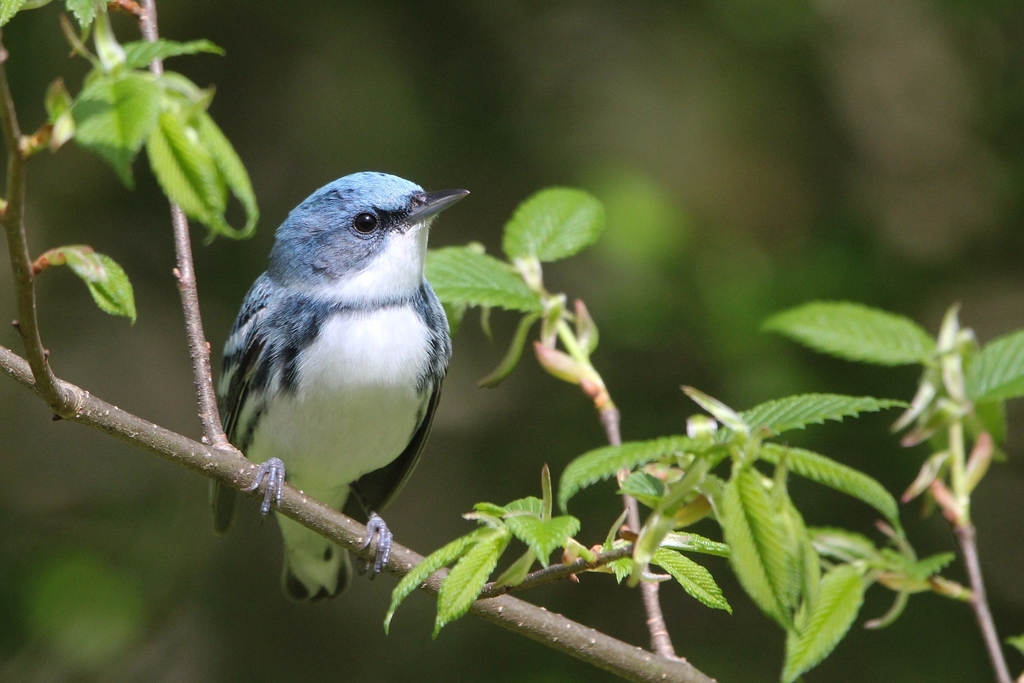
(c) Matt Schenck, some rights reserved (CC BY) · licence
Family: Parulidae · Class: Aves · Order: Passeriformes
Setophaga cerulea (Cerulean Warbler) is a California animal in the Parulidae family.
The Cerulean Warbler is a small neotropical migrant songbird measuring 11 to 13 cm (4.3 to 5.1 inches) in length with a wingspan of 20 cm (7.9 inches). Adult males display distinctive cerulean blue upperparts with white underparts crossed by a dark blue necklace across the breast. Females and juveniles are blue-gray above with pale yellow-white underparts and a whitish eyebrow stripe. Both sexes possess two white wing bars and relatively short tails compared to other wood-warblers. The species breeds primarily in mature deciduous forests of eastern North America, from southern Ontario and the Great Lakes region south to northern Georgia and Alabama, with the core breeding range in the Appalachian Mountains and Ohio River Valley. In California, Cerulean Warblers are extremely rare vagrant visitors, with only a handful of documented records along the coast during migration periods. Most California sightings occur during spring migration between April and May. Cerulean Warblers require mature, tall deciduous forests with large trees and relatively open understories. During breeding season, they favor forests dominated by oak, hickory, maple, and tulip poplar, typically at elevations below 1,000 meters. Males establish territories in the forest canopy, often 15 to 30 meters above ground. The species shows strong preference for forests with gaps created by natural disturbance or selective logging that maintain canopy structure while providing increased light penetration. These warblers are primarily insectivorous, gleaning caterpillars, beetles, flies, and other arthropods from leaves and bark in the upper canopy. During migration and winter, they supplement their diet with small fruits and berries. Breeding occurs from May through July, with females constructing cup-shaped nests on horizontal branches far from the trunk, typically 6 to 18 meters high. Clutches contain 3 to 5 eggs, with incubation lasting 12 to 13 days. Young fledge after 9 to 10 days but remain dependent on parents for an additional two weeks. The Cerulean Warbler has experienced severe population decline throughout its range, with North American Breeding Bird Survey data indicating a 66% decline from 1966 to 2019. The species was designated as vulnerable by Partners in Flight and is considered a Bird of Conservation Concern by the U.S. Fish and Wildlife Service. Primary threats include habitat loss from mountaintop removal mining, forest fragmentation, and conversion of mature forests to younger stands. Additional pressures include collisions with communication towers during migration and habitat degradation on wintering grounds in South America. Climate change poses emerging threats through shifts in suitable breeding habitat northward and altered precipitation patterns affecting food availability.
Classification
Class: Aves · Order: Passeriformes · Family: Parulidae
Frequently asked questions
How is Setophaga cerulea classified?
Setophaga cerulea belongs to class Aves, order Passeriformes, family Parulidae.
What family does Setophaga cerulea belong to?
Setophaga cerulea is in the Parulidae family.
What is Setophaga cerulea?
The Cerulean Warbler is a small neotropical migrant songbird measuring 11 to 13 cm (4.3 to 5.1 inches) in length with a wingspan of 20 cm (7.9 inches).
Is Setophaga cerulea found in California?
Yes. Setophaga cerulea is recorded in California in The California Species Project's catalogue.
Related species
Other California species in the same genus, family, or bioregion.
Data from The California Species Project — 14,000+ California species with verified data from CNPS, CDFW, USFWS, and more.