Setophaga chrysoparia
Golden-cheeked Warbler
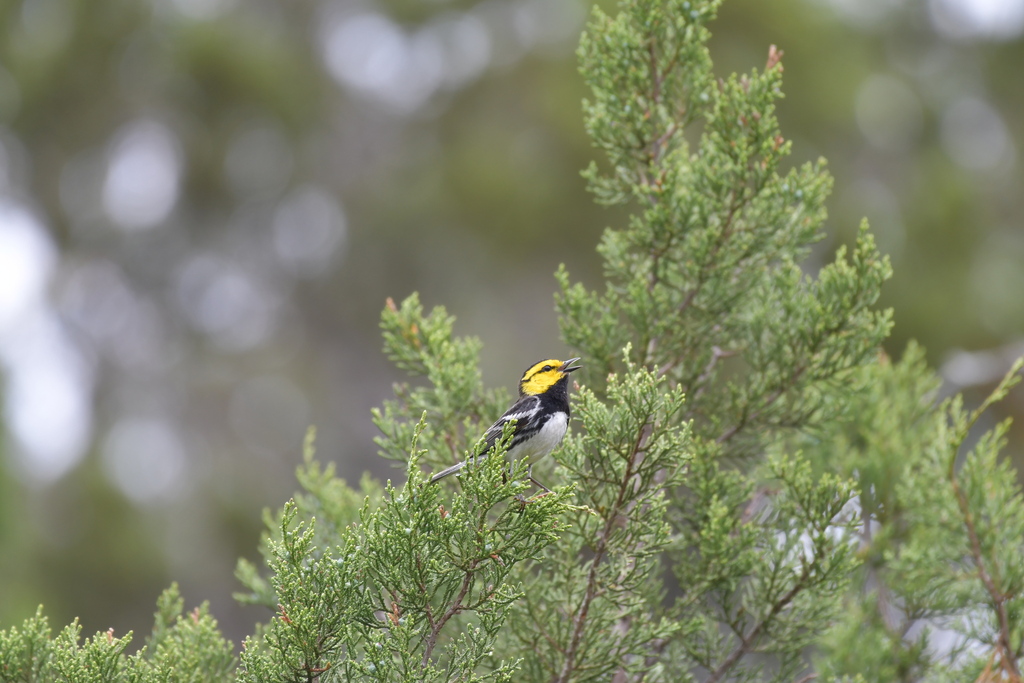
(c) Cody Stricker, some rights reserved (CC BY) · licence
Family: Parulidae · Class: Aves · Order: Passeriformes
Setophaga chrysoparia (Golden-cheeked Warbler) is a California animal in the Parulidae family.
The Golden-cheeked Warbler is a small songbird measuring approximately 12 to 14 centimeters (4.7 to 5.5 inches) in length. Males display distinctive golden-yellow cheek patches bordered by black markings extending from the bill through the eye and down the side of the neck. The back is streaked with black and white, while females and juveniles show more subdued coloration with duller yellow cheeks and less pronounced black markings. The Golden-cheeked Warbler is the only bird species endemic to Texas for breeding, with its entire breeding range restricted to the Edwards Plateau and surrounding areas of central Texas (Birds of the World). The species does not occur in California. During winter months, populations migrate to the mountainous highlands of southern Mexico (Chiapas) and Central America, including Guatemala, Honduras, El Salvador, and Nicaragua (USFWS ECOS). Breeding habitat consists exclusively of mature Ashe juniper-oak woodlands. The species exhibits a critical dependence on Ashe juniper (Juniperus ashei) for nesting material, using only the long, fine bark strips available from mature trees (USFWS). These juniper-oak woodlands typically occur on limestone soils of the Edwards Plateau at elevations ranging from 300 to 760 meters (980 to 2,500 feet). The species requires a mix of mature Ashe junipers for nesting material and deciduous oaks for foraging. Golden-cheeked Warblers are insectivorous, feeding primarily on caterpillars, beetles, and other arthropods gleaned from oak foliage. Males arrive on breeding territories in March, followed by females in mid-March to early April. The species constructs cup-shaped nests using strips of Ashe juniper bark bound together with spider webs, typically placed 3 to 7 meters (10 to 23 feet) above ground in oak or juniper trees. Females lay 3 to 4 eggs, with incubation lasting approximately 12 days. The species is particularly vulnerable to nest parasitism by Brown-headed Cowbirds, which has contributed significantly to population declines. The Golden-cheeked Warbler was federally listed as endangered in 1990 due to habitat loss and fragmentation of its specialized juniper-oak woodland habitat (USFWS). Urban development, agricultural conversion, and cedar clearing have eliminated an estimated 60% of suitable breeding habitat since European settlement. The species faces additional threats from Brown-headed Cowbird parasitism, with parasitism rates exceeding 70% in some areas. Climate change may further impact the species by altering precipitation patterns necessary for maintaining juniper-oak ecosystems. Recent petitions for delisting have been filed, citing population recovery, though USFWS has not found these petitions substantial as of 2016, with a more recent petition receiving a substantial finding in January 2025 (USFWS ECOS). Current population estimates suggest approximately 17,000 to 40,000 pairs remain, concentrated primarily on military installations, private ranches, and state parks within the Edwards Plateau region.
Classification
Class: Aves · Order: Passeriformes · Family: Parulidae
Frequently asked questions
How is Setophaga chrysoparia classified?
Setophaga chrysoparia belongs to class Aves, order Passeriformes, family Parulidae.
What family does Setophaga chrysoparia belong to?
Setophaga chrysoparia is in the Parulidae family.
What is Setophaga chrysoparia?
The Golden-cheeked Warbler is a small songbird measuring approximately 12 to 14 centimeters (4.7 to 5.5 inches) in length.
Is Setophaga chrysoparia found in California?
Yes. Setophaga chrysoparia is recorded in California in The California Species Project's catalogue.
Related species
Other California species in the same genus, family, or bioregion.
Data from The California Species Project — 14,000+ California species with verified data from CNPS, CDFW, USFWS, and more.