Setophaga citrina
Hooded Warbler
no rights reserved · CC0
Family: Parulidae · Class: Aves · Order: Passeriformes
Setophaga citrina (Hooded Warbler) is a California animal in the Parulidae family.
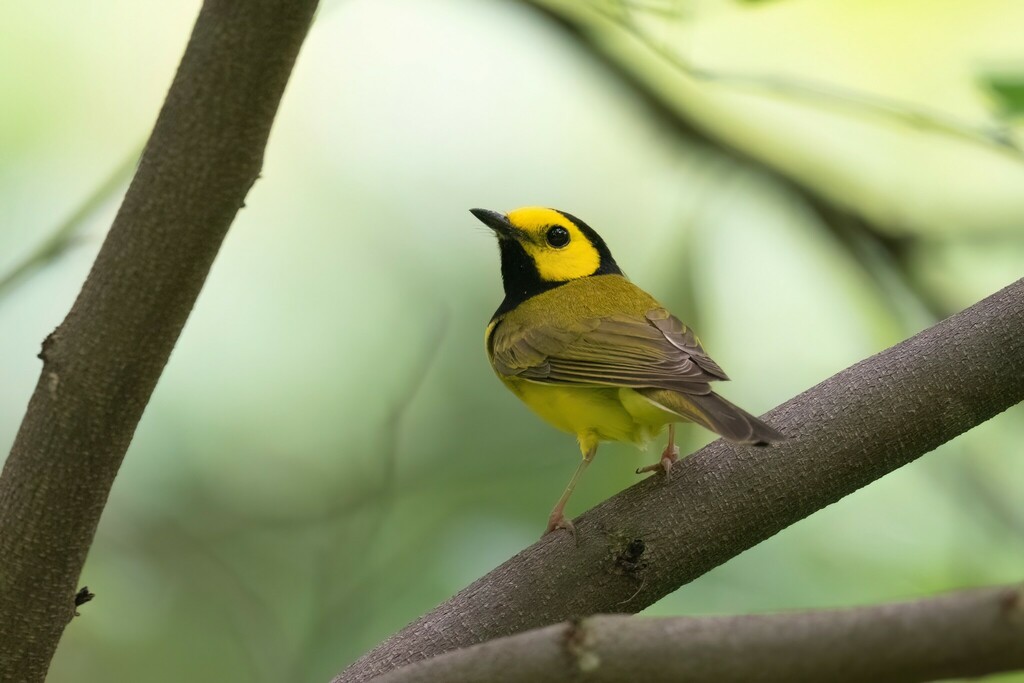
The Hooded Warbler is a small songbird measuring 12 to 14 centimeters (4.7 to 5.5 inches) in length with a wingspan of 17 to 19 centimeters (6.7 to 7.5 inches). Adults weigh 9 to 12 grams (0.3 to 0.4 ounces). Males display striking plumage with bright yellow underparts and face, contrasting sharply with a distinctive black hood that extends from the crown down the sides of the neck, framing the yellow face. The back and wings are olive-green. Females and immature birds lack the black hood, showing olive-green upperparts with yellow underparts and a yellow face with darker ear patches. Both sexes have white outer tail feathers that are conspicuous during flight and foraging behaviors. The Hooded Warbler breeds primarily in eastern North America, from southern Canada south to the Gulf Coast states. The western edge of their breeding range extends into eastern Texas, Oklahoma, and southeastern Kansas. In California, the species is considered a vagrant, with occasional sightings documented during migration periods, particularly along the coast and in desert oases. Most California records occur from late August through October during fall migration, with fewer spring records from April to May. This species inhabits mature deciduous and mixed forests with well-developed understory vegetation. Breeding habitat consists of forests with closed canopies and dense shrub layers, particularly areas with mountain laurel, rhododendron, or other ericaceous shrubs. During migration, Hooded Warblers utilize various woodland habitats including riparian corridors, oak woodlands, and urban parks with sufficient tree cover. They prefer forest edges, gaps, and areas with vertical habitat complexity from ground level to canopy. Hooded Warblers are insectivorous, gleaning insects and spiders from foliage and occasionally catching prey through fly-catching maneuvers. They forage primarily in the understory and lower canopy levels, often hovering briefly to pick insects from leaf surfaces. The species frequently fans its tail, exposing white outer tail feathers, possibly to startle prey or communicate with conspecifics. Breeding occurs from May through July, with females constructing cup-shaped nests in shrubs or small trees 0.6 to 3 meters (2 to 10 feet) above ground. Clutch size ranges from 3 to 5 eggs, with an incubation period of 12 to 13 days. Young fledge after 8 to 9 days but remain dependent on parents for additional weeks. The Hooded Warbler is not federally listed and maintains stable populations throughout most of its range. According to the North American Breeding Bird Survey, populations have remained relatively stable since 1966, though some regional declines have occurred due to forest fragmentation and habitat loss. The species benefits from forest management practices that maintain understory diversity. In California, the Hooded Warbler has no breeding population and is not considered a conservation concern, appearing only as a rare vagrant during migration periods.
Classification
Class: Aves · Order: Passeriformes · Family: Parulidae
Frequently asked questions
How is Setophaga citrina classified?
Setophaga citrina belongs to class Aves, order Passeriformes, family Parulidae.
What family does Setophaga citrina belong to?
Setophaga citrina is in the Parulidae family.
What is Setophaga citrina?
The Hooded Warbler is a small songbird measuring 12 to 14 centimeters (4.7 to 5.5 inches) in length with a wingspan of 17 to 19 centimeters (6.7 to 7.5 inches).
Is Setophaga citrina found in California?
Yes. Setophaga citrina is recorded in California in The California Species Project's catalogue.
Related species
Other California species in the same genus, family, or bioregion.
Data from The California Species Project — 14,000+ California species with verified data from CNPS, CDFW, USFWS, and more.