Setophaga coronata
Yellow-rumped Warbler
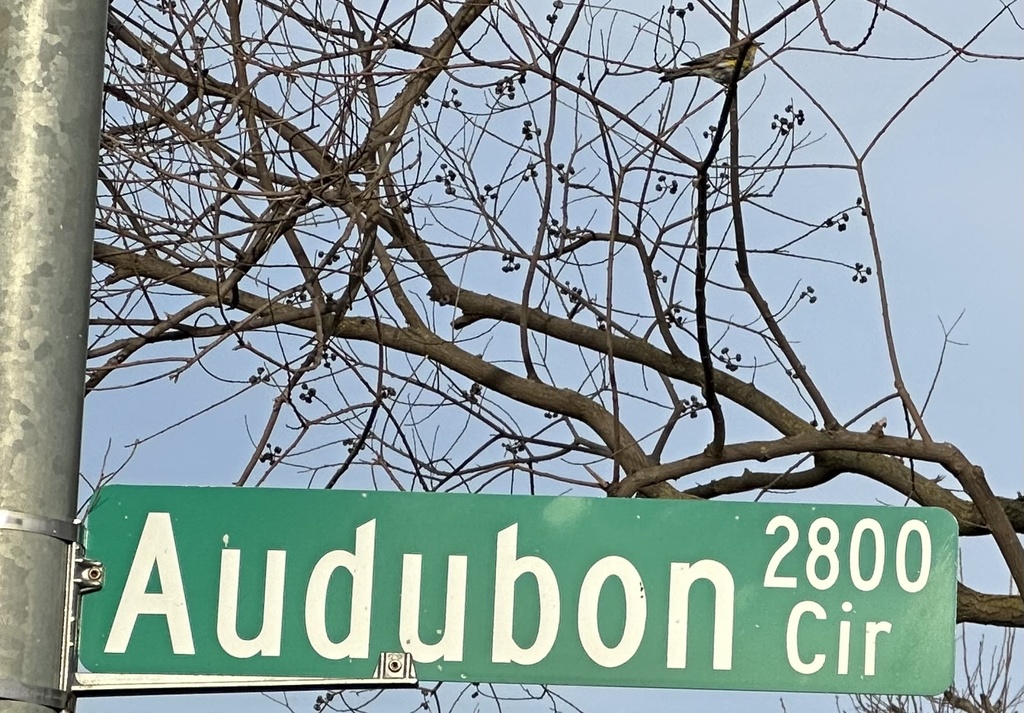
(c) Jonathan Eisen, some rights reserved (CC BY) · licence
Family: Parulidae · Class: Aves · Order: Passeriformes
Setophaga coronata (Yellow-rumped Warbler) is a California animal in the Parulidae family.
The Yellow-rumped Warbler is a medium-sized songbird measuring 12 to 15 cm (4.7 to 5.9 inches) in length with a wingspan of 19 to 24 cm (7.5 to 9.4 inches). Adults weigh 10 to 13 grams. The species exhibits distinct seasonal plumage variation and sexual dimorphism. Breeding males display a blue-gray back, black throat and flanks, white breast and belly, and distinctive yellow patches on the crown, sides, and rump. Two white wing bars are prominent. Females and non-breeding males show browner upperparts with streaked underparts, but retain the characteristic yellow rump patch that gives the species its common name. The species has two recognized subspecies groups: the Myrtle Warbler of eastern North America and the Audubon's Warbler of western regions, which differ primarily in throat coloration and facial patterns. In California, Yellow-rumped Warblers breed primarily in montane coniferous forests throughout the Sierra Nevada, Cascade Range, and higher elevations of the Coast Ranges. The species occurs from Siskiyou County south to San Bernardino County, typically at elevations between 900 and 3,000 meters (2,950 to 9,850 feet). During migration and winter, the species disperses to lower elevations and more diverse habitats, including coastal areas, Central Valley riparian zones, and desert oases. Winter populations are augmented by migrants from northern breeding areas. Breeding habitat consists of mature coniferous forests dominated by Douglas fir, white fir, red fir, and various pine species. The species shows preference for forest edges, openings, and areas with mixed canopy structure. During winter, Yellow-rumped Warblers occupy a broader range of habitats including oak woodlands, riparian forests, chaparral, urban parks, and gardens. The species adapts well to fragmented landscapes and can utilize planted conifers in developed areas. Yellow-rumped Warblers are primarily insectivorous during the breeding season, gleaning beetles, caterpillars, flies, and aphids from foliage and bark. The species exhibits aerial hawking behavior, catching insects in flight. Unlike most warblers, Yellow-rumped Warblers can digest waxy compounds, allowing them to consume bayberries and wax myrtle fruits during winter months. This dietary flexibility contributes to their ability to overwinter farther north than other warbler species. Breeding occurs from May through July, with females constructing cup nests in coniferous trees 1.5 to 15 meters above ground. Clutch size ranges from three to five eggs, with an incubation period of 12 to 13 days. Young fledge after 10 to 12 days. The Yellow-rumped Warbler is not federally or state-listed and maintains stable populations throughout its range. According to the North American Breeding Bird Survey, populations have remained relatively stable over the past several decades, with some regional variations. The species benefits from forest management practices that maintain diverse canopy structure and edge habitats. Climate change may affect high-elevation breeding areas, but the species' habitat flexibility and dietary adaptability provide some resilience to environmental changes.
Classification
Class: Aves · Order: Passeriformes · Family: Parulidae
Frequently asked questions
How is Setophaga coronata classified?
Setophaga coronata belongs to class Aves, order Passeriformes, family Parulidae.
What family does Setophaga coronata belong to?
Setophaga coronata is in the Parulidae family.
What is Setophaga coronata?
The Yellow-rumped Warbler is a medium-sized songbird measuring 12 to 15 cm (4.7 to 5.9 inches) in length with a wingspan of 19 to 24 cm (7.5 to 9.4 inches).
Is Setophaga coronata found in California?
Yes. Setophaga coronata is recorded in California in The California Species Project's catalogue.
Related species
Other California species in the same genus, family, or bioregion.
Data from The California Species Project — 14,000+ California species with verified data from CNPS, CDFW, USFWS, and more.