Setophaga discolor
Prairie Warbler
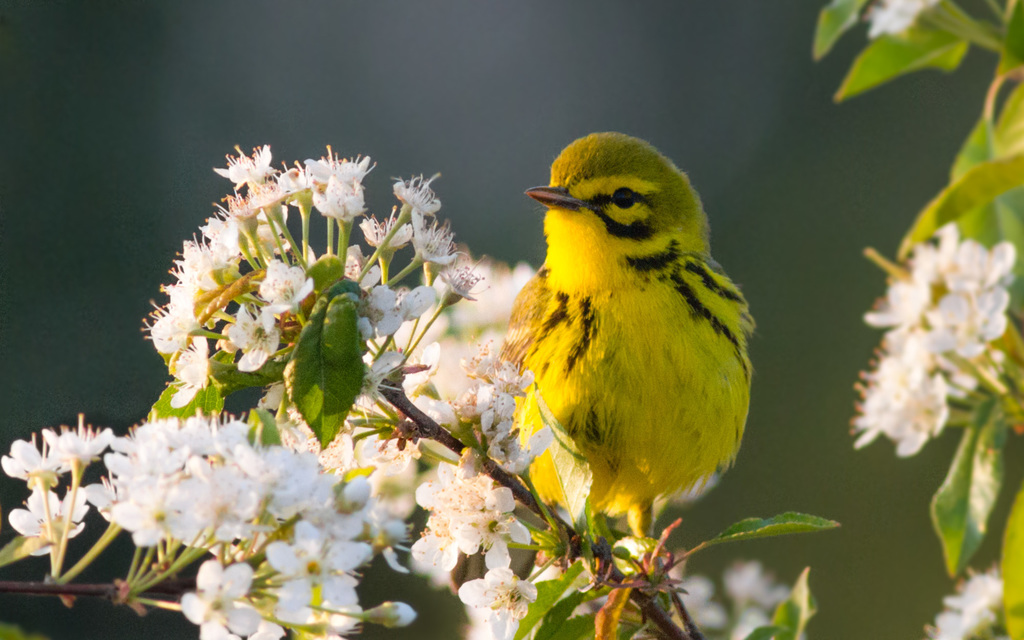
(c) Fyn Kynd, some rights reserved (CC BY-SA) · licence
Family: Parulidae · Class: Aves · Order: Passeriformes
Setophaga discolor (Prairie Warbler) is a California animal in the Parulidae family.
The Prairie Warbler is a small songbird in the wood-warbler family, measuring 11-12 cm (4.3-4.7 inches) in length with a wingspan of 16-19 cm (6.3-7.5 inches). Adults weigh 6.5-8.5 grams. Males display bright yellow underparts with distinctive black streaking along the sides and flanks. The upperparts are olive-green with two faint wing bars and a dark line through the eye. Females and immatures show similar but duller coloration with less pronounced streaking. Both sexes have yellow patches on the sides of the neck and a characteristic habit of tail-wagging while foraging. Despite its name, the Prairie Warbler is not primarily associated with prairie habitats. The species breeds across much of the eastern United States, from southern New England and southeastern Canada south to northern Florida and west to eastern Kansas and Oklahoma. In California, Prairie Warblers are extremely rare vagrants, with only a handful of documented records. These occurrences typically involve individual birds detected during fall migration between August and October, primarily along the coast and in desert regions during peak migration periods. Prairie Warblers inhabit early successional habitats, particularly shrublands, young forest clearings, forest edges, and areas with scattered trees and dense understory vegetation. During breeding season, they prefer habitats with 25-75% canopy cover and substantial shrub layers between 1-4 meters in height. In their eastern range, they commonly utilize power line corridors, abandoned agricultural lands reverting to forest, and managed forest clearcuts. The species typically occurs at elevations below 600 meters but can be found up to 1,200 meters in mountainous regions. These active insectivores forage primarily in the mid-canopy and understory, gleaning insects and spiders from leaves and bark surfaces. Their diet consists mainly of caterpillars, beetles, flies, aphids, and other small arthropods. During migration and winter, they supplement their diet with small fruits and berries. Prairie Warblers are territorial during breeding season, with males arriving on breeding grounds in late April to early May. Females construct cup-shaped nests in shrubs or low tree branches 1-3 meters above ground, typically laying 3-5 white eggs with brown spotting. The incubation period lasts 11-14 days, with fledging occurring 8-11 days after hatching. Most pairs attempt two broods per season. The Prairie Warbler is not federally listed but has experienced significant population declines across much of its range. According to the North American Breeding Bird Survey, populations declined by approximately 1.2% annually between 1966-2019, representing a cumulative decline of over 50%. Primary threats include habitat loss due to forest maturation and development, nest parasitism by Brown-headed Cowbirds, and climate change impacts. The species benefits from forest management practices that maintain early successional habitats, including selective timber harvesting and prescribed burning programs.
Classification
Class: Aves · Order: Passeriformes · Family: Parulidae
Frequently asked questions
How is Setophaga discolor classified?
Setophaga discolor belongs to class Aves, order Passeriformes, family Parulidae.
What family does Setophaga discolor belong to?
Setophaga discolor is in the Parulidae family.
What is Setophaga discolor?
The Prairie Warbler is a small songbird in the wood-warbler family, measuring 11-12 cm (4.3-4.7 inches) in length with a wingspan of 16-19 cm (6.3-7.5 inches).
Is Setophaga discolor found in California?
Yes. Setophaga discolor is recorded in California in The California Species Project's catalogue.
Related species
Other California species in the same genus, family, or bioregion.
Data from The California Species Project — 14,000+ California species with verified data from CNPS, CDFW, USFWS, and more.