Setophaga dominica
Yellow-throated Warbler
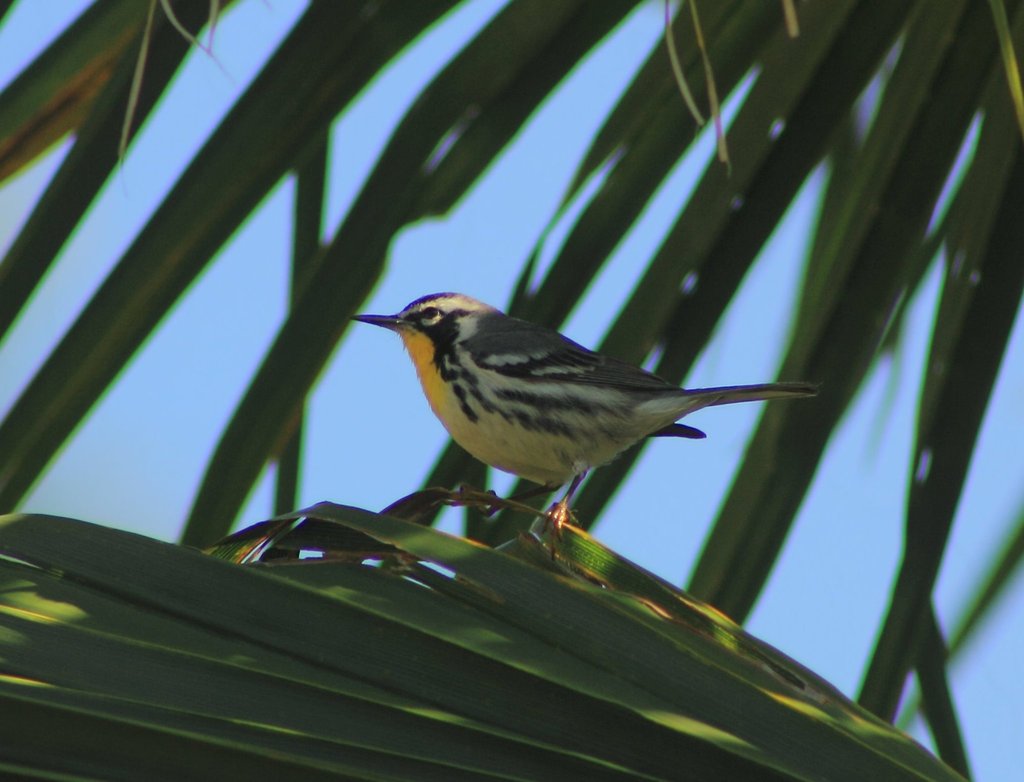
(c) Juan Cruzado Cortés, some rights reserved (CC BY-SA) · licence
Family: Parulidae · Class: Aves · Order: Passeriformes
Setophaga dominica (Yellow-throated Warbler) is a California animal in the Parulidae family.
The Yellow-throated Warbler is a small songbird measuring 12-14 cm (4.7-5.5 inches) in length with a wingspan of 20-23 cm (7.9-9.1 inches). Adults weigh 8-11 grams. The species displays distinct sexual dimorphism, with males featuring a bright yellow throat and upper breast, contrasting with white underparts and gray upperparts. A distinctive black mask extends from the bill through the eye to the auriculars, bordered above by a white supercilium. Two prominent white wing bars mark the dark wings. The bill is long, thin, and slightly decurved, adapted for gleaning insects from bark crevices. Females show similar patterns but with duller coloration, particularly reduced yellow on the throat. In California, the Yellow-throated Warbler is an extremely rare vagrant, with only a handful of documented records. The species' primary range extends across the southeastern United States, from southern Pennsylvania and New Jersey south to northern Florida and west to eastern Texas and southeastern Kansas. During winter, populations migrate to Central America, the Caribbean, and southern Florida. California records typically occur during spring and fall migration periods, with sightings concentrated along the coast and in riparian areas. The species typically inhabits mature deciduous and mixed forests, particularly those with tall trees such as sycamores, cypresses, and live oaks in its native range. Yellow-throated Warblers show a strong preference for areas near water, including swamps, wooded streams, and lakeshores. In California, vagrant individuals are most often detected in riparian woodlands with large trees, coastal parks, and well-vegetated urban areas that provide suitable foraging habitat during migration. Yellow-throated Warblers are primarily insectivorous, foraging by methodically searching bark surfaces, moss, and Spanish moss for insects, spiders, and larvae. Their feeding behavior resembles that of nuthatches, as they often forage head-downward on tree trunks and large branches. The species constructs cup-shaped nests placed high in trees, typically 6-18 meters above ground. Breeding occurs from April through July in their native range, with females laying 3-5 eggs per clutch. Males defend territories through song, delivering clear, whistled notes that descend in pitch. The Yellow-throated Warbler is not federally or state-listed in California, reflecting its status as a vagrant rather than a breeding resident. Across its range, the species maintains stable populations according to the North American Breeding Bird Survey, though some regional declines have been noted. The species faces typical threats affecting migratory songbirds, including habitat loss in both breeding and wintering areas, collisions with structures during migration, and pesticide use. Climate change may affect migration timing and routes, potentially influencing the frequency of California records. Conservation efforts focus on protecting mature forest habitats and maintaining connectivity between breeding and wintering grounds.
Classification
Class: Aves · Order: Passeriformes · Family: Parulidae
Frequently asked questions
How is Setophaga dominica classified?
Setophaga dominica belongs to class Aves, order Passeriformes, family Parulidae.
What family does Setophaga dominica belong to?
Setophaga dominica is in the Parulidae family.
What is Setophaga dominica?
The Yellow-throated Warbler is a small songbird measuring 12-14 cm (4.7-5.5 inches) in length with a wingspan of 20-23 cm (7.9-9.1 inches).
Is Setophaga dominica found in California?
Yes. Setophaga dominica is recorded in California in The California Species Project's catalogue.
Related species
Other California species in the same genus, family, or bioregion.
Data from The California Species Project — 14,000+ California species with verified data from CNPS, CDFW, USFWS, and more.