Setophaga petechia
Yellow Warbler
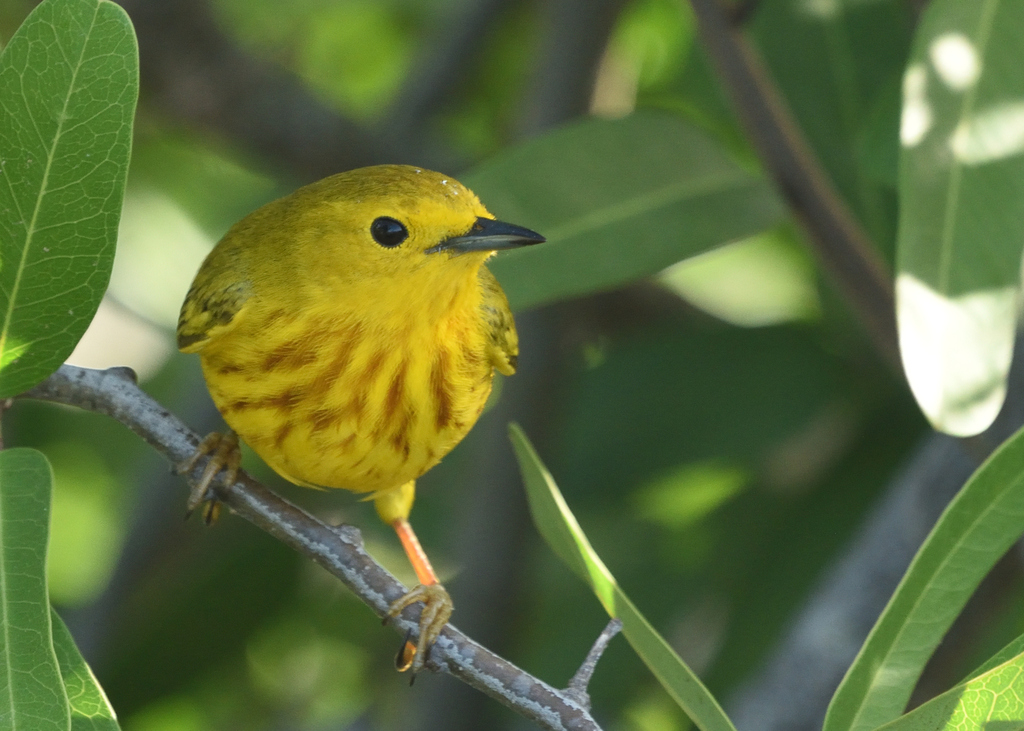
(c) Guy Babineau, some rights reserved (CC BY) · licence
Family: Parulidae · Class: Aves · Order: Passeriformes
Conservation status: G5 S3
Setophaga petechia (Yellow Warbler) is a California animal in the Parulidae family.
The Yellow Warbler is a small, bright songbird measuring 4.7 to 5.1 inches (12 to 13 centimeters) in length with a wingspan of 6.3 to 7.9 inches (16 to 20 centimeters). Males display brilliant golden-yellow plumage with rusty-red streaking on the breast and flanks during breeding season. Females are duller yellow with minimal streaking and olive-gray wings. Both sexes have dark eyes, thin pointed bills, and yellow tail spots visible in flight. The species exhibits distinct geographic variation across its range, with western populations (subspecies sonorana) showing more extensive red streaking than eastern forms. The Yellow Warbler has one of the most extensive breeding ranges of any North American warbler, extending from Alaska south to northern South America. In California, the species occurs from southern regions north along the coast to Mendocino and Lassen counties, with sparse populations in the Central Valley and eastern counties. Historically common throughout California's major riparian corridors, populations have declined significantly since the 1930s due to habitat loss, with more notable declines since the 1950s (Small 1994). The species is now largely absent from Central Valley and southern desert areas of California. Yellow Warblers inhabit relatively low, open-canopy riparian woodlands dominated by willows and cottonwoods, as well as montane riparian areas. In California, they are closely associated with native riparian vegetation along streams and rivers, particularly areas with dense understory shrubs. The species requires mature trees for nesting but forages at various canopy levels. Elevation ranges vary across the state, from sea level coastal areas to montane regions exceeding 7,000 feet. This species is primarily insectivorous, feeding on caterpillars, aphids, midges, moths, and beetles gleaned from foliage and caught in flight. Yellow Warblers are highly active foragers, moving constantly through vegetation while searching for prey. Breeding occurs from May through July, with females constructing compact cup nests in the forks of shrubs or small trees, typically 4 to 12 feet above ground. Clutch size ranges from 3 to 5 eggs, with an incubation period of 11 to 12 days. The species is particularly vulnerable to Brown-headed Cowbird parasitism, often responding by building new nest layers over parasitized eggs. The Yellow Warbler is designated as a California Species of Special Concern due to significant population declines and habitat loss. Primary threats include riparian habitat destruction through urban development, agricultural conversion, water diversions, and replacement of native vegetation with invasive species such as salt cedar. Channelization of rivers and streams has eliminated extensive breeding habitat, particularly along major waterways like the Colorado River. Climate change poses additional challenges through altered precipitation patterns and increased drought frequency. Conservation efforts focus on riparian habitat restoration, invasive species control, and protection of remaining native riparian corridors. Populations in southwestern United States, including California's subspecies sonorana, have become highly localized since the 1960s and require continued monitoring and active management to prevent further declines.
Classification
Class: Aves · Order: Passeriformes · Family: Parulidae
Conservation status
G5 S3
Frequently asked questions
How is Setophaga petechia classified?
Setophaga petechia belongs to class Aves, order Passeriformes, family Parulidae.
What family does Setophaga petechia belong to?
Setophaga petechia is in the Parulidae family.
Is Setophaga petechia protected or of conservation concern?
Setophaga petechia carries the following status: G5 S3.
What is Setophaga petechia?
The Yellow Warbler is a small, bright songbird measuring 4.7 to 5.1 inches (12 to 13 centimeters) in length with a wingspan of 6.3 to 7.9 inches (16 to 20 centimeters).
Is Setophaga petechia found in California?
Yes. Setophaga petechia is recorded in California in The California Species Project's catalogue.
Related species
Other California species in the same genus, family, or bioregion.
Data from The California Species Project — 14,000+ California species with verified data from CNPS, CDFW, USFWS, and more.