Setophaga pinus
Pine Warbler
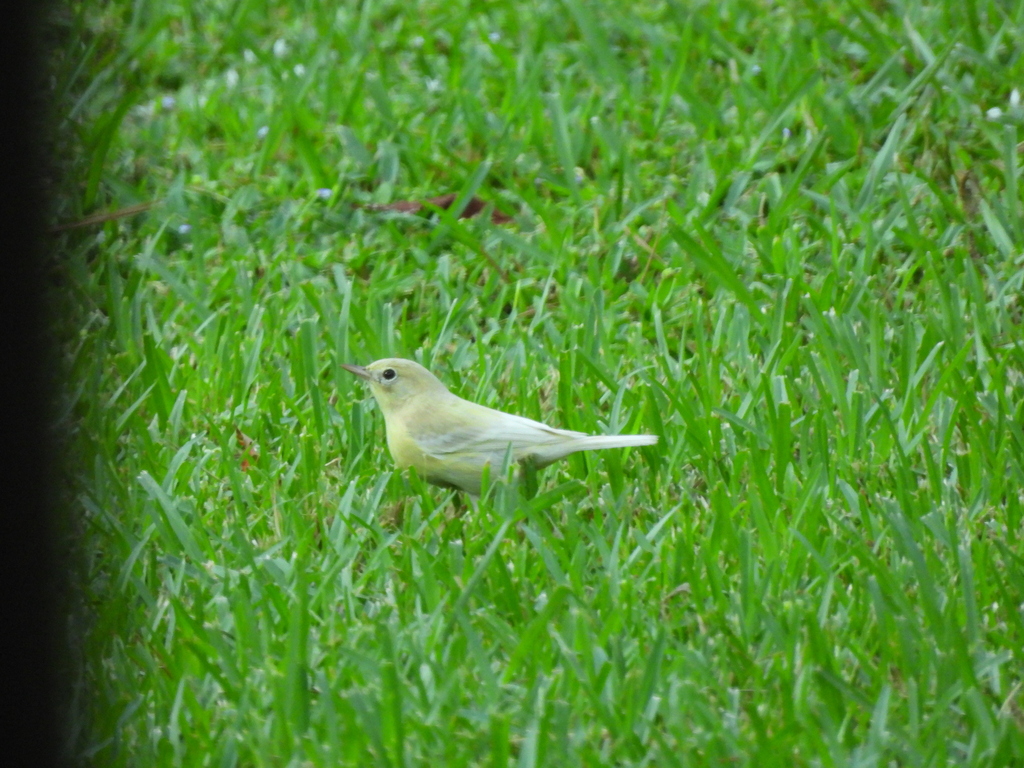
(c) ncb1221, some rights reserved (CC BY) · licence
Family: Parulidae · Class: Aves · Order: Passeriformes
Setophaga pinus (Pine Warbler) is a California animal in the Parulidae family.
The Pine Warbler is a medium-sized songbird measuring 12.5 to 14 cm (4.9 to 5.5 inches) in length with a wingspan of 18 to 23 cm (7.1 to 9.1 inches). Adult males display bright yellow underparts extending from the throat to the belly, with olive-green upperparts and gray wings marked by two distinct white wing bars. Females and immature birds show more subdued coloration, with pale yellow to whitish underparts and duller olive-brown upperparts. Both sexes have relatively long, thin bills adapted for gleaning insects and a distinctive white eye-ring that helps distinguish them from similar warbler species. The Pine Warbler has one of the most restricted breeding ranges among North American warblers, being closely associated with pine forests throughout the eastern United States and southeastern Canada. In California, this species occurs primarily as a rare vagrant during migration periods, with scattered records from coastal areas and the Central Valley. Most California observations are documented during fall migration from September through November, with fewer spring records from March through May. This species shows strong habitat specialization, almost exclusively inhabiting mature pine forests during the breeding season. Pine Warblers prefer open stands of various pine species, including loblolly, longleaf, slash, and white pines. They typically forage in the upper canopy and mid-story levels, rarely venturing to the forest floor. During migration and winter, the species may utilize mixed pine-hardwood forests and occasionally visits bird feeders, particularly those offering suet or sunflower seeds. Pine Warblers are primarily insectivorous during the breeding season, foraging methodically along pine branches and bark crevices for caterpillars, beetles, moths, and other arthropods. Unlike most warblers, they also consume significant quantities of pine seeds, particularly during fall and winter months. Breeding occurs from April through July, with females constructing cup-shaped nests of twigs, bark strips, and pine needles placed high in pine branches. Clutch size typically ranges from three to five eggs, with an incubation period of 10 to 13 days. The Pine Warbler is not federally or state listed in California, reflecting its status as a non-breeding visitor rather than a resident species. Breeding populations in eastern North America are considered stable, with the species showing resilience to forest management practices that maintain mature pine stands. According to the North American Breeding Bird Survey, continental populations have remained relatively stable over the past several decades. In California, the species' occurrence is primarily dependent on appropriate weather patterns that may bring vagrants westward during migration. Climate change may potentially alter migration patterns and the frequency of vagrancy events in the state. The species faces few significant conservation threats within its core eastern range, though habitat loss from pine forest conversion and fire suppression policies that alter natural pine forest dynamics represent potential concerns for long-term population stability.
Classification
Class: Aves · Order: Passeriformes · Family: Parulidae
Frequently asked questions
How is Setophaga pinus classified?
Setophaga pinus belongs to class Aves, order Passeriformes, family Parulidae.
What family does Setophaga pinus belong to?
Setophaga pinus is in the Parulidae family.
What is Setophaga pinus?
The Pine Warbler is a medium-sized songbird measuring 12.5 to 14 cm (4.9 to 5.5 inches) in length with a wingspan of 18 to 23 cm (7.1 to 9.1 inches).
Is Setophaga pinus found in California?
Yes. Setophaga pinus is recorded in California in The California Species Project's catalogue.
Related species
Other California species in the same genus, family, or bioregion.
Data from The California Species Project — 14,000+ California species with verified data from CNPS, CDFW, USFWS, and more.