Setophaga striata
Blackpoll Warbler
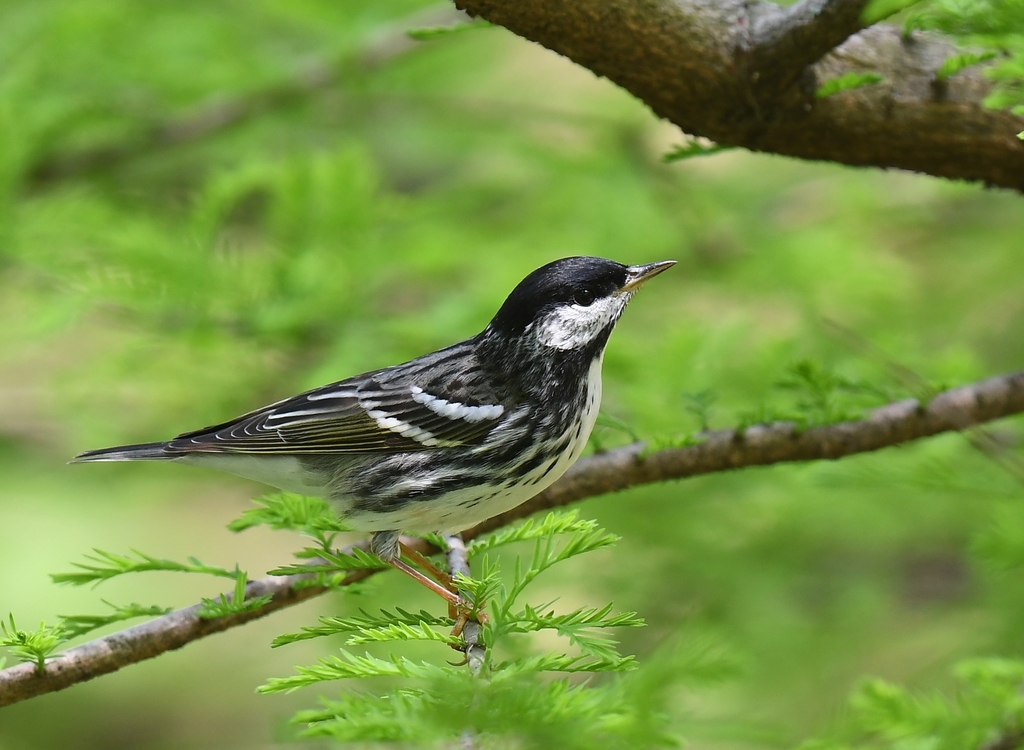
no rights reserved · CC0
Family: Parulidae · Class: Aves · Order: Passeriformes
Setophaga striata (Blackpoll Warbler) is a California animal in the Parulidae family.
The Blackpoll Warbler is a small songbird measuring 12.5 to 15 cm (4.9 to 5.9 inches) in length with a wingspan of 20 to 25 cm (7.9 to 9.8 inches) and weighing 9 to 21 grams. During breeding season, males display distinctive black and white plumage with a solid black cap, white cheeks, and heavily streaked black and white upperparts. The underparts are white with bold black streaking along the sides and flanks. Breeding females and non-breeding individuals of both sexes show more subdued coloration with olive-green upperparts, yellowish underparts, and less distinct streaking. The species has pale yellow legs and a thin, pointed bill typical of insectivorous warblers. The Blackpoll Warbler breeds across the boreal forests of Alaska and Canada, extending south into the northern United States including northern New England and the Great Lakes region. In California, this species occurs primarily as a migrant, with sightings documented during spring and fall migration periods. The species is considered uncommon to rare in California, with most records concentrated along the coast and in riparian corridors during migration. Fall migration timing typically occurs from August through October, while spring migration is less commonly observed in the state. Breeding habitat consists of mature coniferous and mixed forests, particularly spruce-fir forests in mountainous or northern regions. During migration, Blackpoll Warblers utilize a variety of habitats including riparian woodlands, parks, gardens, and forest edges. The species shows preference for areas with dense canopy cover and abundant insect prey. In California, migrants are most frequently detected in coastal scrub, riparian forests, and urban parks with mature trees. Blackpoll Warblers are primarily insectivorous, feeding on caterpillars, aphids, scale insects, flies, and other small arthropods gleaned from foliage and bark surfaces. During migration and winter, they supplement their diet with berries and small fruits. The species exhibits one of the most extensive migration patterns among North American birds, with some populations traveling over 3,000 kilometers non-stop across the Atlantic Ocean from eastern North America to South America. Breeding occurs from June through August, with females constructing cup-shaped nests in coniferous trees 1 to 8 meters above ground. Clutch size ranges from 3 to 5 eggs, with an incubation period of 11 to 12 days. The Blackpoll Warbler is not federally listed but has experienced significant population declines across its range. According to the North American Breeding Bird Survey, populations have declined by approximately 88% since 1970, making it one of the most rapidly declining warbler species. Primary threats include habitat loss on breeding grounds due to logging and development, habitat degradation on wintering grounds in South America, and climate change impacts on boreal forest ecosystems. The species faces additional challenges during migration from window strikes, communication tower collisions, and light pollution. Conservation efforts focus on protecting boreal forest breeding habitat and addressing threats along migration routes.
Classification
Class: Aves · Order: Passeriformes · Family: Parulidae
Frequently asked questions
How is Setophaga striata classified?
Setophaga striata belongs to class Aves, order Passeriformes, family Parulidae.
What family does Setophaga striata belong to?
Setophaga striata is in the Parulidae family.
What is Setophaga striata?
The Blackpoll Warbler is a small songbird measuring 12.5 to 15 cm (4.9 to 5.9 inches) in length with a wingspan of 20 to 25 cm (7.9 to 9.8 inches) and weighing 9 to 21 grams.
Is Setophaga striata found in California?
Yes. Setophaga striata is recorded in California in The California Species Project's catalogue.
Related species
Other California species in the same genus, family, or bioregion.
Data from The California Species Project — 14,000+ California species with verified data from CNPS, CDFW, USFWS, and more.