Sialia currucoides
Mountain Bluebird
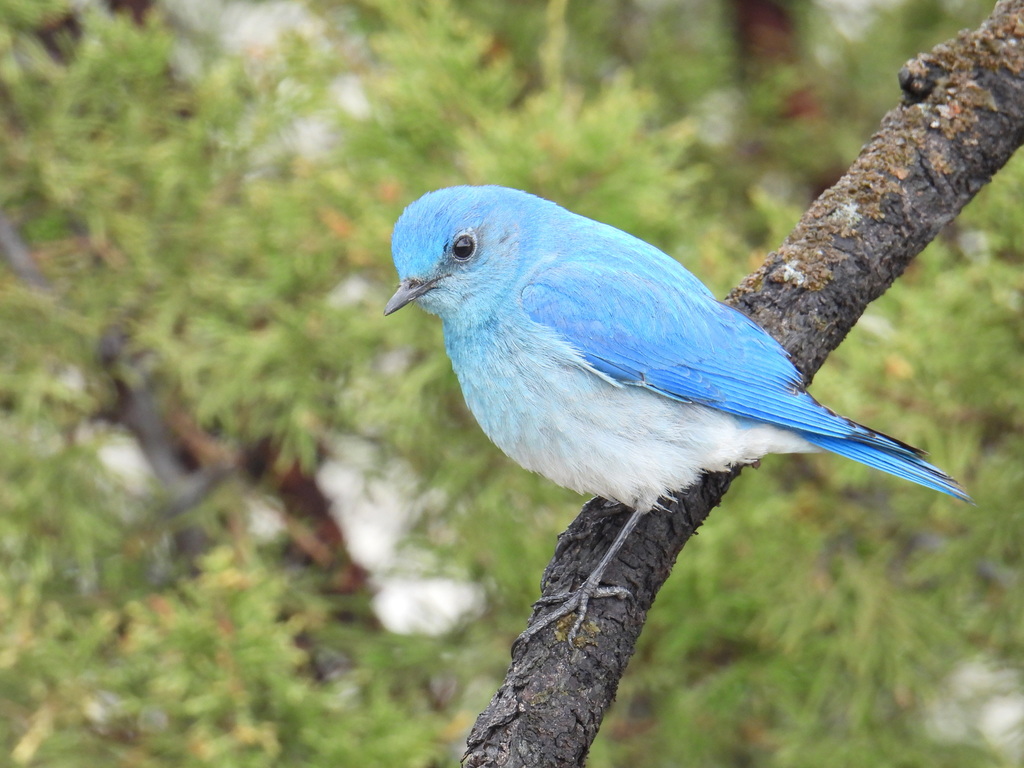
(c) Josiah Londerée, some rights reserved (CC BY) · licence
Family: Turdidae · Class: Aves · Order: Passeriformes
Sialia currucoides (Mountain Bluebird) is a California animal in the Turdidae family.
The Mountain Bluebird is a medium-sized thrush measuring 16 to 20 centimeters (6.3 to 7.9 inches) in length with a wingspan of 28 to 36 centimeters (11 to 14 inches). Adult males display bright sky-blue plumage across the head, back, wings, and tail, with lighter blue underparts. Females are predominantly gray-brown with blue tinges on the wings, tail, and rump. Both sexes have relatively long wings adapted for aerial foraging and straight, thin bills suitable for insectivorous feeding. Juveniles resemble adult females but show spotted breasts characteristic of young thrushes. Mountain Bluebirds breed across western North America from southern Alaska through the western United States to northern Mexico. In California, they occur primarily in the Sierra Nevada, Cascade Range, and northeastern mountains, with breeding populations extending from Siskiyou and Modoc counties south through the Sierra Nevada to Kern County. During winter, many populations migrate to lower elevations and southern regions, though some individuals remain year-round in suitable California habitats. The species inhabits open montane and subalpine environments, typically at elevations ranging from 1,200 to 3,600 meters (4,000 to 12,000 feet). Preferred breeding habitats include meadows, grasslands, and open woodlands with scattered trees or snags for nesting. Mountain Bluebirds require open areas for foraging combined with suitable nest sites, often utilizing natural tree cavities, old woodpecker holes, or nest boxes. During winter, they occupy lower elevation grasslands, agricultural areas, and desert scrublands. Mountain Bluebirds are primarily insectivorous, employing aerial hawking techniques to capture flying insects including beetles, flies, moths, and grasshoppers. Unlike other bluebird species, they frequently hover while hunting and can catch prey on the wing with considerable agility. During autumn and winter, their diet expands to include berries and small fruits. The breeding season extends from April through July, with females typically laying 3 to 7 pale blue eggs in cup-shaped nests constructed within cavities. Incubation lasts 12 to 14 days, and nestlings fledge after 16 to 22 days. Pairs often produce two broods per season under favorable conditions. Mountain Bluebirds are not federally or state-listed as threatened or endangered. According to the North American Breeding Bird Survey, populations have remained relatively stable across their range over recent decades, though some regional declines have been documented. Primary conservation concerns include habitat loss due to development, livestock grazing impacts on nesting areas, and competition for nest sites with introduced European Starlings and House Sparrows. Climate change poses potential long-term threats through shifts in suitable habitat elevation and timing of insect emergence. Conservation efforts focus on maintaining suitable breeding habitat, installing and monitoring nest box programs, and preserving large blocks of open montane habitat. The species benefits from forest management practices that maintain open understories and snag retention for nesting sites.
Classification
Class: Aves · Order: Passeriformes · Family: Turdidae
Frequently asked questions
How is Sialia currucoides classified?
Sialia currucoides belongs to class Aves, order Passeriformes, family Turdidae.
What family does Sialia currucoides belong to?
Sialia currucoides is in the Turdidae family.
What is Sialia currucoides?
The Mountain Bluebird is a medium-sized thrush measuring 16 to 20 centimeters (6.3 to 7.9 inches) in length with a wingspan of 28 to 36 centimeters (11 to 14 inches).
Is Sialia currucoides found in California?
Yes. Sialia currucoides is recorded in California in The California Species Project's catalogue.
Related species
Other California species in the same genus, family, or bioregion.
Data from The California Species Project — 14,000+ California species with verified data from CNPS, CDFW, USFWS, and more.