Sicya crocearia
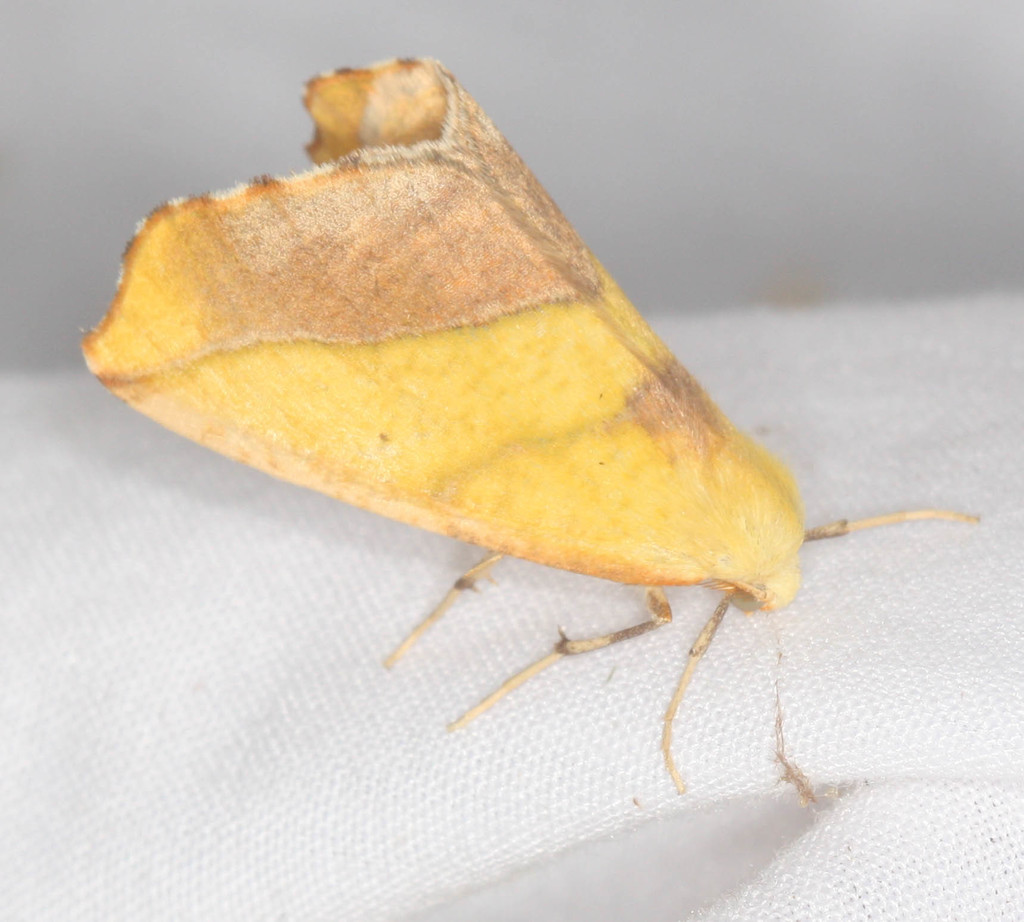
no rights reserved · CC0
Family: Geometridae · Class: Insecta · Order: Lepidoptera
Sicya crocearia is a California animal in the Geometridae family.
Sicya crocearia is a moth species in the family Geometridae, commonly known as geometrid moths or inchworm moths. This species belongs to the genus Sicya, which comprises small to medium-sized moths characterized by their distinctive wing patterns and Geometridae family traits. Adult geometrid moths typically hold their wings horizontally when at rest and have relatively slender bodies compared to their wingspan. Geometridae larvae, known as inchworms or loopers, are distinguished by their characteristic method of locomotion, moving by arching their bodies in a looping motion due to the absence of prolegs on the middle abdominal segments. The caterpillars typically have prolegs only at the posterior end and on the sixth abdominal segment, creating their distinctive "measuring worm" gait. The current distribution and range of Sicya crocearia in California remains poorly documented in readily accessible literature. Many geometrid moths have restricted ranges and specific habitat requirements, often associated with particular host plant communities or elevation zones. Without specific locality data, the species' historical and current range within California cannot be definitively characterized. Habitat requirements for Sicya crocearia are not well-documented in available sources. Geometridae moths typically occupy diverse habitats ranging from coastal areas to montane forests, with many species showing strong associations with specific plant communities that serve as larval hosts. The habitat preferences of this species likely correlate with the distribution of its larval host plants, though these associations remain undocumented. Like other Geometridae species, Sicya crocearia likely undergoes complete metamorphosis with egg, larval, pupal, and adult stages. Adult moths are typically active during specific seasonal periods, often coinciding with the availability of larval host plants and favorable environmental conditions. Mating behaviors in geometrid moths commonly involve pheromone communication, with females releasing chemical signals to attract males. Larvae feed on foliage of host plants, potentially showing specificity to particular plant species or families. The conservation status of Sicya crocearia is not established through standard state or federal listing processes. The species lacks formal protection under the California Endangered Species Act or the federal Endangered Species Act. Without comprehensive survey data or population monitoring, the current population trends and conservation needs cannot be assessed. Many geometrid moth species face potential threats from habitat loss, urbanization, pesticide use, and climate change effects on host plant communities. The limited available information about Sicya crocearia highlights the need for additional taxonomic and ecological research on California's diverse lepidopteran fauna. Many geometrid species remain poorly studied despite their ecological importance as herbivores and prey species in various ecosystems. Comprehensive surveys and taxonomic studies would be necessary to better understand this species' distribution, ecology, and conservation requirements within California's diverse landscapes.
Classification
Class: Insecta · Order: Lepidoptera · Family: Geometridae
Frequently asked questions
How is Sicya crocearia classified?
Sicya crocearia belongs to class Insecta, order Lepidoptera, family Geometridae.
What family does Sicya crocearia belong to?
Sicya crocearia is in the Geometridae family.
What is Sicya crocearia?
Sicya crocearia is a moth species in the family Geometridae, commonly known as geometrid moths or inchworm moths.
Is Sicya crocearia found in California?
Yes. Sicya crocearia is recorded in California in The California Species Project's catalogue.
Related species
Other California species in the same genus, family, or bioregion.
Data from The California Species Project — 14,000+ California species with verified data from CNPS, CDFW, USFWS, and more.