Sicya macularia
Sharp-lined Yellow
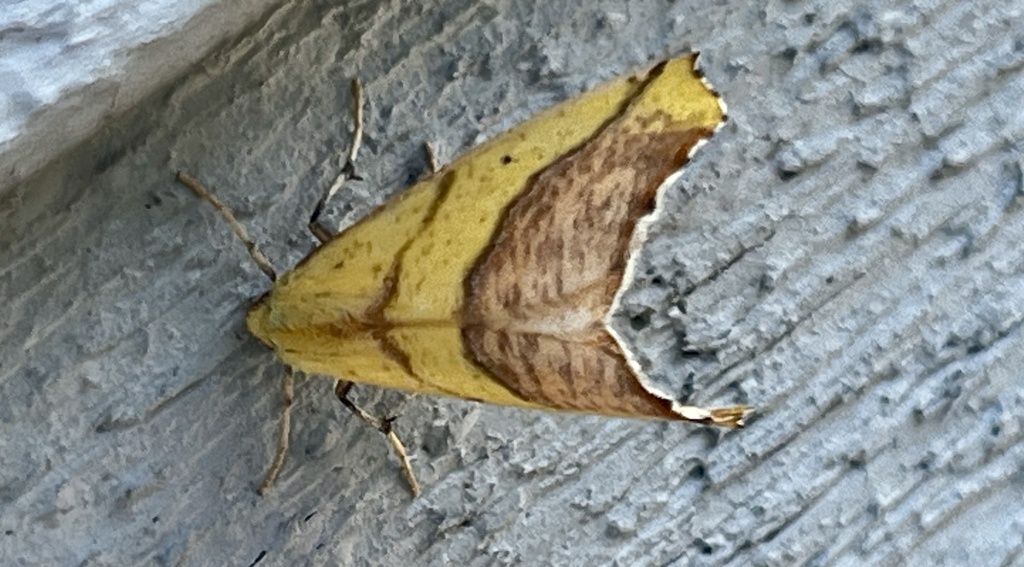
(c) Sheila Furlong, some rights reserved (CC BY-SA) · licence
Family: Geometridae · Class: Insecta · Order: Lepidoptera
Sicya macularia (Sharp-lined Yellow) is a California animal in the Geometridae family.
Sicya macularia, commonly known as the Sharp-lined Yellow, is a geometrid moth in the family Geometridae. This species belongs to the subfamily Sterrhinae, a group characterized by their typically small size and delicate wing patterns. Adult Sharp-lined Yellow moths display pale yellow to cream-colored forewings with distinctive sharp, linear markings that give the species its common name. The wings feature precise geometric patterns typical of geometrids, with thin transverse lines crossing the wing surface. The hindwings are generally paler than the forewings, often appearing nearly white with subtle markings. The Sharp-lined Yellow occurs in western North America, with populations documented in California and adjacent regions. Within California, the species has been recorded from various locations, though detailed distribution data remains limited in published literature. The moth's range appears to coincide with areas supporting its host plant communities, suggesting habitat specificity that may influence its overall distribution pattern. This species inhabits areas where its larval host plants occur, typically in open woodlands, chaparral, and mixed vegetation communities. Sharp-lined Yellow moths are associated with shrubland and woodland edge habitats that provide both larval food sources and adult nectar resources. The elevation range and specific microhabitat preferences require further documentation, though the species appears to favor areas with moderate canopy cover and diverse plant communities. Like other geometrid moths, Sharp-lined Yellow larvae are commonly called inchworms or loopers due to their characteristic method of locomotion. The caterpillars move by arching their bodies, bringing their hind legs forward to meet their front legs, then extending forward again. Adult moths are primarily nocturnal, attracted to artificial lights during their active period. Flight periods likely correspond with seasonal availability of host plants and optimal weather conditions for reproduction. Females deposit eggs on or near host plant foliage, where larvae develop through several instars before pupating. Geometrid moths undergo complete metamorphosis, with larvae feeding on foliage before forming pupae in soil or leaf litter. The Sharp-lined Yellow's life cycle timing depends on local climate conditions and host plant phenology. Adults emerge when environmental conditions favor successful mating and oviposition. Currently, Sicya macularia lacks formal conservation status designations at federal, state, or international levels. The species does not appear on endangered species lists or conservation concern databases as of December 2025. However, like many specialized insects, Sharp-lined Yellow populations may face pressures from habitat modification, urbanization, and climate change effects on host plant communities. The lack of comprehensive survey data makes it difficult to assess population trends or conservation needs. Many geometrid species have narrow host plant associations, making them potentially vulnerable to environmental changes that affect their specific habitat requirements. Further research is needed to understand the species' population status, distribution limits, and ecological requirements to inform any future conservation assessments.
Classification
Class: Insecta · Order: Lepidoptera · Family: Geometridae
Frequently asked questions
How is Sicya macularia classified?
Sicya macularia belongs to class Insecta, order Lepidoptera, family Geometridae.
What family does Sicya macularia belong to?
Sicya macularia is in the Geometridae family.
What is Sicya macularia?
Sicya macularia, commonly known as the Sharp-lined Yellow, is a geometrid moth in the family Geometridae.
Is Sicya macularia found in California?
Yes. Sicya macularia is recorded in California in The California Species Project's catalogue.
Related species
Other California species in the same genus, family, or bioregion.
Data from The California Species Project — 14,000+ California species with verified data from CNPS, CDFW, USFWS, and more.