Sigmodon arizonae
Arizona Cotton Rat
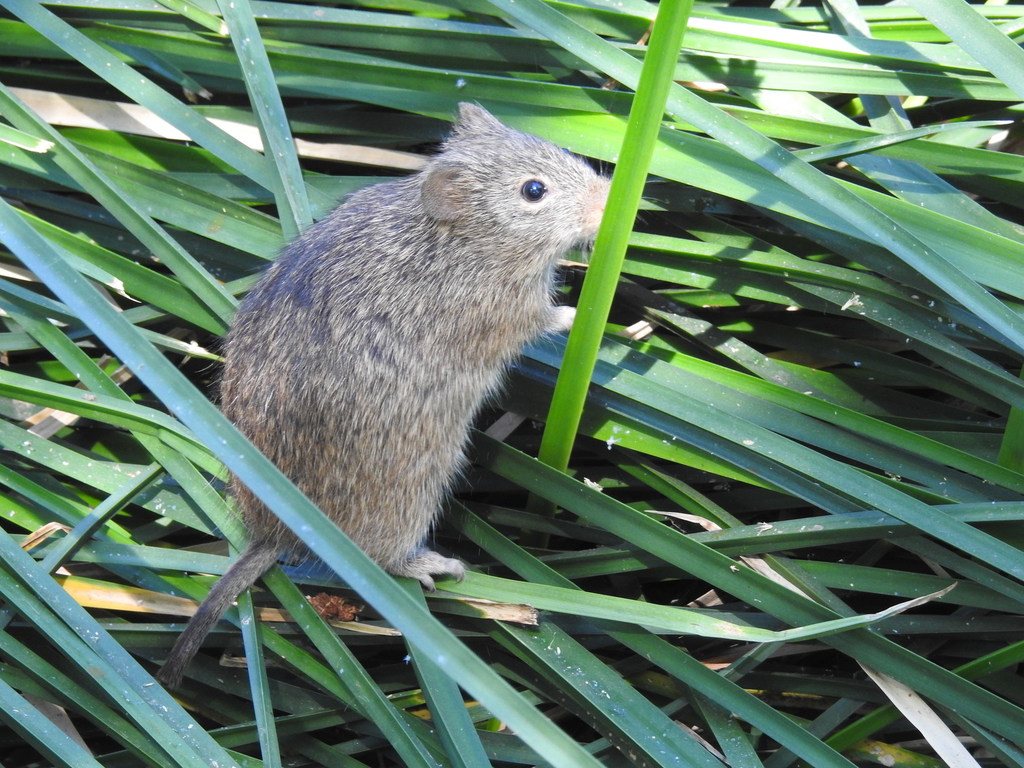
(c) Rachel Stringham, some rights reserved (CC BY) · licence
Family: Cricetidae · Class: Mammalia · Order: Rodentia
Sigmodon arizonae (Arizona Cotton Rat) is a California animal in the Cricetidae family.
The Arizona cotton rat is a medium-sized rodent measuring 200 to 280 mm (7.9 to 11.0 inches) in total length, with a tail comprising 40 to 45 percent of this measurement. Adults typically weigh between 85 and 150 grams (3.0 to 5.3 ounces). The dorsal fur is coarse and grizzled, ranging from grayish-brown to dark brown with black-tipped guard hairs creating a salt-and-pepper appearance. The ventral surface is lighter, typically pale gray to buff. The tail is bicolored, dark above and lighter below, with sparse hair that allows the scaly skin to show through. The ears are relatively small and nearly hidden in the fur, while the feet are moderately large with well-developed claws adapted for digging. Historically, the Arizona cotton rat occurred in southeastern Arizona and southwestern New Mexico in the United States, extending south into northwestern Mexico through Sonora and western Chihuahua. Within Arizona, the species was documented in Cochise, Pima, and Santa Cruz counties. The current distribution appears significantly reduced from historical records, with recent confirmed populations limited to isolated areas in the Sonoran Desert region. This species inhabits desert grasslands, oak woodlands, and riparian areas at elevations ranging from 900 to 1,500 meters (2,950 to 4,920 feet). Arizona cotton rats show strong preference for areas with dense herbaceous ground cover, particularly native grasses such as grama grass and three-awn grass. They utilize rocky outcrops, shrub thickets, and areas near intermittent streams where vegetation density provides adequate cover. The species constructs extensive runway systems through vegetation and creates burrow networks in loose soil beneath rocks or dense plant cover. Arizona cotton rats are primarily herbivorous, feeding on green vegetation, seeds, and occasionally roots. Their diet consists largely of grasses and forbs, with seasonal variation based on plant availability. Breeding occurs primarily during summer months following monsoon rains when food resources are most abundant. Females produce litters of 2 to 6 young after a gestation period of approximately 27 days. Multiple litters per year are possible under favorable conditions. The species is primarily crepuscular and nocturnal, remaining in burrows or dense cover during daylight hours to avoid predators and extreme temperatures. The Arizona cotton rat is not federally listed under the Endangered Species Act, nor does it hold special status under California state regulations. However, the species faces significant conservation concerns due to habitat loss and fragmentation from urban development, agriculture, and livestock grazing. Invasive plant species, particularly non-native grasses, have altered the native grassland communities upon which this species depends. Climate change may exacerbate these threats by increasing aridity and altering precipitation patterns that affect vegetation growth. Population monitoring is limited, making current population trends difficult to assess. Conservation efforts focus on habitat protection and restoration of native grassland ecosystems within the species' remaining range.
Classification
Class: Mammalia · Order: Rodentia · Family: Cricetidae
Frequently asked questions
How is Sigmodon arizonae classified?
Sigmodon arizonae belongs to class Mammalia, order Rodentia, family Cricetidae.
What family does Sigmodon arizonae belong to?
Sigmodon arizonae is in the Cricetidae family.
What is Sigmodon arizonae?
The Arizona cotton rat is a medium-sized rodent measuring 200 to 280 mm (7.9 to 11.0 inches) in total length, with a tail comprising 40 to 45 percent of this measurement.
Is Sigmodon arizonae found in California?
Yes. Sigmodon arizonae is recorded in California in The California Species Project's catalogue.
Related species
Other California species in the same genus, family, or bioregion.
Data from The California Species Project — 14,000+ California species with verified data from CNPS, CDFW, USFWS, and more.