Sigmodon hispidus
Hispid Cotton Rat
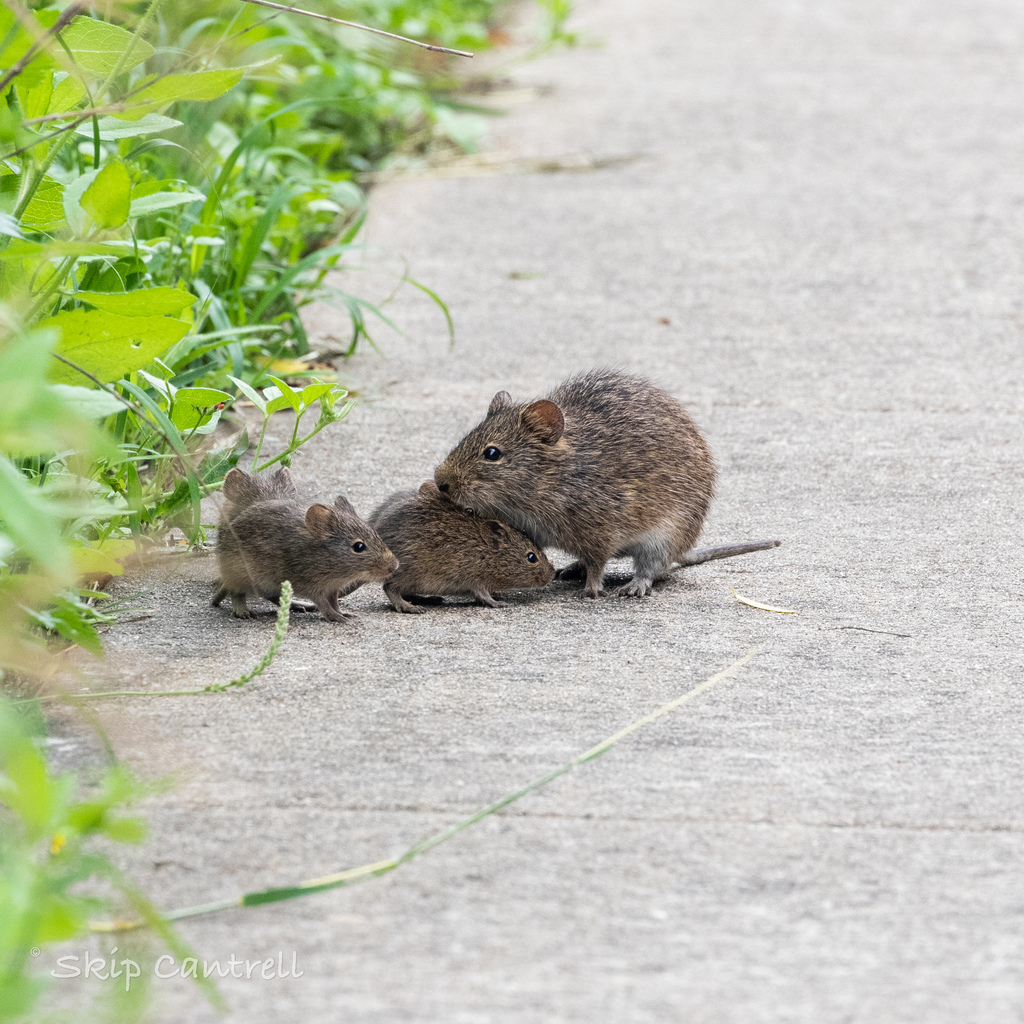
(c) tcantrell52, some rights reserved (CC BY) · licence
Family: Cricetidae · Class: Mammalia · Order: Rodentia
Sigmodon hispidus (Hispid Cotton Rat) is a California animal in the Cricetidae family.
The Hispid Cotton Rat is a medium-sized rodent with coarse, grizzled fur that gives the species its common name. Adults measure 150 to 200 mm (5.9 to 7.9 inches) in total body length, with tails ranging from 80 to 120 mm (3.1 to 4.7 inches). Body weight typically ranges from 100 to 225 grams (3.5 to 7.9 ounces). The dorsal pelage is dark brown to blackish, heavily mixed with buff and gray guard hairs that create a coarse, bristly texture. The ventral surface is grayish-white to pale buff. The tail is shorter than the head and body combined, sparsely haired, and appears scaly. Ears are relatively small and partially hidden by the coarse fur. Historically, Hispid Cotton Rats occurred throughout much of California's Central Valley and coastal regions, extending from Kern County north to the Sacramento Valley. The species was documented in suitable habitat from sea level to approximately 1,500 meters (4,900 feet) elevation. However, current distribution in California is severely restricted, with recent confirmed populations limited to isolated patches in the Central Valley and possibly some coastal areas. The species remains more widespread across the southeastern United States, ranging from Virginia south to Florida and west to eastern Colorado and New Mexico. Hispid Cotton Rats inhabit dense grasslands, weedy fields, overgrown pastures, and areas with thick ground cover. They prefer habitats with tall grasses, sedges, and herbaceous vegetation that provide both food resources and protective cover. The species constructs extensive runway systems through dense vegetation, creating well-defined trails that connect feeding areas to nest sites. Nests are typically built on the ground or slightly below surface level, constructed of woven grasses and plant fibers. These rodents are primarily herbivorous, feeding on green plant material including grasses, sedges, and forbs. They occasionally consume seeds, bark, and roots. Hispid Cotton Rats are known for their high reproductive rate, with females capable of producing multiple litters per year. Breeding occurs year-round in favorable climates, with gestation lasting approximately 27 days. Litter sizes range from 2 to 10 young, typically averaging 4 to 6 offspring. Young reach sexual maturity at 6 to 8 weeks of age. The species exhibits peak activity during dawn and dusk hours, though they may be active throughout the day and night. In California, Hispid Cotton Rats are not currently listed under state or federal endangered species legislation, though their distribution has contracted significantly from historical levels. The primary threats include habitat loss due to agricultural conversion, urban development, and changes in land management practices that reduce dense grassland habitat. Intensive grazing and frequent mowing eliminate the thick vegetative cover essential for the species' survival. Climate change and prolonged drought conditions may further impact remaining populations by altering vegetation communities and reducing habitat quality.
Classification
Class: Mammalia · Order: Rodentia · Family: Cricetidae
Frequently asked questions
How is Sigmodon hispidus classified?
Sigmodon hispidus belongs to class Mammalia, order Rodentia, family Cricetidae.
What family does Sigmodon hispidus belong to?
Sigmodon hispidus is in the Cricetidae family.
What is Sigmodon hispidus?
The Hispid Cotton Rat is a medium-sized rodent with coarse, grizzled fur that gives the species its common name.
Is Sigmodon hispidus found in California?
Yes. Sigmodon hispidus is recorded in California in The California Species Project's catalogue.
Related species
Other California species in the same genus, family, or bioregion.
Data from The California Species Project — 14,000+ California species with verified data from CNPS, CDFW, USFWS, and more.