Sinodendron rugosum
Rugose Stag Beetle
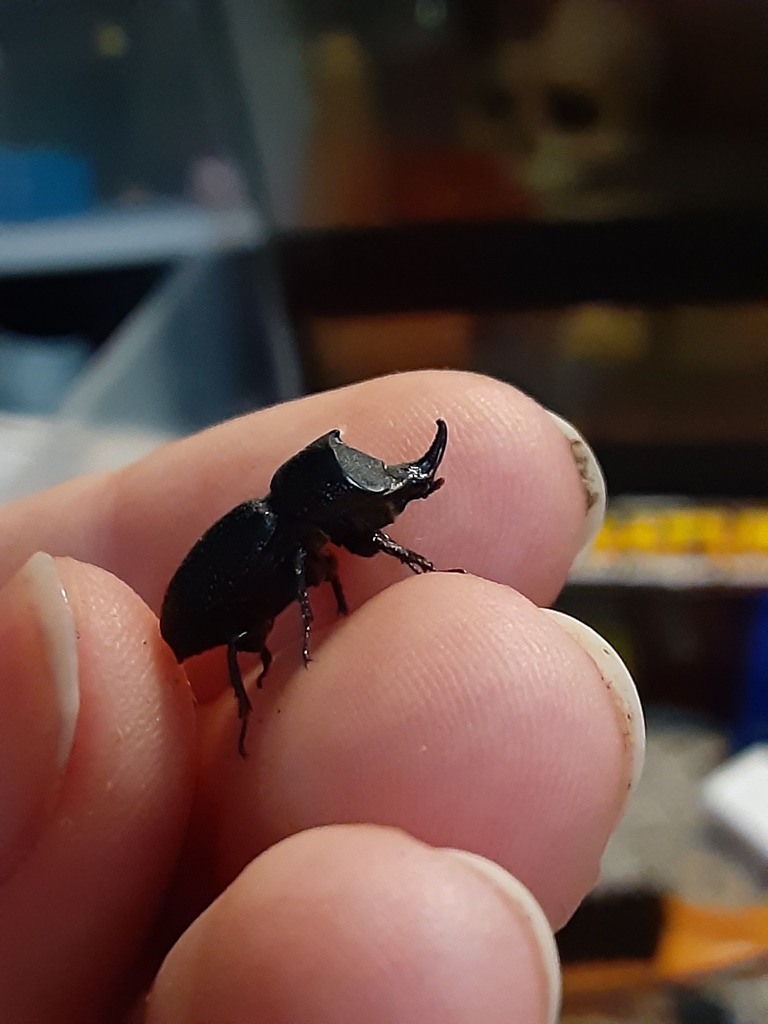
(c) Seth, some rights reserved (CC BY) · licence
Family: Lucanidae · Class: Insecta · Order: Coleoptera
Sinodendron rugosum (Rugose Stag Beetle) is a California animal in the Lucanidae family.
The Rugose Stag Beetle (Sinodendron rugosum) is a member of the family Lucanidae, subfamily Syndesinae, first described by Mannerheim in 1843. This species belongs to a small group of North American stag beetles characterized by their distinctive rugose (wrinkled or ridged) surface texture, which gives the species its common name. The Rugose Stag Beetle occurs in western North America, with its range extending from British Columbia through Idaho to California (BugGuide.net). Within California, the species represents the southernmost extent of its distribution. The beetle's range reflects its adaptation to cooler, montane forest environments typical of the Pacific Northwest bioregion. This species inhabits forested ecosystems, particularly those dominated by coniferous trees. Rugose Stag Beetles are associated with decaying wood environments, where both larvae and adults complete their life cycles. The species typically occurs in areas with substantial amounts of dead and dying timber, including fallen logs, tree stumps, and standing dead trees (snags). These microhabitats provide the decomposing wood substrate essential for larval development. Like other members of the Lucanidae family, Rugose Stag Beetles undergo complete metamorphosis with distinct larval, pupal, and adult stages. The larvae are wood-boring grubs that feed on decaying wood, contributing to forest decomposition processes. Adult beetles emerge from their pupal chambers in the wood substrate, typically during warmer months when environmental conditions favor reproduction and dispersal. Adults may feed on tree saps, fermenting fruit, or other organic matter, though specific dietary preferences for this species have not been extensively documented. The reproductive biology of Sinodendron rugosum follows the general pattern of other stag beetles, with females depositing eggs in suitable decaying wood substrates. Larval development occurs within the wood over an extended period, potentially requiring multiple years to complete. The extended development time reflects the species' dependence on stable forest habitats with consistent availability of appropriate dead wood resources. Currently, the Rugose Stag Beetle does not appear on federal or state endangered species lists, and NatureServe Explorer indicates no special conservation status under the U.S. Endangered Species Act (NatureServe). However, like many forest-dependent species, populations may face pressure from habitat modification, including intensive forest management practices that reduce dead wood availability. Climate change impacts on forest composition and fire regimes could also affect habitat quality for this wood-dependent species. Scientific documentation for this species remains limited compared to more commonly studied beetle groups. The information presented here synthesizes available sources including taxonomic databases and field guides. Additional research on population status, detailed habitat requirements, and ecological relationships would enhance understanding of this species' conservation needs and forest ecosystem role.
Classification
Class: Insecta · Order: Coleoptera · Family: Lucanidae
Frequently asked questions
How is Sinodendron rugosum classified?
Sinodendron rugosum belongs to class Insecta, order Coleoptera, family Lucanidae.
What family does Sinodendron rugosum belong to?
Sinodendron rugosum is in the Lucanidae family.
What is Sinodendron rugosum?
The Rugose Stag Beetle (Sinodendron rugosum) is a member of the family Lucanidae, subfamily Syndesinae, first described by Mannerheim in 1843.
Is Sinodendron rugosum found in California?
Yes. Sinodendron rugosum is recorded in California in The California Species Project's catalogue.
Related species
Other California species in the same genus, family, or bioregion.
Data from The California Species Project — 14,000+ California species with verified data from CNPS, CDFW, USFWS, and more.