Sitona californius
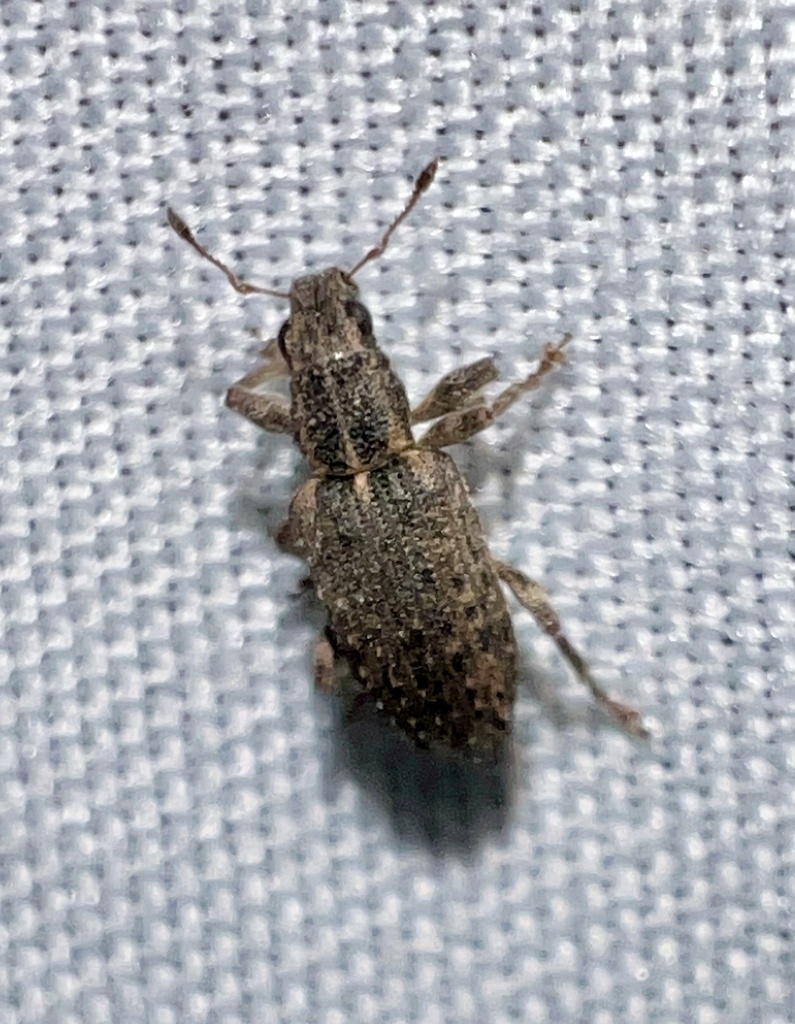
(c) Joshua Ebright, some rights reserved (CC BY) · licence
Family: Curculionidae · Class: Insecta · Order: Coleoptera
Sitona californius is a California animal in the Curculionidae family.
Sitona californius is a small broad-nosed weevil measuring 4.2 to 6.0 mm in length (BugGuide). This beetle belongs to the subfamily Entiminae within the family Curculionidae, commonly known as snout and bark beetles. Like other members of the genus Sitona, S. californius possesses the characteristic elongated rostrum or snout typical of weevils, though specific morphological details distinguishing this species from congeners have not been well documented. Despite its specific epithet "californius," this weevil has a distribution extending well beyond California. According to BugGuide, the species ranges throughout much of the southwestern United States to Louisiana, indicating a broader geographic occurrence than the name might suggest. Within California, specific county-level distribution data remains limited in available literature. Sitona californius exhibits a polyphagous feeding habit, utilizing a diverse array of host plants. BugGuide reports the species feeding on native lupine (Lupinus polyphyllus), Ceanothus divaricata, and various cultivated plants including plum, peach, crabapple, alfalfa, apple, and wild sunflower. This broad host range suggests the species is adaptable to both native plant communities and agricultural or horticultural settings. The association with leguminous plants like lupine and alfalfa follows patterns observed in other Sitona species, many of which specialize on Fabaceae. Specific habitat preferences and microhabitat requirements for S. californius have not been thoroughly documented in available scientific literature. Given its recorded host plant associations, the species likely occurs in a variety of habitats ranging from natural shrubland and woodland communities supporting Ceanothus and native lupines to agricultural areas and disturbed sites where weedy or cultivated host plants grow. Life history details including reproductive biology, seasonal activity patterns, and developmental stages remain poorly documented for this species. As with other Sitona weevils, adults likely feed on foliage while larvae develop in association with root systems of host plants, but specific confirmation for S. californius is lacking. The broad host plant range suggests potential for multiple generations annually in favorable conditions, though this requires verification through field studies. Sitona californius currently lacks formal conservation status designation at federal or state levels. The species appears to be relatively widespread geographically and demonstrates adaptability to various host plants, including common agricultural crops and weedy species. This ecological flexibility may contribute to population stability, though comprehensive population assessments have not been conducted. The association with both native plant communities and anthropogenic habitats suggests the species may benefit from habitat diversification in some landscapes while potentially facing localized pressures from intensive land use practices. Detailed ecological studies of this species remain limited. The information presented here synthesizes available observations from BugGuide and taxonomic literature. Enhanced documentation of habitat associations, population trends, and ecological relationships would improve understanding of this widespread weevil's role in western North American ecosystems.
Classification
Class: Insecta · Order: Coleoptera · Family: Curculionidae
Frequently asked questions
How is Sitona californius classified?
Sitona californius belongs to class Insecta, order Coleoptera, family Curculionidae.
What family does Sitona californius belong to?
Sitona californius is in the Curculionidae family.
What is Sitona californius?
Sitona californius is a small broad-nosed weevil measuring 4.2 to 6.0 mm in length (BugGuide).
Is Sitona californius found in California?
Yes. Sitona californius is recorded in California in The California Species Project's catalogue.
Related species
Other California species in the same genus, family, or bioregion.
Data from The California Species Project — 14,000+ California species with verified data from CNPS, CDFW, USFWS, and more.