Sitona hispidulus
Clover Weevil
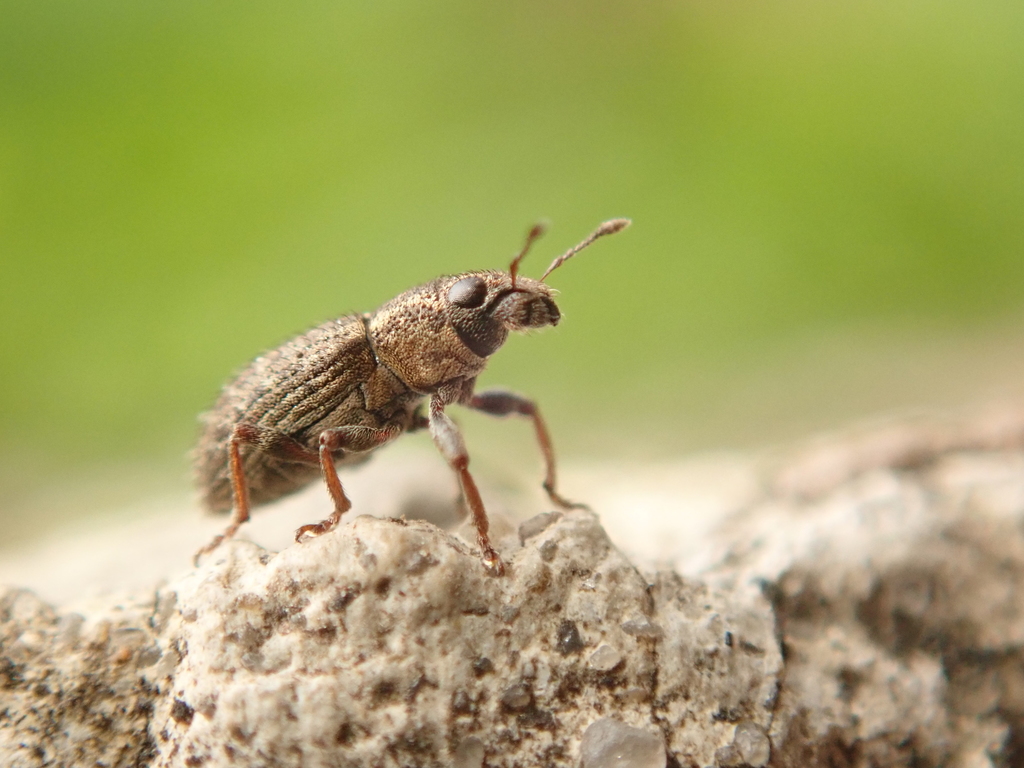
(c) Alexis Tinker-Tsavalas, some rights reserved (CC BY) · licence
Family: Curculionidae · Class: Insecta · Order: Coleoptera
Sitona hispidulus (Clover Weevil) is a California animal in the Curculionidae family.
The Clover Weevil (Sitona hispidulus) is a small, introduced beetle measuring 3.2 to 4.0 mm in length. Adults are characterized by their distinctive erect hairs on each elytral interstria, a feature that distinguishes them from similar Sitona species. The eyes are notably flatter compared to related species, and like other members of the Curculionidae family, they possess an elongated snout typical of weevils (BugGuide 2024). This Holarctic species has been introduced and is now established across the United States and southern Canada. In California, the Clover Weevil occurs throughout agricultural and disturbed areas where its host plants are present. The species has successfully colonized diverse regions from coastal areas to inland valleys, adapting to various climatic conditions across North America (BugGuide 2024). Clover Weevils inhabit agricultural fields, pastures, roadsides, and disturbed areas where leguminous plants grow. They are particularly abundant in areas with clover cultivation and other Fabaceae species. The species shows strong association with nitrogen-fixing legumes, which provide both larval development sites and adult feeding resources. They can be found from sea level to moderate elevations wherever suitable host plants occur. Adults are active primarily during spring and summer months, with peak activity coinciding with host plant flowering periods. The species exhibits typical weevil behavior, with adults feeding on foliage while larvae develop in root nodules and soil around host plant roots. Females deposit eggs in soil near host plants, and the complete life cycle typically requires one year. Adults are capable fliers and can disperse readily to new host patches, contributing to their successful establishment across diverse habitats. As an introduced agricultural pest species, the Clover Weevil has no special conservation status and is not protected under federal or state legislation. The species is considered economically significant due to its impact on clover and alfalfa crops, where both adult feeding damage and larval root feeding can reduce crop yields. Adults feed on leaves, creating characteristic notched feeding patterns, while larvae feed on root nodules, potentially disrupting the nitrogen-fixing capacity of leguminous crops. Management typically involves integrated pest management approaches including biological control agents, cultural practices, and targeted pesticide applications when economic thresholds are exceeded. The species' ability to develop resistance to certain insecticides has made biological control increasingly important in agricultural systems. Despite its pest status, the Clover Weevil has become a naturalized component of North American agricultural ecosystems and continues to expand its range as suitable habitat becomes available.
Classification
Class: Insecta · Order: Coleoptera · Family: Curculionidae
Frequently asked questions
How is Sitona hispidulus classified?
Sitona hispidulus belongs to class Insecta, order Coleoptera, family Curculionidae.
What family does Sitona hispidulus belong to?
Sitona hispidulus is in the Curculionidae family.
What is Sitona hispidulus?
The Clover Weevil (Sitona hispidulus) is a small, introduced beetle measuring 3.2 to 4.0 mm in length.
Is Sitona hispidulus found in California?
Yes. Sitona hispidulus is recorded in California in The California Species Project's catalogue.
Related species
Other California species in the same genus, family, or bioregion.
Data from The California Species Project — 14,000+ California species with verified data from CNPS, CDFW, USFWS, and more.