Sitta carolinensis aculeata
Slender-Billed White-breasted Nuthatch
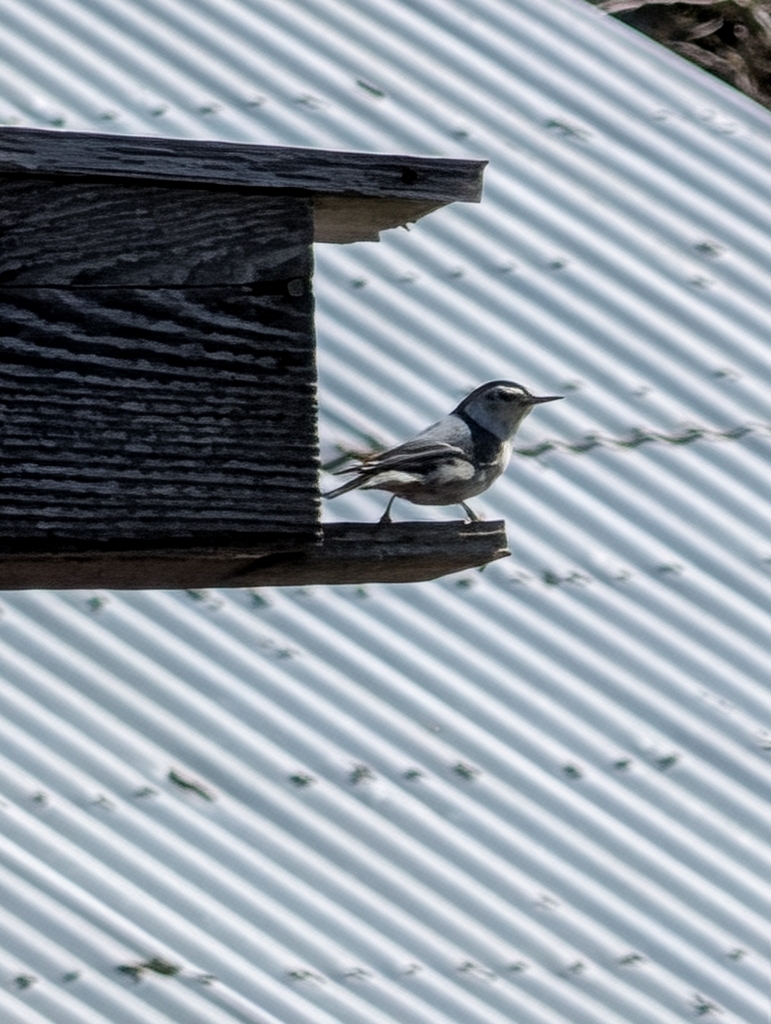
(c) Ben Coons, some rights reserved (CC BY) · licence
Family: Sittidae · Class: Aves · Order: Passeriformes
Sitta carolinensis aculeata (Slender-Billed White-breasted Nuthatch) is a California animal in the Sittidae family.
The Slender-billed White-breasted Nuthatch (Sitta carolinensis aculeata) is a small passerine bird and one of several subspecies of White-breasted Nuthatch found in western North America. This subspecies is characterized by its relatively narrow bill compared to other White-breasted Nuthatch populations, measuring approximately 11 to 12 centimeters (4.3 to 4.7 inches) in length with a wingspan of 20 to 27 centimeters (7.9 to 10.6 inches). Adults display blue-gray upperparts, white underparts, and a distinctive black cap extending from the bill over the crown to the nape. Males typically show more pronounced black coloration on the head than females. The species exhibits the characteristic nuthatch behavior of walking headfirst down tree trunks while foraging. The Slender-billed White-breasted Nuthatch occurs throughout much of the western United States, with populations distributed across mountainous regions from the Rocky Mountains to the Pacific Coast ranges. In California, this subspecies is found primarily in montane forests of the Sierra Nevada, Cascade Range, and scattered mountain ranges throughout the state. The subspecies also extends into Oregon, Washington, Idaho, Montana, Wyoming, Colorado, Utah, Nevada, Arizona, and New Mexico, typically occupying elevations between 1,200 and 3,000 meters (3,900 to 9,800 feet). This subspecies inhabits mature coniferous and mixed coniferous-deciduous forests, showing particular preference for ponderosa pine, Douglas fir, and oak woodlands. According to USFWS documentation, the Slender-billed White-breasted Nuthatch serves as an indicator species for oak woodland habitats in conservation planning efforts. The species requires mature trees with substantial trunk diameter for nesting cavities and foraging surfaces, typically favoring forests with open understories that facilitate their characteristic foraging behavior. Slender-billed White-breasted Nuthatches are primarily insectivorous during breeding season, consuming beetles, caterpillars, ants, and other arthropods gleaned from bark crevices. During autumn and winter, their diet shifts to include seeds and nuts, particularly pine seeds, acorns, and sunflower seeds, which they characteristically wedge into bark crevices and hammer open with their bills. The species is cavity-nesting, utilizing natural tree holes or abandoned woodpecker cavities for breeding. Pairs typically produce one brood annually, with clutches consisting of 5 to 9 eggs. Incubation lasts approximately 12 days, with nestlings fledging after 18 to 26 days. The Slender-billed White-breasted Nuthatch is identified as a Bird of Conservation Concern by the U.S. Fish and Wildlife Service as of 2021, specifically noting the aculeata subspecies. While not federally listed under the Endangered Species Act, this designation indicates the subspecies faces conservation challenges that warrant monitoring and management attention. Primary threats include habitat loss from logging, fire suppression altering forest structure, and climate change affecting montane forest ecosystems. The subspecies' dependence on mature forest stands with large-diameter trees makes it particularly vulnerable to forest management practices that favor younger, more uniform stands.
Classification
Class: Aves · Order: Passeriformes · Family: Sittidae
Frequently asked questions
How is Sitta carolinensis aculeata classified?
Sitta carolinensis aculeata belongs to class Aves, order Passeriformes, family Sittidae.
What family does Sitta carolinensis aculeata belong to?
Sitta carolinensis aculeata is in the Sittidae family.
What is Sitta carolinensis aculeata?
The Slender-billed White-breasted Nuthatch (Sitta carolinensis aculeata) is a small passerine bird and one of several subspecies of White-breasted Nuthatch found in western North America.
Is Sitta carolinensis aculeata found in California?
Yes. Sitta carolinensis aculeata is recorded in California in The California Species Project's catalogue.
Related species
Other California species in the same genus, family, or bioregion.
Data from The California Species Project — 14,000+ California species with verified data from CNPS, CDFW, USFWS, and more.