Sitta pygmaea
Pygmy Nuthatch
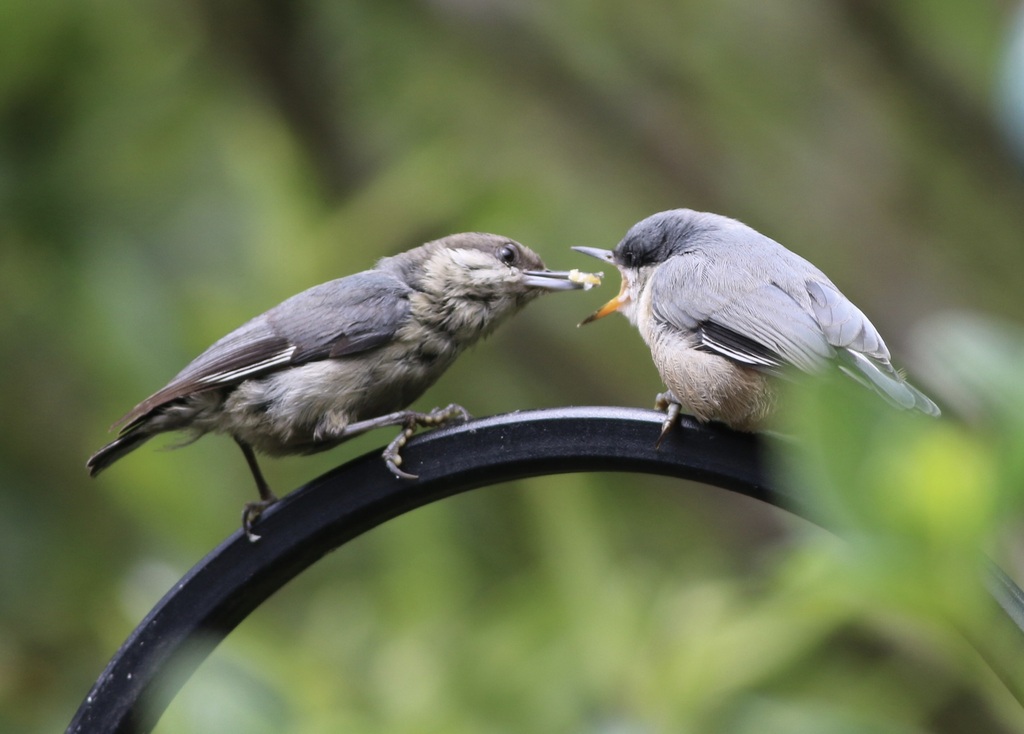
(c) Cricket Raspet, some rights reserved (CC BY) · licence
Family: Sittidae · Class: Aves · Order: Passeriformes
Sitta pygmaea (Pygmy Nuthatch) is a California animal in the Sittidae family.
The Pygmy Nuthatch is the smallest nuthatch species in North America, measuring 9.5 to 11 cm (3.7 to 4.3 inches) in length with a wingspan of 16 to 18 cm (6.3 to 7.1 inches). Adults weigh 8 to 12 grams (0.28 to 0.42 ounces). The species displays a distinctive brown cap extending from the forehead to the nape, contrasting with white underparts and grayish-blue upperparts. A dark eyeline runs through the eye, and the bill is thin, straight, and dark gray. Males and females appear similar, though males may show slightly more pronounced coloration during breeding season. Pygmy Nuthatches occur primarily in montane coniferous forests throughout western North America, with populations in California found in the Sierra Nevada, Cascade Range, and scattered locations in the Coast Ranges and Transverse Ranges. The species inhabits elevations from 1,200 to 3,350 meters (3,900 to 11,000 feet), with highest densities typically occurring between 1,500 and 2,700 meters (4,900 to 8,900 feet). California populations are distributed from Siskiyou and Modoc counties in the north to Kern and Tulare counties in the southern Sierra Nevada. The species shows strong habitat specialization for mature ponderosa pine forests, though it also utilizes Douglas-fir, white fir, sugar pine, and Jeffrey pine stands. Pygmy Nuthatches require large-diameter trees with thick, furrowed bark that provides foraging substrate and nesting cavities. They prefer open forest structure with 40 to 60 percent canopy cover and minimal understory development. Dead and dying trees (snags) are essential habitat components, providing both foraging opportunities and nest sites. Pygmy Nuthatches are highly social, often forming flocks of 5 to 15 individuals outside the breeding season. They forage primarily by gleaning insects and spiders from bark crevices, pine needles, and small branches, using their specialized bills to probe for hidden arthropods. The species also consumes conifer seeds, particularly pine seeds, which become increasingly important during winter months. Breeding occurs from April through July, with pairs excavating nest cavities in dead or decaying wood 2 to 15 meters (6.5 to 49 feet) above ground. Females lay 4 to 9 white eggs with reddish-brown spots, with incubation lasting 15 to 16 days. Young fledge after 20 to 22 days but may remain with parents for several weeks. Pygmy Nuthatches are not federally listed but face conservation challenges from forest management practices and climate change. Fire suppression has altered forest structure in many areas, reducing the open, mature forest conditions the species requires. Climate change may shift suitable habitat to higher elevations, potentially fragmenting populations. The species benefits from forest management practices that maintain large-diameter trees, snags, and open canopy conditions typical of historical fire-maintained forests.
Classification
Class: Aves · Order: Passeriformes · Family: Sittidae
Frequently asked questions
How is Sitta pygmaea classified?
Sitta pygmaea belongs to class Aves, order Passeriformes, family Sittidae.
What family does Sitta pygmaea belong to?
Sitta pygmaea is in the Sittidae family.
What is Sitta pygmaea?
The Pygmy Nuthatch is the smallest nuthatch species in North America, measuring 9.5 to 11 cm (3.7 to 4.3 inches) in length with a wingspan of 16 to 18 cm (6.3 to 7.1 inches).
Is Sitta pygmaea found in California?
Yes. Sitta pygmaea is recorded in California in The California Species Project's catalogue.
Related species
Other California species in the same genus, family, or bioregion.
Data from The California Species Project — 14,000+ California species with verified data from CNPS, CDFW, USFWS, and more.