Socalchemmis monterey
Monterey Socalchemmis Spider
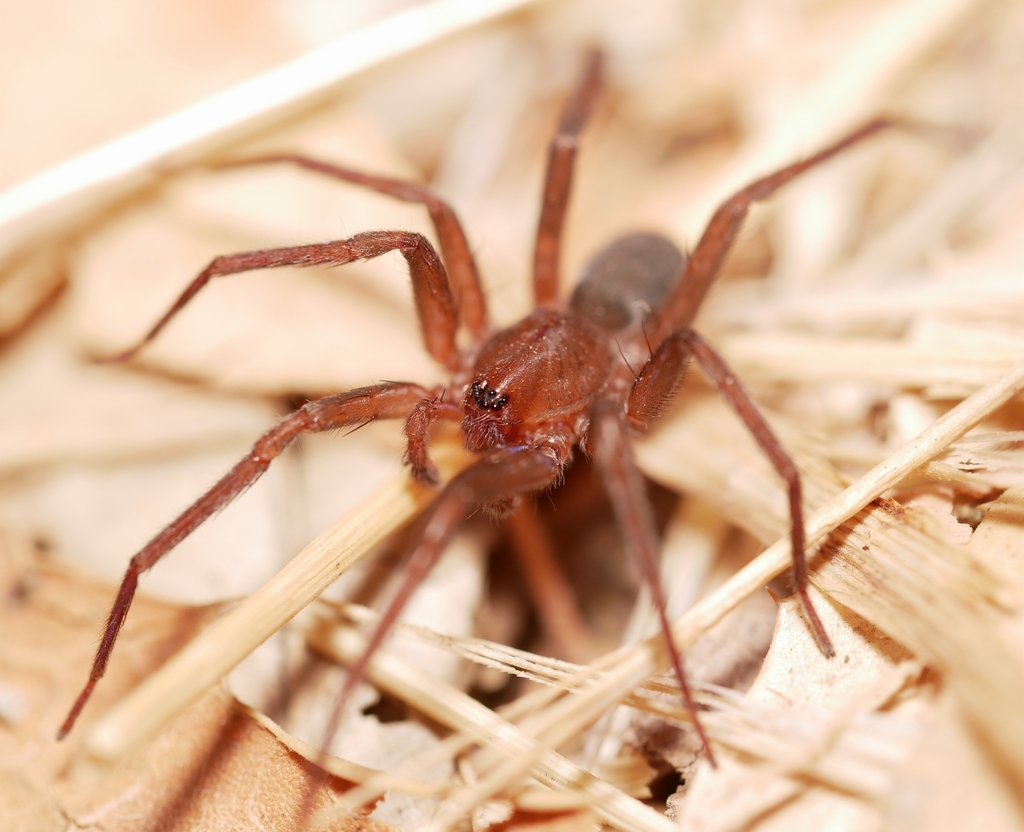
(c) Toby, some rights reserved (CC BY) · licence
Family: Zoropsidae · Class: Arachnida · Order: Araneae
Conservation status: G1 S1
Socalchemmis monterey (Monterey Socalchemmis Spider) is a California animal in the Zoropsidae family.
Socalchemmis monterey is a critically imperiled spider species endemic to California, belonging to the family Zoropsidae. This spider represents a rare arachnid in the state, with conservation rankings of G1 S1 indicating it is critically imperiled both globally and within California. The species appears to have an extremely restricted range, as suggested by its common name referencing the Monterey region of central California. As a member of the Clubionidae family, commonly known as sac spiders, S. monterey likely shares certain morphological characteristics with related species, including a generally elongated body form and the ability to construct silken retreats or sacs. However, specific physical descriptions, including size, coloration, and distinguishing features that separate this species from other Socalchemmis spiders, have not been well documented in accessible scientific literature. The precise geographic range of S. monterey remains poorly defined, though the species name suggests an association with the Monterey Peninsula or broader Monterey County region. Given the critically imperiled status, the current range is likely highly restricted compared to any historical distribution. The specific counties, elevation ranges, and habitat boundaries where this species occurs require further documentation through systematic surveys. Habitat requirements for S. monterey have not been well characterized in available literature. As a member of Clubionidae, the species likely occupies terrestrial microhabitats where it can construct silk retreats under rocks, bark, or leaf litter. Many clubionid spiders are associated with specific plant communities or soil types, but the particular ecological requirements of S. monterey remain undocumented. The behavioral ecology and life history of S. monterey are largely unknown. Clubionid spiders are typically nocturnal hunters that emerge from their silk retreats to forage, but specific information about prey preferences, reproductive timing, dispersal ability, and seasonal activity patterns for this species is lacking. Understanding these ecological parameters is crucial for developing effective conservation strategies. The G1 S1 conservation ranking indicates S. monterey faces an extremely high risk of extinction. With fewer than five known populations or occurrences likely remaining, this species represents one of California's most endangered invertebrates. Primary threats probably include habitat loss, fragmentation, and degradation within its restricted range, though specific threat assessments have not been published. Climate change may pose additional risks to remaining populations through altered temperature and precipitation patterns affecting suitable microhabitats. The species' critically imperiled status underscores the urgent need for comprehensive surveys to locate existing populations, detailed ecological studies to understand habitat requirements, and immediate conservation measures to protect any discovered populations. Scientific documentation for this species remains extremely limited. We welcome contributions of verified scientific data, field observations, or photographs to enhance this species account.
Classification
Class: Arachnida · Order: Araneae · Family: Zoropsidae
Conservation status
G1 S1
Frequently asked questions
How is Socalchemmis monterey classified?
Socalchemmis monterey belongs to class Arachnida, order Araneae, family Zoropsidae.
What family does Socalchemmis monterey belong to?
Socalchemmis monterey is in the Zoropsidae family.
Is Socalchemmis monterey protected or of conservation concern?
Socalchemmis monterey carries the following status: G1 S1.
What is Socalchemmis monterey?
Socalchemmis monterey is a critically imperiled spider species endemic to California, belonging to the family Zoropsidae.
Is Socalchemmis monterey found in California?
Yes. Socalchemmis monterey is recorded in California in The California Species Project's catalogue.
Related species
Other California species in the same genus, family, or bioregion.
Data from The California Species Project — 14,000+ California species with verified data from CNPS, CDFW, USFWS, and more.