Sorex lyelli
Mt. Lyell Shrew
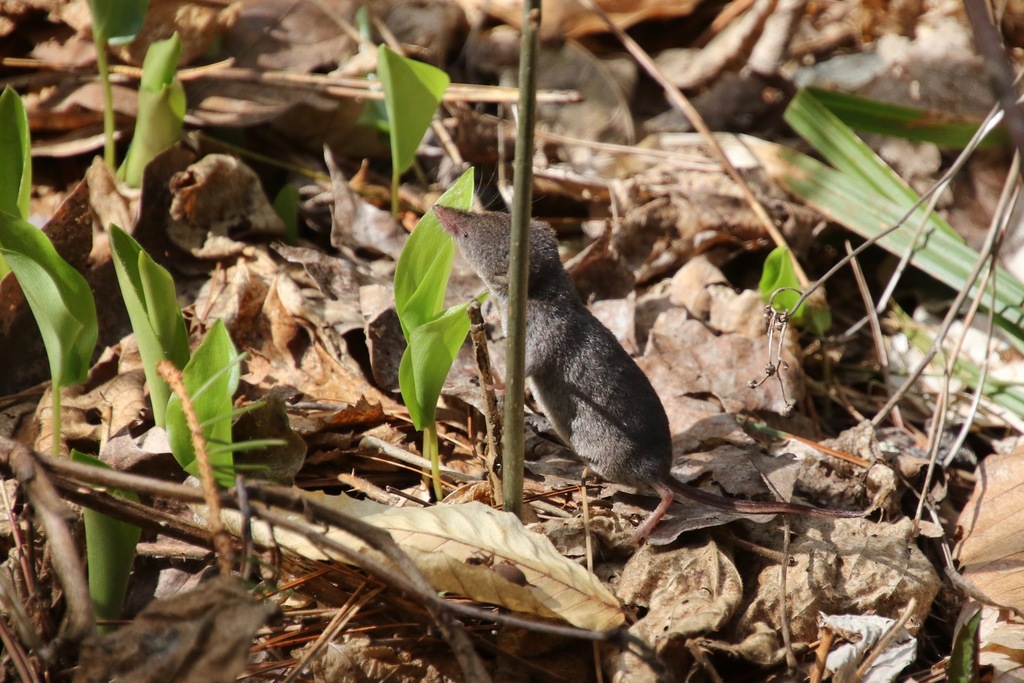
(c) er-birds, some rights reserved (CC BY) · licence
Family: Soricidae · Class: Mammalia · Order: Eulipotyphla
Conservation status: G3G4 S3S4
Sorex lyelli (Mt. Lyell Shrew) is a California animal in the Soricidae family.
The Mt. Lyell shrew (Sorex lyelli) is a small insectivorous mammal endemic to the high-elevation regions of the Sierra Nevada mountain range in California. Adults measure approximately 95-110 mm (3.7-4.3 inches) in total length, with the tail comprising roughly half of this measurement. Body weight ranges from 4-7 grams (0.14-0.25 ounces). The pelage is typically dark grayish-brown dorsally, transitioning to lighter grayish tones on the ventral surface. The long, pointed snout contains small eyes and is equipped with numerous tactile vibrissae for foraging in low-light conditions. The species exhibits the characteristic high metabolic rate of shrews, requiring frequent feeding to maintain body temperature. The Mt. Lyell shrew occurs exclusively in the Sierra Nevada of California, with documented populations in the central and southern portions of the range. The species is named after Mount Lyell in Yosemite National Park, near the type locality. Current distribution includes high-elevation areas in Fresno, Inyo, Madera, Mono, and Tuolumne counties. The range extends from approximately the Mammoth Lakes region southward to the Kings Canyon and Sequoia National Parks area, representing one of the most restricted distributions among North American shrews. This species inhabits alpine and subalpine environments, typically occurring at elevations between 2,440-4,115 meters (8,000-13,500 feet). Preferred habitats include rocky talus slopes, alpine meadows, and areas near permanent water sources such as streams and seeps. The Mt. Lyell shrew shows strong association with moist microhabitats, often found under rocks, logs, and dense vegetation mats. Snow cover persists for much of the year across its range, creating a challenging environment that requires specialized adaptations for survival. The Mt. Lyell shrew is primarily insectivorous, feeding on a variety of small invertebrates including beetles, flies, spiders, and other arthropods found in alpine environments. Like other shrews, it must consume food equivalent to 80-90% of its body weight daily due to its extremely high metabolic rate. The species is active year-round, foraging beneath the snowpack during winter months. Reproduction occurs during the brief alpine summer, typically from June through August. Females produce one to two litters annually, with litter sizes ranging from 2-7 young. Gestation period is approximately 20-21 days, and young reach independence after 3-4 weeks. The Mt. Lyell shrew is currently assigned a global conservation rank of G3G4 (vulnerable to apparently secure) and a state rank of S3S4 in California, indicating moderate conservation concern. The species faces threats from climate change, which may alter alpine habitat conditions and reduce suitable elevation zones. Recreational activities in high-elevation areas and potential habitat degradation from grazing also pose localized threats. The restricted range and specialized habitat requirements make this species particularly vulnerable to environmental changes. Current population trends are poorly documented due to the remote nature of occupied habitats and the secretive behavior of the species.
Classification
Class: Mammalia · Order: Eulipotyphla · Family: Soricidae
Conservation status
G3G4 S3S4
Frequently asked questions
How is Sorex lyelli classified?
Sorex lyelli belongs to class Mammalia, order Eulipotyphla, family Soricidae.
What family does Sorex lyelli belong to?
Sorex lyelli is in the Soricidae family.
Is Sorex lyelli protected or of conservation concern?
Sorex lyelli carries the following status: G3G4 S3S4.
Is Sorex lyelli found in California?
Yes. Sorex lyelli is recorded in California in The California Species Project's catalogue.
Related species
Other California species in the same genus, family, or bioregion.
Data from The California Species Project — 14,000+ California species with verified data from CNPS, CDFW, USFWS, and more.